The European Central Bank (ECB) said non-cash payments in the euro area rose in the first half of 2025, with consumers and businesses making 77.7bn transactions, 7.7% more than in the first half of 2024, with a total value of €116trn, up 2.9%. The data cover access to and use of payment services, cards and terminals, plus transactions processed by retail and large-value payment systems.
The trend is clear: digital payment habits are deepening, led by everyday card spending, while the physical cash network is being rationalised. For households, that means fewer frictions at checkout and a diminishing need to carry notes and coins. For businesses, it means investing in acceptance technology and managing a more complex set of costs and risks behind a transaction that now takes seconds.
Cards dominate day-to-day spending
Card payments represented 57% of the total number of non-cash payments in the first half of 2025, the ECB said, making cards the main engine of transaction growth. Credit transfers accounted for 22% of the total, direct debits for 14% and e-money payments for 6%, with the remainder made up of cheques, money remittances and other services.
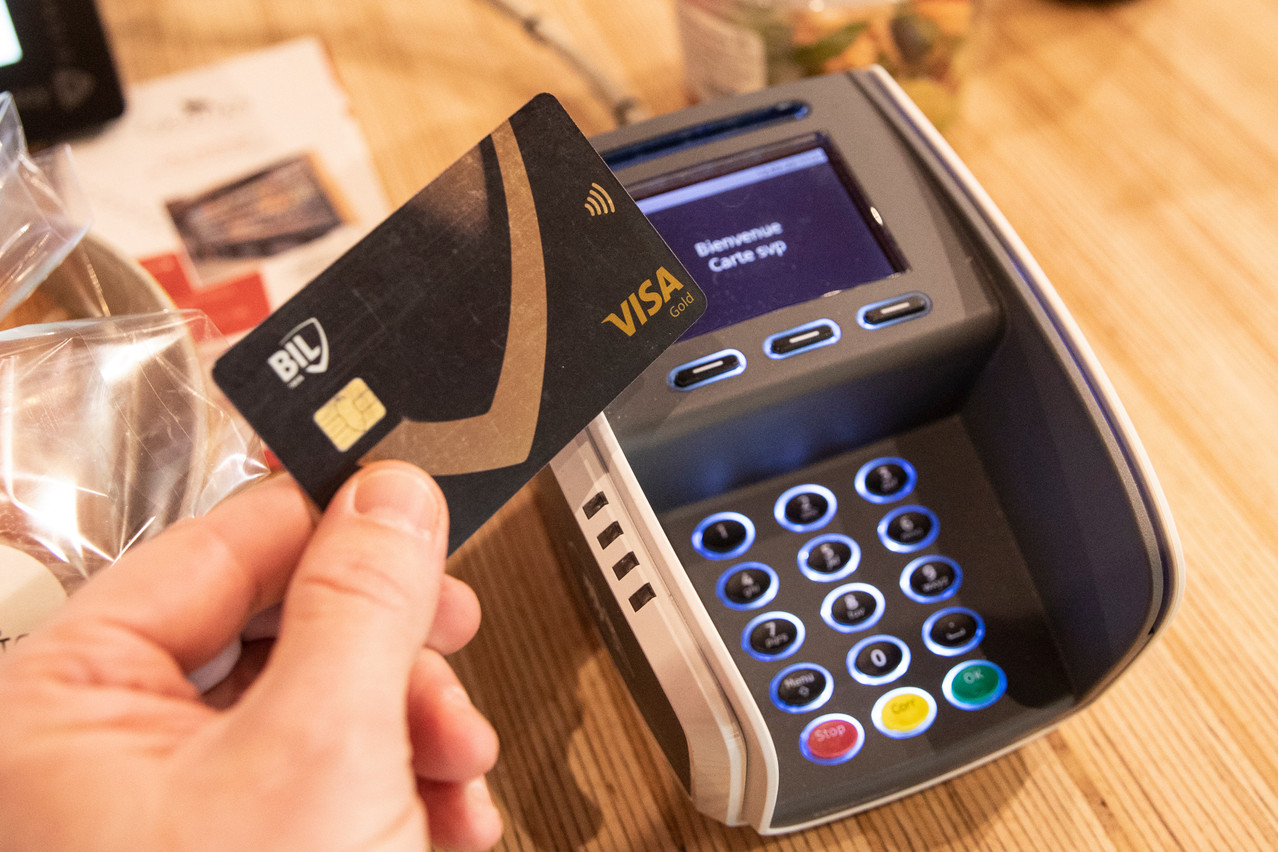
Contactless continued to reshape in-person shopping. The ECB said the number of contactless card payments rose to 29.6bn, up 12.8%, with a total value of €797bn, up 13.9%. Contactless represented 83% of non-remote card payments by volume and 67% by value, signalling that ‘tapping a card’ has become the standard way to pay for routine purchases across much of the currency union.
This matters for consumer behaviour because it encourages more frequent, low-friction spending. The ECB’s average value of about €38 per card payment suggests that the growth is not just about occasional large purchases moving to plastic, but about everyday transactions that once might have been settled in cash.
Retailers respond with more terminals, fewer excuses
Merchants have adapted quickly. The ECB said the number of point-of-sale terminals climbed to about 24.7m by the end of the first half of 2025, up 24.0% year on year, and that 93% of terminals accepted contactless transactions.
The expansion suggests businesses now treat digital acceptance as essential infrastructure. In practical terms, the competitive penalty for being “cash only” is rising, particularly in urban centres and in sectors where speed at checkout is part of the product. For small firms, the trade-off is that convenience comes with ongoing fees, dependence on technology providers and heightened exposure to outages.
Cash access quietly shrinks
As digital grows, cash infrastructure contracts. The ECB said the number of automated teller machines (ATMs) in the euro area fell 2.9% to about 249,300 by the end of the first half of 2025, and that 34% of ATMs accepted contactless transactions.
For many consumers, this decline is subtle until it becomes personal: a removed cash machine at a local supermarket, fewer withdrawal options late at night, or longer journeys to access cash in rural areas. The reduction can also accelerate cash’s retreat, because a payment method that is slightly harder to obtain is used slightly less, weakening the economics of maintaining the network.
Instant transfers gain ground, with consequences
The ECB’s figures also show transfer-based payments being pulled towards real time. Retail payment systems in the euro area processed about 55.7bn transactions worth €26.2trn in the first half of 2025, and instant credit transfers accounted for 23% of the volume and 7% of the value of credit transfers processed by euro area retail payment systems.
For consumers and businesses, that trend supports a shift in expectations: transfers are increasingly judged not by whether they arrive, but by how quickly they arrive. Yet the move to instant also raises the stakes on fraud and mistaken payments, because funds can be gone before a customer realises something is wrong. Banks are therefore likely to tighten app-based confirmation, warnings and limits, while businesses will face pressure to strengthen approvals and reconciliation so that speed does not come at the expense of control.
What to expect next
The ECB data point to a payments economy where convenience is winning and cash is being pushed to the margins by economics as much as by consumer preference. But convenience has second-order effects: a deeper reliance on card networks for everyday commerce, a larger operational burden for merchants and banks and less room for error as instant transfers spread.
For households, the near-term direction is more of the same: more places to pay by card, more routine tapping and less visible cash access. For businesses, the next phase will be about resilience and trust, ensuring that payments remain reliable even as systems become faster, more automated and more exposed to fraud.