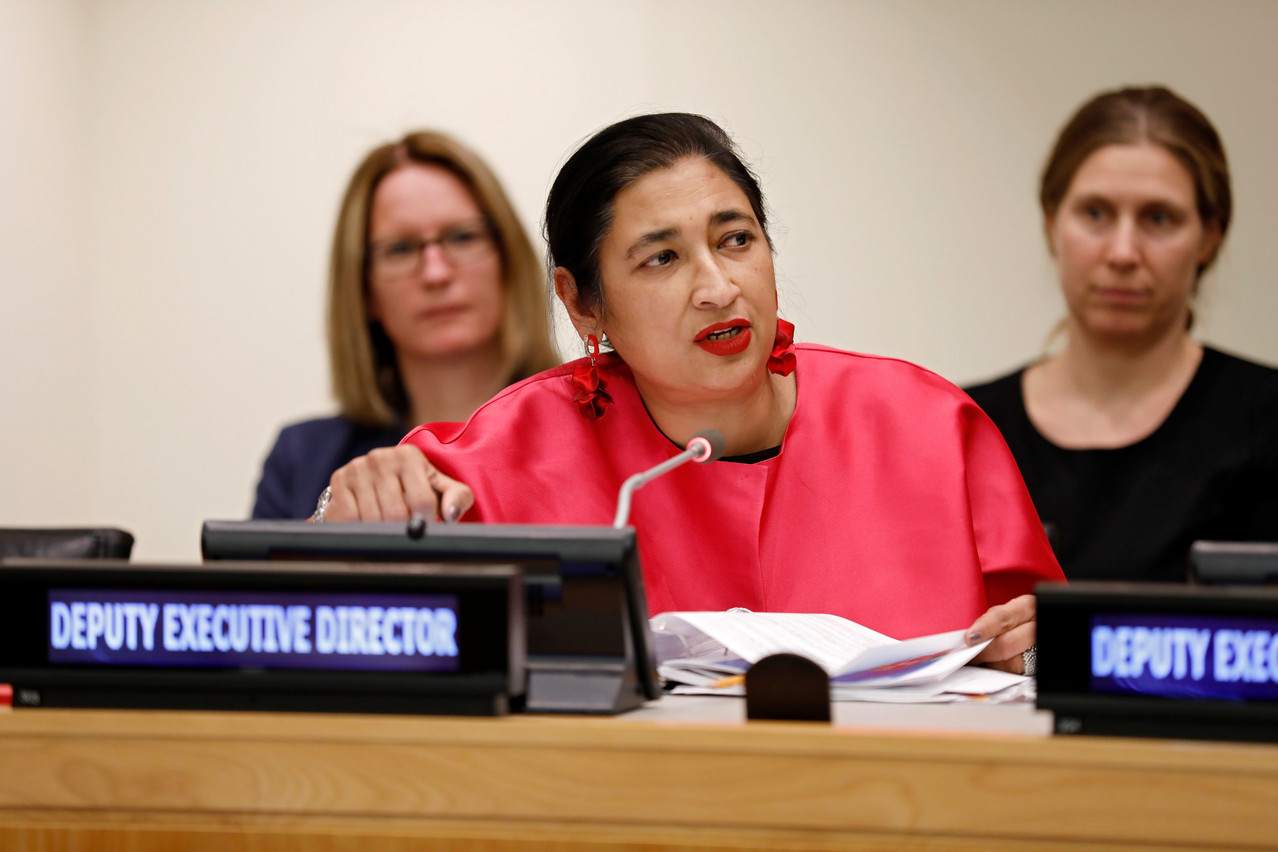
What does gender have to do with the climate or how does it contribute to sustainability? Simply put, climate change is a multiplier of threats, and it can escalate existing pressures in many contexts, Anita Bhatia, assistant secretary general and deputy executive director at UN Women told Delano during her visit to Luxembourg from 21-23 February.
Ahead of the International Women’s Day, Bhatia met with several key actors including development cooperation minster Franz Fayot (LSAP), equality minister Taina Bofferding (LSAP), environment minister Carole Dieschbourg (Déi Gréng), EIB vice-president Ambroise Fayolle, CEO of the Luxembourg Stock Exchange Julie Becker, director general of fund industry association (ALFI) Camille Thommes, and CEO of the Banque Internationale à Luxembourg.
The aim of these meetings that include the finance sector is geared towards deepening a partnership that utilises Luxembourg’s knowledge and capacity in achieving global gender equality [SDG 5].
“Luxembourg is a very important partner for UN Women, and it is a partner that we really appreciate because it has been with us for a long time and has made significant contribution to programs in parts of the world where there are really big problems,” says Bhatia. In the past, Luxembourg support to UN Women has contributed to climate resilient agriculture projects in Mali and empowerment for migrant and refugee women in Brazil to name a few.
Building forward differently: the climate- gender-sustainability nexus
Climate change is one of the biggest threats to sustainability, and apart from the physical consequences on the environment, there are also economic, political and social impacts that could exacerbate already existing threats. Although climate and sustainability are often directly interlinked, gender equality can be the missing link required to build truly inclusive and sustainable societies, which depend on a complete integration of women in the economy, society and politics, Bhatia explains.
But apart from the crucial role women could play to enhance sustainable practices, they are also a major stakeholder as the backlash of any form of instability expose women to several vulnerabilities. Bhatia cites the covid-19 pandemic as a key example. Although this is a health crisis, violence against women--referred to as the “shadow pandemic” by UN secretary general António Guterres--increased exponentially and so did the care burden, which drove many women out of the workforce.
But all these issues do not tone down the fact that before the pandemic women make up the greatest part of the world’s poor and were doing three times as much unpaid care work as men, or that income inequality is blatant and women in countries already suffering from major environmental challenges such as desertification are starved of a source of income.
“We believe that the time is ripe for this focus on sustainability to expand and cover issues such as gender because when you look at ESG, there's been a lot of focus on the E and very little focus on the S, and within that S not enough focus on gender. And we want to leverage the knowledge and platforms that Luxembourg has built on sustainable green finance for gender because sustainability should also include gender equality,” says Bhatia.
I don't like saying build back so much because I don't think you want to go back to the old world. It's really an opportunity to build forward differently.”

Changing attitudes and policies to favour women
Almost five decades have passed since the UN International Women’s Year conference where demands on three main fronts were made--full gender equality, women’s full integration and participation in development and world peace--by the pioneering gender balanced delegations across the world. Fast-forward to 2022 and several demands are yet to be met.
But as the world prepares for another International Women’s Day, we start a discussion on what the world can do differently. She highlights two major changes.
On the one hand, understanding that gender inequality has many causes with one of them entrenched in attitudes, mindsets and biases. Individuals--including men and women--must start by asking themselves how they are role modelling gender equality in what they do. She goes on to emphasise the need to have even more male champions of gender equality.
On the other hand, the International Women’s Day will be a good time for the private sector to question existing practices, consider women-friendly policies, assess if the female hires are sufficient or if there is a gender pay gap, and check if they are promoting enough women to leadership positions.
These international days come and go, and women continue to suffer…There's a lot of bad practices still out there that have to be changed. It's time to translate the walking into talking.”

However, all these efforts shouldn’t stop here. There needs to be a push for gender diversity in supply chains and products, she adds. For example, this can start by companies asking themselves if they hire from suppliers that employ women or how their products reflect diversity and gender equality.
As shown in several empirical studies, the benefits that companies stand to gain are diverse. “Gender can be a differentiator of performance for countries and for companies. There's a strong business case to do better on gender. It's not a nice to have, it’s a good to have because it will make the company more profitable,” she explains.
Racing against the clock
In line with its triple mandate, the UN Women strategic plan for 2022 to 2025 is aimed at four key thematic areas that encompass ending violence against women, driving women's economic empowerment, asserting their participation in leadership, and ensuring their role in peace-building processes in conflict regions. Bhatia mentions that an important action in the next eight years for UN Women will be “to have a very strong and singular focus on achieving the SDGs.”
In the past two years, she notes the terrible conditions women have encountered and the sudden need to re-litigate issues affecting women that were considered a done deal, for example, the right to abortion, which is again being questioned and has received a pushback in many parts of the world.
Nevertheless, she refers to a “silver lining” amid the pandemic and exhorts the increased “recognition” of some of these major challenges in achieving gender equality by some global actors.
We may not see gender equality in my lifetime, but I hope we will see it in my daughter's.”
