How bold should a government, which is accountable for public money, be when it comes to investing in technological infrastructure? Bet on an emerging technology that has not yet been sufficiently adopted, so as to be at the forefront? Opt for a proven technology that is vulnerable to a wave of disruptions? Or do nothing and let the market find its own solutions, at the risk of citizens not being able to ride the wave of a green mobility revolution?
It’s easy to answer afterwards, and easy to criticise too. But little Luxembourg, with its economy exposed to the four winds, has no alternative but to try and stay at the heart of all these fundamental mobility issues, whether on the road, on the rail or in the air. If companies or workers cannot come to Luxembourg, there will be no need to fear that they will go to Dublin, Paris or Lisbon…
But what an example of the difficulties of properly positioning a strategy with the double announcement by BYD founder and CEO Wang Chuanfu at the end of March, and of the Spark Alliance this Wednesday in Paris!
BYD in March announced the market launch of a 1,000KW charging system, compared with 350KW today. This would give a car an extra 400km of range in five minutes--a revolution already underway in China, where the first 4,000 charging stations will be available at the end of April.
Ultra-fast charging, the only future
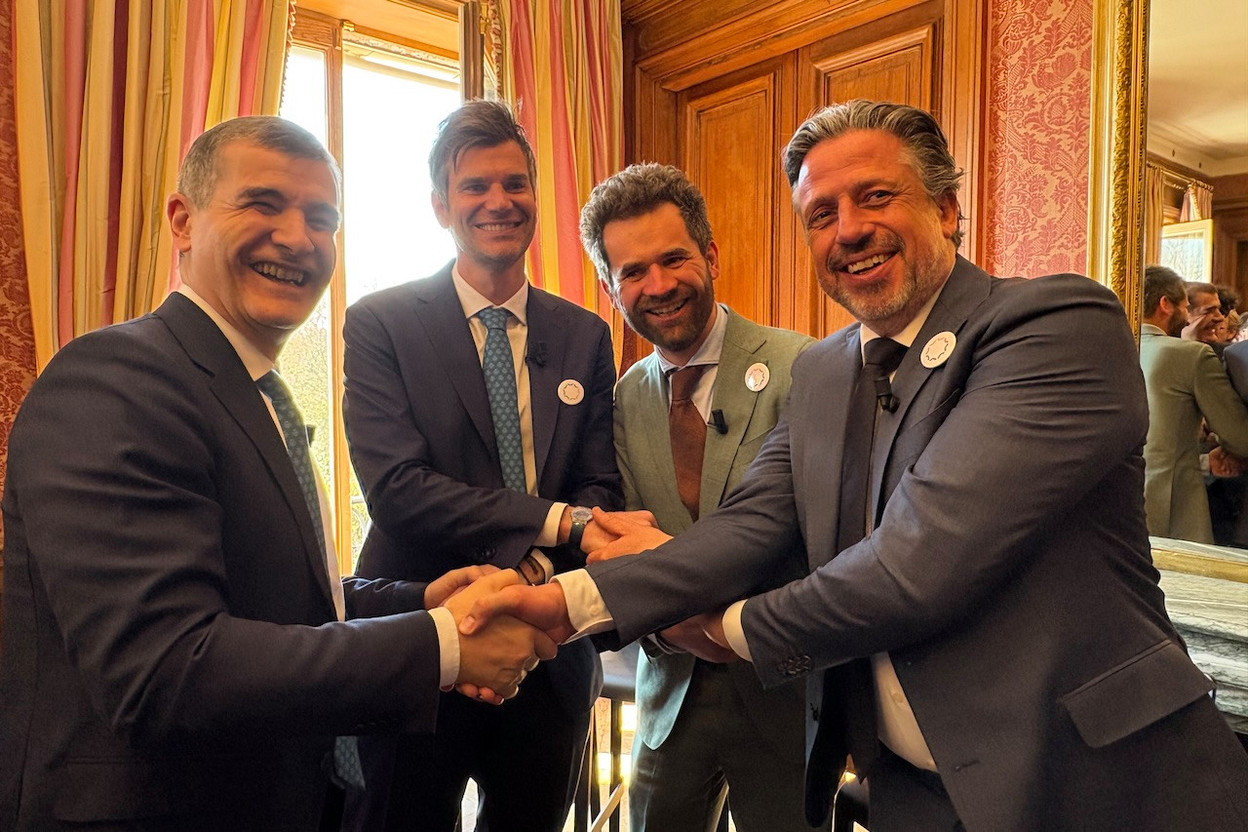
The second announcement--that of the Spark Alliance--concerns the grouping of four European pure players in fast charging (150 to 450KW). The group’s aim is to offer their services to all customers of all four suppliers--with no subscription, no fees and no barriers. These four make no secret of it: charging points that require 12 hours to recharge 80% of a car’s battery don’t interest them.
It’s a question of scale, they explain. “Imagine you have a charging point that needs 12 hours to reach 80% or 100%,” explains Fastned CEO Michiel Langezaal. “You charge a maximum of two cars a day. With a terminal that recharges to 80% in twenty minutes, you can plug in three cars per hour,” or 72 per day.
Of course, to achieve this, the charging point has to be made as available as possible and as visible as possible in the midst of the many projects currently under development. That’s what the Spark Alliance will be working on from this spring. “We need to generate money from the sale of electricity at these stations, and the more electricity we deliver in a short space of time, the more the model allows us to reinvest in developing the infrastructure and our positions. For us, this is a vital issue.”
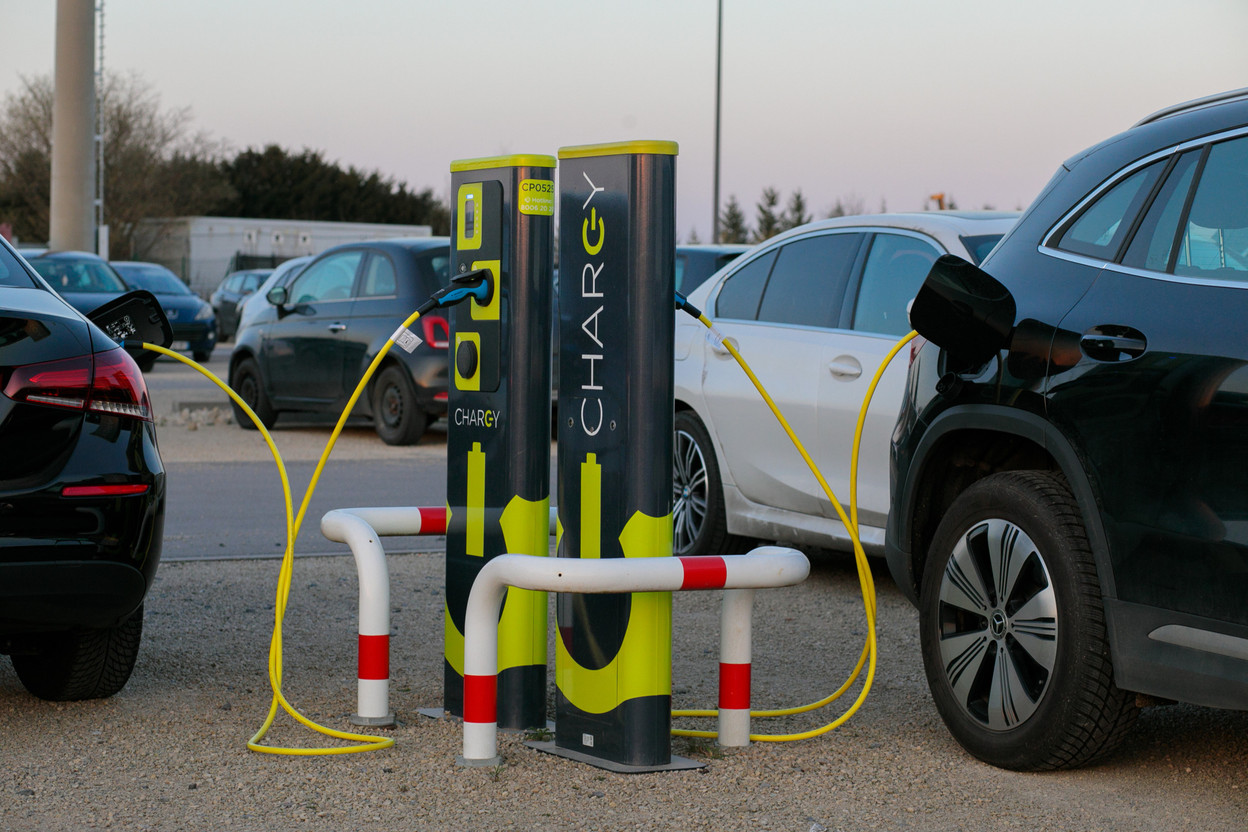
What does this have to do with Luxembourg? Well, if the public infrastructure does indeed have a Superchargy version--88 charging points in total--it has been designed for long charging times.
But how could the government have done otherwise? When it entrusted the Luxembourg firm Schwartz with the task of studying the options in order to make its decisions, ultra-fast charging did not exist and the investment would be prohibitively expensive for the public purse. “Ultra-fast charging, with 150KVA power allowing a theoretical full charge of 25KW in five minutes, is currently a theoretical level whose acceptability to batteries has not been demonstrated. What’s more, the associated power demand would be very high and would be detrimental to the distribution network,” states the analysis. “The investment cost of a normal charge point (including installation) is between €6,000 and €11,000, whilst that of a fast charge point is between €15,000 and €50,000.”
In a market that is still in its infancy and struggling to deliver models, even in a country as passionate about cars as Luxembourg still is today, having an ultra-fast charging network--not fast, but ultra-fast--would have served no purpose. It would only have put the electricity grid operators under great stress.
“We have had discussions with the government and warned them of this movement that was going to gain momentum,” says a member of the entourage of one of the four companies who does not wish to be named. “I don’t know if they took any notice of it.”
An anticipation at risk
“We are interested in Luxembourg, yes!” says Electra CEO Aurélien de Meaux for his part. His company was the first of the four to set foot in the grand duchy, opening its first charging station in March. Another 15 to 20 could follow, according to the framework agreement Electra has signed with Delhaize Group for Belgium and Luxembourg, but the Frenchman is not really in control of time.
And time is money here too. “On average, it takes about four years from the time we say we could install a station in a place to the time a motorist can plug in their car for the first time,” explains Fastned’s CEO, a little embarrassed at the thought. “You have to be careful with this kind of estimate. It depends on who owns the land and how you manage to negotiate it. How you manage to get permission from the authorities and connect it to the grid. Then how quickly you build it and get it up and running. It can be very different from one station to another sometimes.”
From a business point of view, he explained over lunch, “we have prepared our bids on the basis of the policy adopted by the European Union for 2035. We are in the process of equipping Europe to meet the challenges of mobility in terms of access to electric recharging.” The industry itself has a natural interest in offering cars that have not just 200km of range but 1,000km, even when the average driver does less than 25km a day.
So we need to develop two skills that will be increasingly fundamental: agility to adapt to what we decided the day before and watchfulness to detect weak and strong signals the day after. We need to educate ourselves and find staff. A whole range of technological and environmental projects--because the two aspects will be increasingly linked--is only going to accelerate. We hope to hear from you soon.
This article was originally published in French.