It is possible to reduce your energy bill without undertaking major works. Temperature, ventilation, settings, appliances on standby: there are a number of levers that can produce visible results in the first few weeks. With the director of the Klima-Agence, 
In 2025, the average Luxembourg household will spend around €600 a year on electricity in a flat and €1,200 in a single-family home, excluding electric cars and heat pumps. These figures come from estimates drawn up by the Ministry of the Economy at the end of 2024, when the new grid usage tariffs were introduced.
These amounts do not take into account heating, which generally accounts for the largest share of the total energy bill. According to Nina Weicherding, energy adviser at the Klima-Agence, “it is difficult to establish an average figure”, as consumption is highly dependent on the year of construction of the building, its insulation and the habits of the occupants.
Fenn Faber, director of the Klima-Agence, points out that “the thermal envelope of the building has a very significant impact on the energy bill”. He points out that the differences between homes can be considerable depending on their design and condition.
Heating: the most sensitive item
Two identical homes can have very different consumption figures. “In the same scenario, one family can use much more energy than another just because of their habits,” explains Nina Weicherding.
Indoor temperature plays a central role. “One degree can make a difference of up to 6% in energy consumption.” Going from 21 to 20 degrees therefore represents a measurable saving over the year.
The director of the Klima-Agency recommends:
- 20 degrees in the living room
- 17 to 18 degrees in a bedroom
- 22 to 23 degrees in a bathroom
These differences may seem small, but they have a direct impact on the bill.
Fenn Faber also stresses the importance of adjusting installations: “It’s also a question of adjusting the heating system itself.” In particular, he mentions the sizing of heat pumps and the calibration between the actual heating requirement and the performance of the installation. “You have to make sure that the settings are right, both for heating the building and for hot water.”
Airing: five minutes, not all day
Ventilation also influences consumption. Leaving a window ajar for several hours causes continuous heat loss.
The recommendation is simple: open windows completely for five to ten minutes, then close again. During this time, it’s best to turn off radiators. “Otherwise they’ll start working at full blast because they realise there’s a significant drop in temperature,” says Nina Weicherding.
The same principle applies to air conditioning in summer. Opening the windows while the air conditioning is running leads to unnecessary consumption. Instead, the advisor recommends closing the shutters during the day and airing out early in the morning.
Hot water: often set too high
The temperature of the domestic hot water is sometimes excessive. “You don’t take a shower at 70 degrees”, reminds the director of the Klima-Agence.
Setting the temperature too high increases consumption without improving comfort. Fenn Faber observes that “sometimes the temperature chosen for hot water is far too high”, resulting in unnecessary expenditure.
Checking the parameters of the water heater or asking a professional to check the installation can reduce energy expenditure without major work.
Equipment on standby: a real cost
Equipment left on standby consumes electricity continuously. The impact varies depending on the equipment and how old it is.
Some orders of magnitude given by the Klima-Agence:
- television on standby: between 13 and 80 euros per year
- computer: around 20 euros
- internet box: around 15 euros
These amounts may seem small in isolation, but add up when several devices remain plugged in.
“A good indication is the little light that stays on,” says Nina Weicherding. If a light is visible, there is consumption.
Fenn Faber adds that “it’s the combination of different appliances in a household” that makes the difference. He recommends the use of power strips with switches: “You have a button to turn off several appliances at the same time”, which makes it easier to make a lasting change.
Apartment or house: a structural difference
Living in a flat can reduce heating consumption, particularly when the dwelling is surrounded by other flats. “If you have neighbours on four sides, above and below, the flat needs to be heated a little less,” explains Nina Weicherding.
The area to be heated is generally smaller than in a detached house. However, the insulation of the building remains a determining factor.
Fenn Faber points out that “even in the same type of home, habits can create major differences”. He also stresses the importance of sub-metering, which allows people to pay according to their actual consumption rather than a collective allocation.
Comparing your supplier: a simple lever
Aside from everyday actions, the choice of electricity supplier has a direct impact on the bill. Fenn Faber points out that “it’s worth comparing the different offers”, as Luxembourg is a market where households rarely change supplier.
He recommends using the official Calculix comparator, set up by the Luxembourg Regulation Institute. This tool allows you to compare tariffs according to your consumption profile and preferences.
Structural measures: beyond everyday gestures
Behaviour counts, but isn’t always enough. “There is a gap between the perception of certain measures and their real impact,” explains Fenn Faber, referring to a study by the Climate Policy Observatory.
He points out that “everyday actions remain important”, but points out that “more structural measures have a greater impact”.
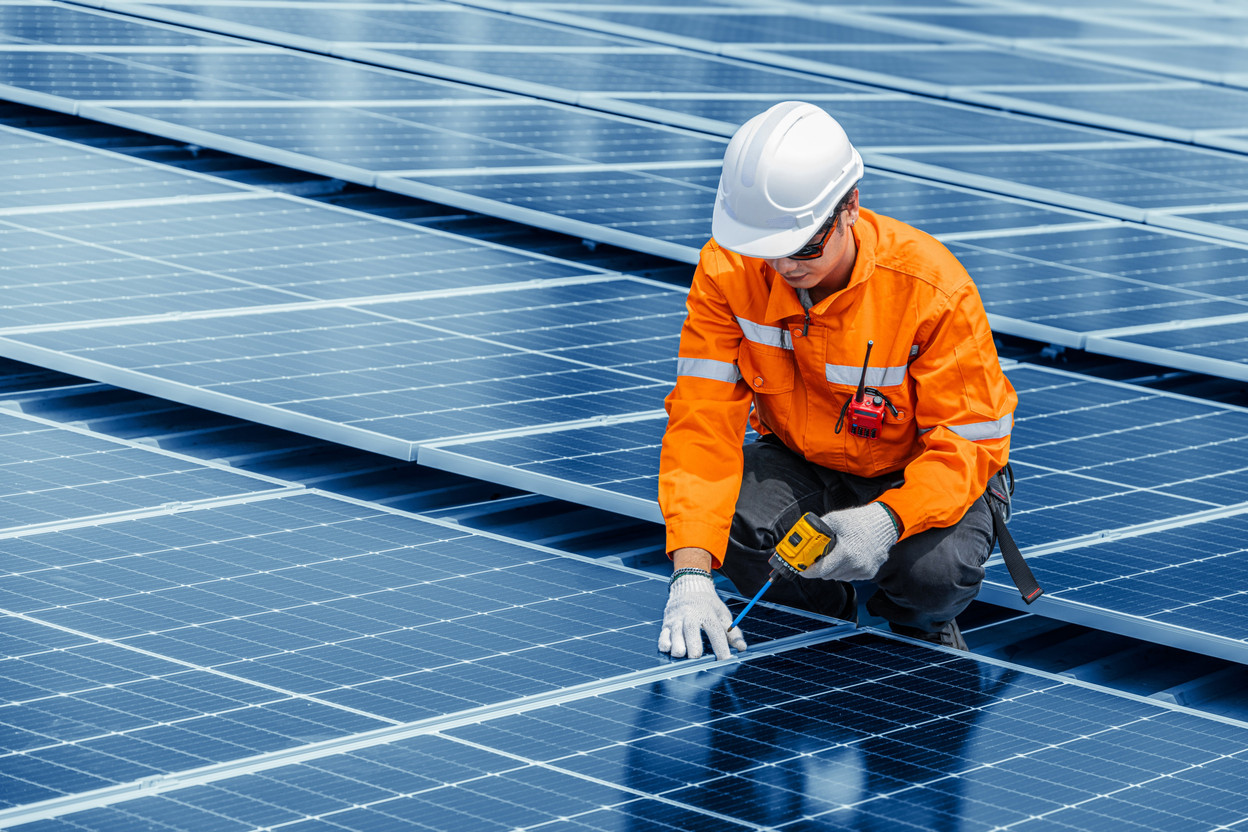
Photovoltaic installations are among the solutions that have a direct effect on bills. “If the project is properly sized, you can cover a significant proportion of your energy bill”, he explains. The pre-financing mechanism introduced in 2025 makes it possible to reduce the initial investment by immediately deducting public aid.
It is also possible to share the electricity produced with your neighbours, via energy communities or collective self-consumption. “The partners agree on an energy price that is often lower than the market price,” says Fenn Faber.
What about tenants?
Tenants cannot influence the insulation or structure of the building. The levers remain mainly behavioural. However, some solutions do exist.
Fenn Faber acknowledges that “it’s a difficult starting point”, particularly in the context of the Luxembourg property market. He does, however, mention avenues such as photovoltaic panels on balconies, which are possible in certain cases with the agreement of the owner or managing agent.
Divisional metering, which will become compulsory in apartment blocks by 2027, requires individual meters to be installed for heating and hot water. “This gives each occupant the opportunity to have a greater effect on their own bill,” concludes Fenn Faber.