1. Prevention: insufficient efforts
The general state of health of the population. Luxembourgers are doing rather well, if we are to believe the data in the health profile drawn up by the OECD in partnership with the European Commission and the Observatoire national de la santé. In 2024, average life expectancy, at 83.5 years compared with 83.4 years at the end of 2023, will be an all-time record, two years higher than the EU average. On average, women live 4.7 years longer than men. The downside is that from the age of 65 onwards, a significant proportion of the remaining years of life are spent with activity limitations. For the OECD, population ageing and chronic diseases will pose increasing challenges.
Cardiovascular diseases (25.8%) and cancer (24.9%) are the main causes of death. Next come respiratory diseases (9.3%), dementia—including Alzheimer’s disease—(7%) and external causes, such as accidents (6.5%).
Notably, the number of people with cancer is higher than the EU average. A quarter of deaths are attributable to behavioural factors (smoking, diet, alcohol and lack of physical activity). While trends in alcohol and smoking are good, the rise in obesity, sedentary lifestyles and the use of electronic cigarettes among teenagers raise questions. All the more so as social inequalities in the face of health risks remain marked: people with a low level of education are thus more exposed to obesity and smoking.
The coalition agreement provides for the development of a national prevention strategy, taking over the provisions of the 2023 National Health Plan. A framework law is in preparation, under which general practitioners and referring doctors will play a central role in this policy of preventive medicine.
In addition to the primary prevention of chronic diseases, four areas are considered to be priorities: tobacco consumption, alcohol consumption, nutrition and physical activity. However, the OECD notes that spending on prevention has declined, falling to 3% in 2023, a level below the EU average.
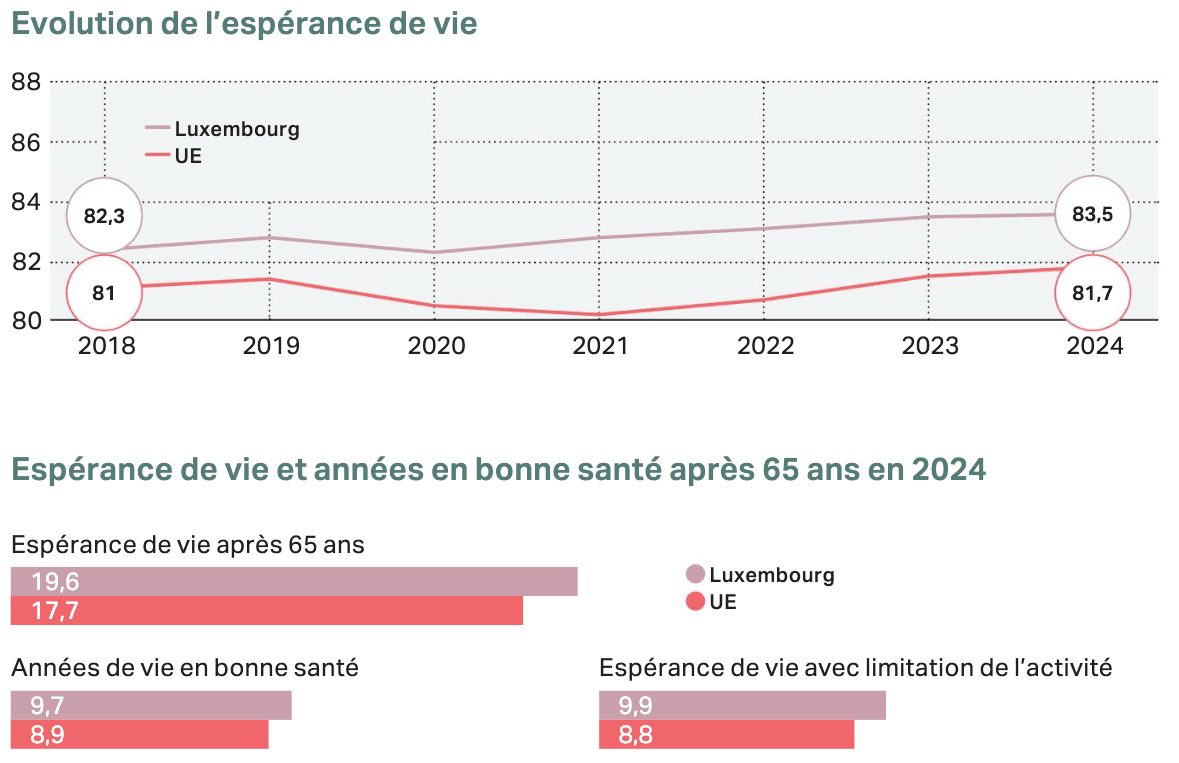
Life expectancy trends in Luxembourg. (Infography: Paperjam; source: Country Health Profile 2025—Luxembourg; OECD & European Commission)
The figure to remember: 15%. This is the proportion of the population aged over 65. Although this proportion is currently the lowest in the EU, it is set to double by 2050, according to the OECD.
2. Healthcare costs: what impact on contributions?
An update on the financial future of the CNS. If the state of health of Luxembourgers is good, it’s because the resources are there. Luxembourg has high per capita healthcare expenditure. In 2023, the Grand Duchy spent €4,614 per capita on healthcare. That’s 20% more than the EU average (€3,832) and €298 more than in 2022. The system is 85% publicly financed, above the EU average.
Extra-hospital care continues to account for the largest share of healthcare expenditure in Luxembourg, with 33% of expenditure in 2023, higher than the EU average (28%). Spending on hospital care (27% of expenditure) and long-term care (18%) has remained stable and close to EU averages over the past decade.
In contrast, spending on pharmaceuticals and medical devices accounted for 14%, well below the EU average of 18%. The share devoted to preventive care rose from 7% of healthcare spending in 2021, during the Covid pandemic, to 3% in 2023, below the EU average (4%) but higher than ten years ago (2% in 2015).
The problem is whether this generosity can continue. With the situation unchanged, the figures hint at painful adjustments. With the CNS becoming structurally loss-making from 2024 onwards, the government wants to save €140m through an effort to control expenditure via increased medical monitoring and the fight against waste and fraud. In the meantime, it has increased funding to €59m from the €20m originally planned. This will mean that there will be no increase in social security contributions for 2026. An increase that seems inevitable in 2027. The social partners will discuss it this autumn.
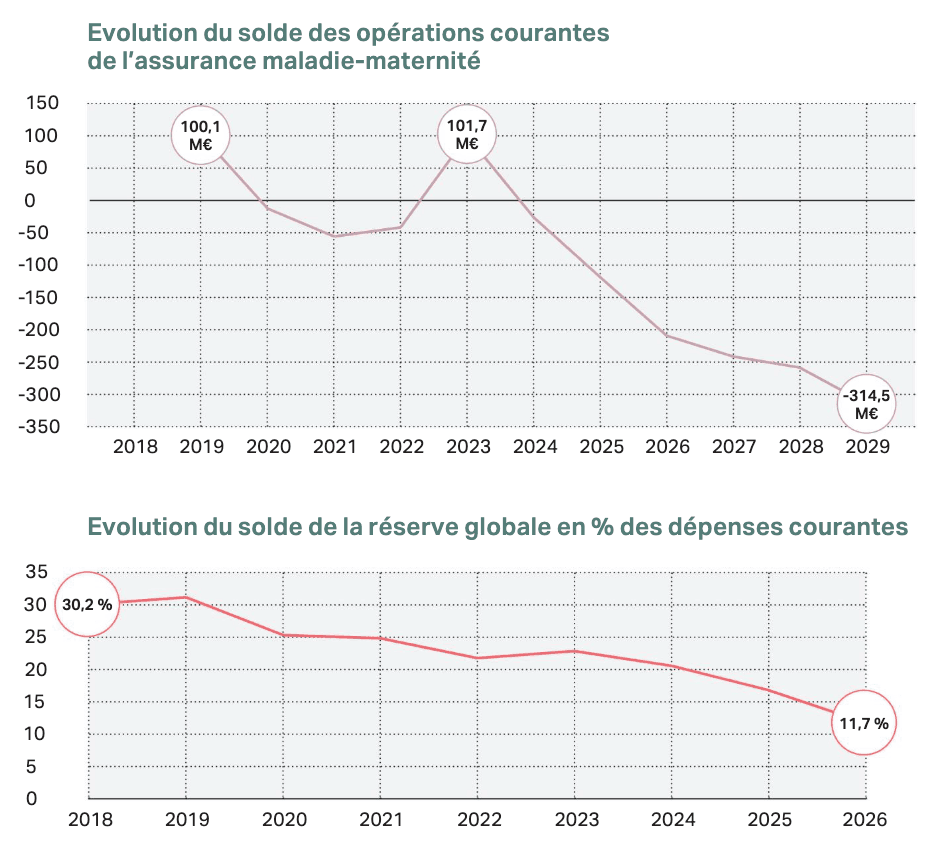
Changes in the CNS balance and expenditure since 2018. (Infography: Paperjam; source: IGSS, report in view of the Quadripartite of 13 October 2025)
The figure to remember: 8.3%. As the share of healthcare expenditure in relation to gross national income (GNI). On average, EU member states invest 10% of their GDP in healthcare.
3. Access to healthcare: doctors’ societies to unblock the situation?
Accessibility issues. Talking about accessibility in healthcare means first of all looking at the level of unmet medical needs. The country is among the best performers in the EU. In 2024, 1.9% (compared with 3.6% in the EU) of the population with medical needs stated that they did not have access to this care, due to cost, delays or distance. The situation is similar for dental care: 3.1% of the population expressing a need for dental care said that this need had not been met in 2024 (compared with 6.3% in the EU). Patients’ out-of-pocket expenses are among the lowest in Europe (10% of total healthcare expenditure, compared with 16% in the EU). The largest proportion of out-of-pocket expenditure is for pharmaceutical products (36%), out-of-hospital care (18%) and dental care (17%).
The concern is more about waiting times. Delays particularly affect emergency services, specialist care (especially oncology) and medical imaging. These delays are due to the small size of the population, which limits the availability of certain hyper-specialised services. Some measures have been taken to address this, such as decentralising imaging services and extending opening hours.
In 2022–2023, most imaging tests were completed within two months. The National Health Laboratory has reduced the time taken to obtain biopsy results from 19 days in 2024 to 8 days in 2025. The Minister for Health, 
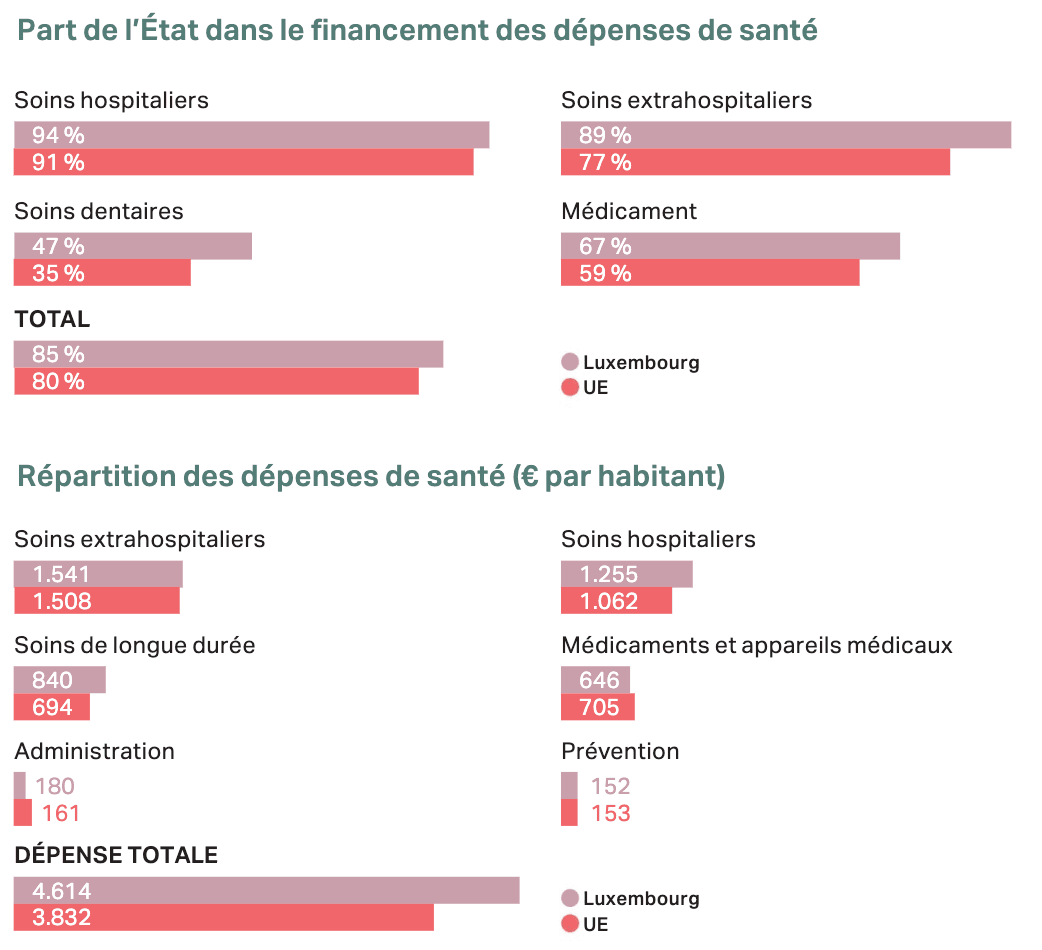
The state’s share of healthcare expenditure and its breakdown per capita. (Infography: Paperjam)
The figure to remember: 75%. This is the proportion of benefits paid for via the direct payment system (PID) in July 2025 (20% in 2023). By that date, around 1,900 of the 2,321 practising doctors had signed up to the PID.
4. Staff shortages, waiting times… An update on the hot issues
Vulnerabilities of the system and reforms underway. Although efficient, Luxembourg’s healthcare system is no less vulnerable. Mainly because of its dependence on foreign-trained professionals. Case in point? Over the next five years, 900 nursing posts will need to be filled. This far exceeds the country’s training capacity. A system that produced just 68 nursing graduates in 2023–2024. As far as doctors are concerned, the situation is identical: the country is dependent on doctors trained abroad. The medical curriculum in Luxembourg currently consists of a bachelor’s degree and three specialist diplomas (DES) in general medicine, neurology and medical oncology. These DES are accessible to holders of a master’s degree. The missing link. The Minister for Higher Education and Research, 
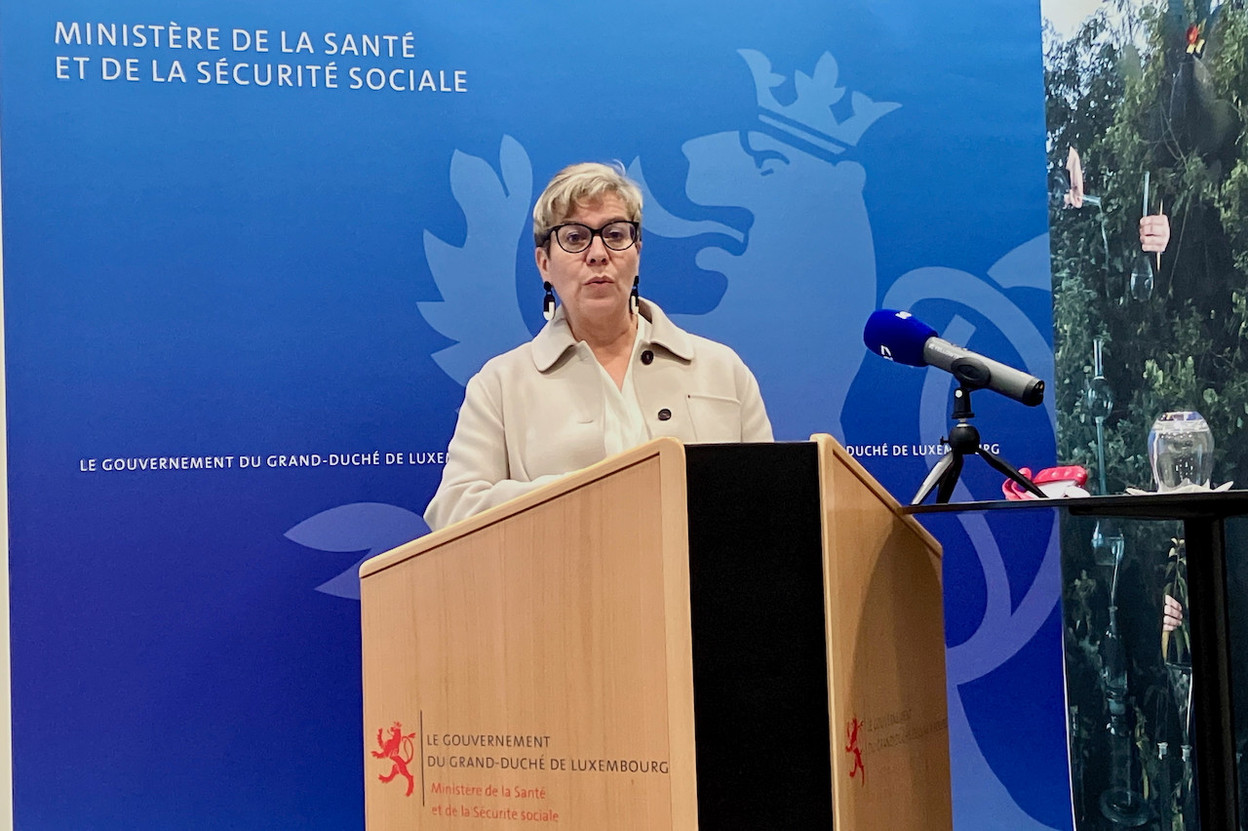
The Minister for Health, Martine Deprez, has some major reforms ahead of her to finalise. After the creation of the Centrale nationale d’achat et de logistique (CNAL), which aims to improve the medical equipment supply system, the project to create a Luxembourg Agency for Medicines and Health Products has just been put on hold on 6 February. Another long-awaited reform is Universal Health Care Coverage (Cuss). Although health insurance is compulsory, part of the resident population falls through the net. This population was estimated at 1,182 in 2021. A pilot project was launched in 2022. An evaluation of the system, as a prelude to enshrining it in law, is expected shortly. This year should also see the finalisation of Bill 8562, which creates a right to forget medical history and should make it easier for cured patients to access banking and insurance services.
The latest project: negotiations with doctors and dentists on automatic agreements between practitioners and the CNS—which sets tariffs and sets the framework for reimbursements. Practitioners are up in arms over the government’s proposals to increase the value of their services.
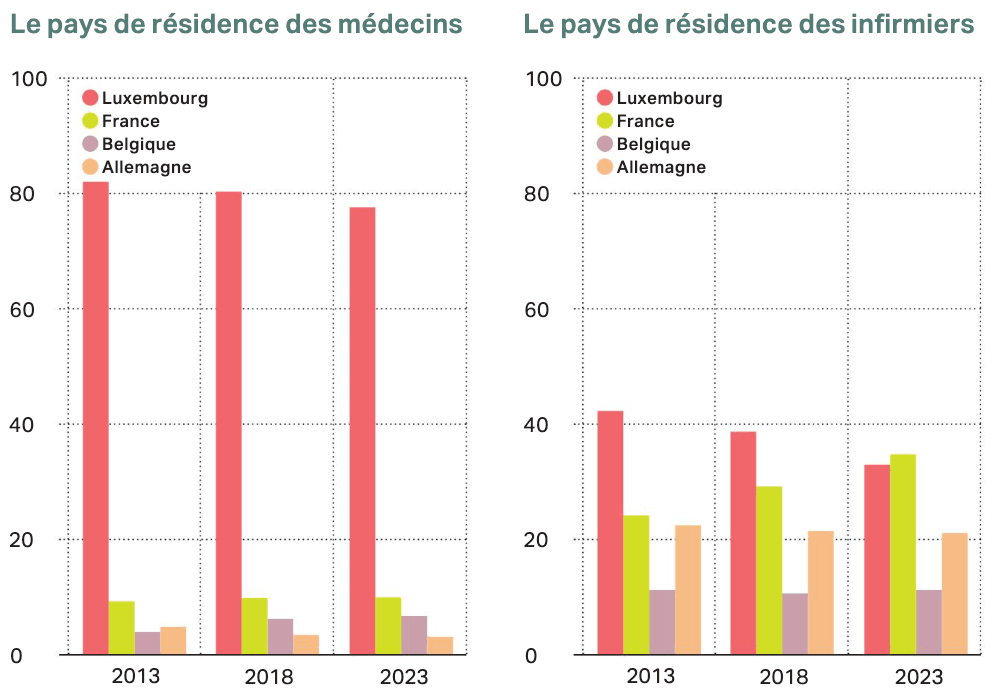
Country of residence of doctors and nurses practising in Luxembourg. (Infography: Paperjam)
The figure to remember: 4. At the end of 2023, Luxembourg had 4 doctors per 1,000 inhabitants (4.3 in the EU). The proportion of general practitioners is 30% (20% in the EU) and the density of nurses is 14.2 per 1,000 inhabitants (8.3/1,000 in the EU). Professionals who often live across borders.
This article was written for the March 2026 issue of Paperjam magazine, published on 25 February. The content is produced exclusively for the magazine. It is published on the site to contribute to Paperjam’s comprehensive archive. Click on this link to subscribe to the magazine.
Is your company a member of Club Paperjam? You can request a subscription in your name. Let us know via club@paperjam.lu.