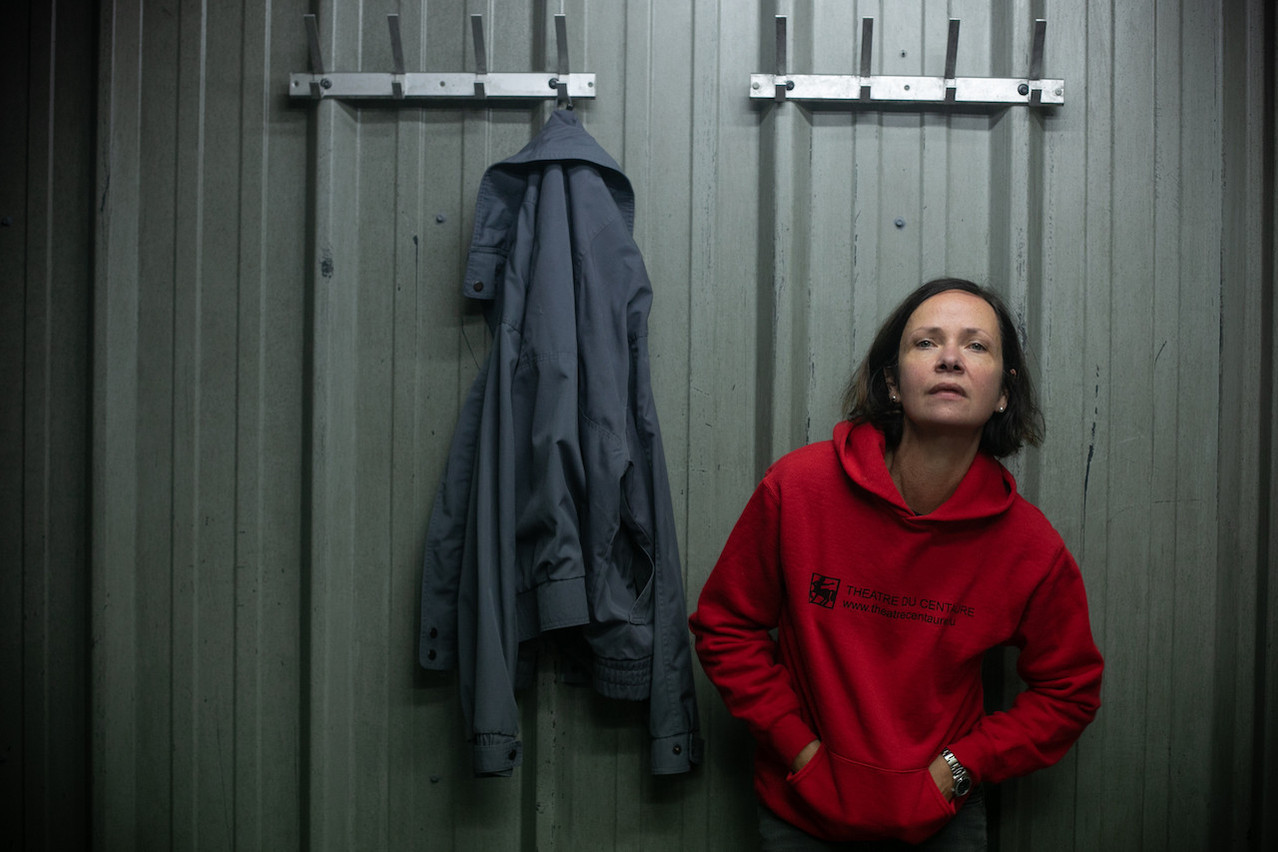
Myriam Muller had first considered doing a play in English when she directed Anéantis, a French translation of Sarah Kane’s first play, Blasted, at the Centaure in 2018. “I thought, should I have done it in English because it's such modern English and English plays are written with so much precision, that you obviously lose something when you do it in French or German or whatever.”
So when she re-read David Harrower’s Blackbird and realised she wanted to put on the play and had the cast of Jules Werner and Jil Devresse in mind, she tried readings with the cast in both English and French. “It was really obvious that we preferred it in English.” As Muller explains, it is not often in Luxembourg theatre that actors can perform comfortably in English.
Indeed, Werner studied theatre in London and has performed here in English, notably at the Capucins in productions of Closer and Design for Living directed by Doug Rintoul. But for Devresse, acting in English is a novelty. “At first, I was a little insecure…but very quickly I just didn't think about it anymore. I just had to work on the accent a little.”
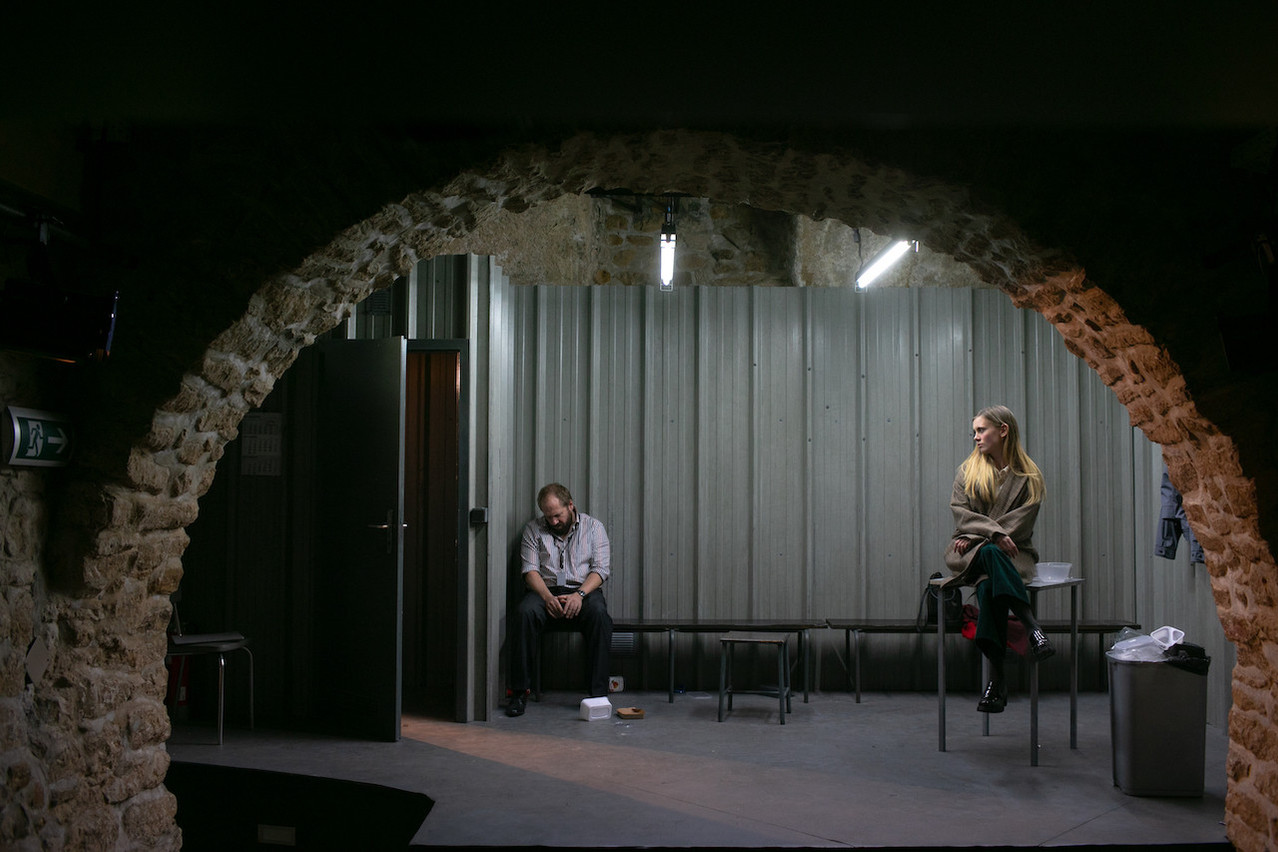
Jules Werner as Ray and Jil Devresse as Una underwent an intense rehearsal schedule. Matic Zorman / Maison Moderne
As artistic director of the Centaure, Muller is aware that she risks losing a portion of the theatre’s regular audience for the English-language production. “Of course there are a few older French-speaking people who don’t understand English.” But she also hopes the decision may attract new and younger audiences to the Centaure, “because young people understand so many languages naturally.”
Not black and white
But the play itself is also challenging. Blackbird, commissioned by the Edinburgh International Festival and first performed in 2005, tackles the harrowing subject of paedophilia but not just from the point of view of the victim. “When I reread the play a year ago, I was surprised at how relevant it still was,” says Muller. “I mean we have the whole hashtag MeToo phenomenon, so it’s a subject we are talking about in society. But Harrower dares to go into the grey zone.”
The tricky part, the interesting part of the play is that you don’t just hear the voice of the woman, but also the voice of the man.

It was this refusal by the playwright to approach the subject in mere black and white terms, as the media often does, that fascinated Muller.
“The tricky part, the interesting part of the play is that you don’t just hear the voice of the woman, but also the voice of the man. And what interested me is, by hearing him, you understand the manipulation, how he functions, the patterns of abuse. By listening to him, you understand the manipulation of abuse. So young women, or young people, can even better avoid being trapped by those kind of toxic relationships.”
It is the confrontation between Devresse’s Una, a young woman in her twenties, and Werner’s Ray, that makes the drama more profound and complicated than merely portraying the suffering of the victim alone. The meeting between the two, some 15 years after they had a “relationship” when Una was just twelve and Ray in his forties, is, in the words of the New York Times, “taut, twisty and provocative”.
The play deals very much with the aftermath, the consequences, of the relationship and the impact it subsequently had on Una and Ray.
Werner explains that Ray sees himself as having been traumatised by the experience. “He did go to prison as a child abuser. And you know, what happens to those people in prison? And so he feels like he’s kind of paid his debt to society and thinks he should have the right to a new life, to start afresh,” says the actor. “But then that’s the big question, whether he has started afresh, or whether he's still kind of perpetrating the same patterns.”
Question of impunity
That question of impunity is a crucial subplot to the play, says Muller. Indeed, while Ray feels he has served his punishment, he feels that Una did get to have a new start. But, as Devresse explains, that is not entirely true. “She can't get rid of what happened, and even with therapy and everything else she tried, she was a victim of sexual abuse when she was 12 years old, and that’s not going to change.”
It is that feeling of hopelessness that leads Una to seek out Ray and confront him when she happens upon a photo of him in a magazine by chance. “I think she doesn't really know what she wants, she just need needs this confrontation because she’s stuck,” says Devresse of her character. “So she hopes that maybe after confronting him, something will change and she can live a normal life and have normal relationships and just live …”
Devresse and Werner both starred in the first season of hit Netflix series Capitani, directed by Christophe Wagner for Luxembourg production company samsa film. But Muller is unphased by any preconceptions audiences may have. “I didn't want to make a coup. Jil was just perfect and Jules was also perfect for the play.”
But she knows that Werner and Devresse work well together on stage, and all three agree that an intense rehearsal period has paid off handsomely.
Blackbird at Théâtre du Centaure (4 Grand Rue in Luxembourg City) opens on 10 November and further performances are on 11, 16, 17, 18, 20, 23, 24, 25, and 27 November – at 8pm (except on Thursdays and Sundays when it is at 6.30pm). Tickets from the theatre website.