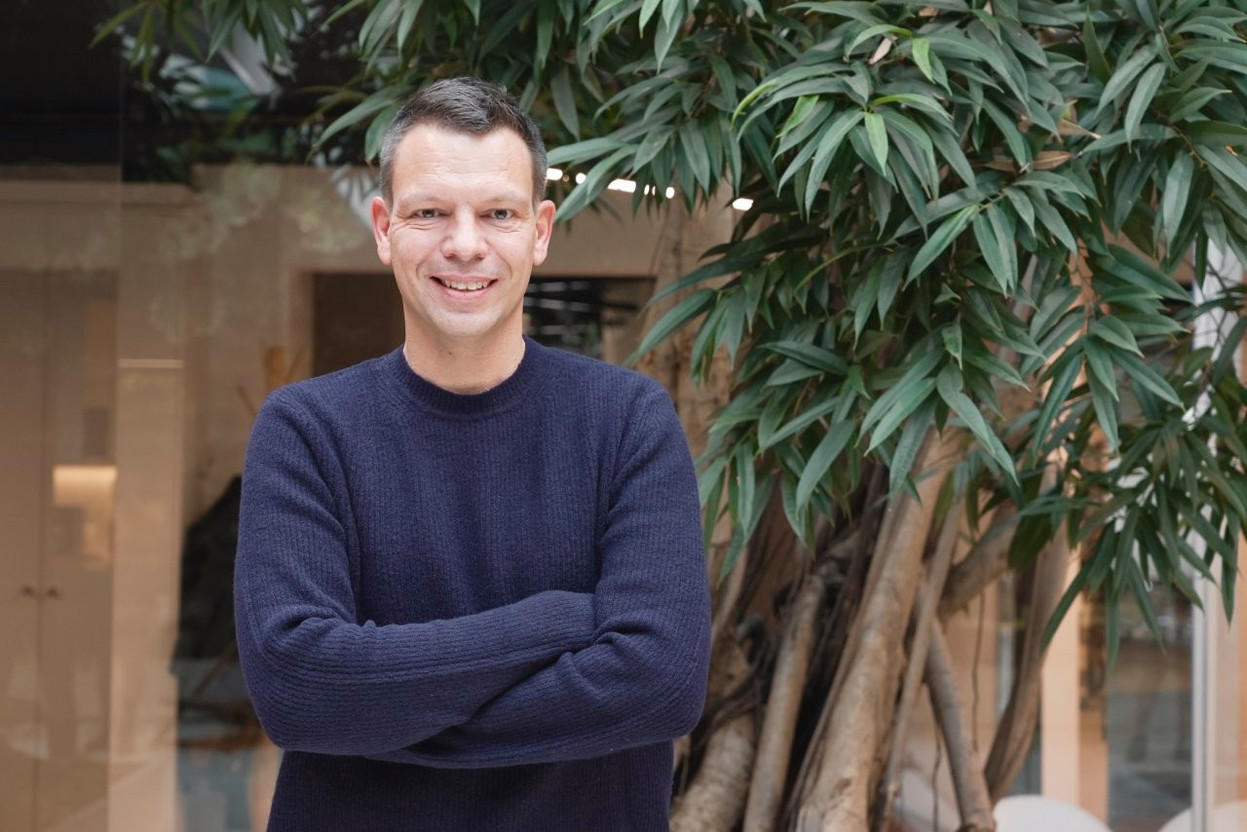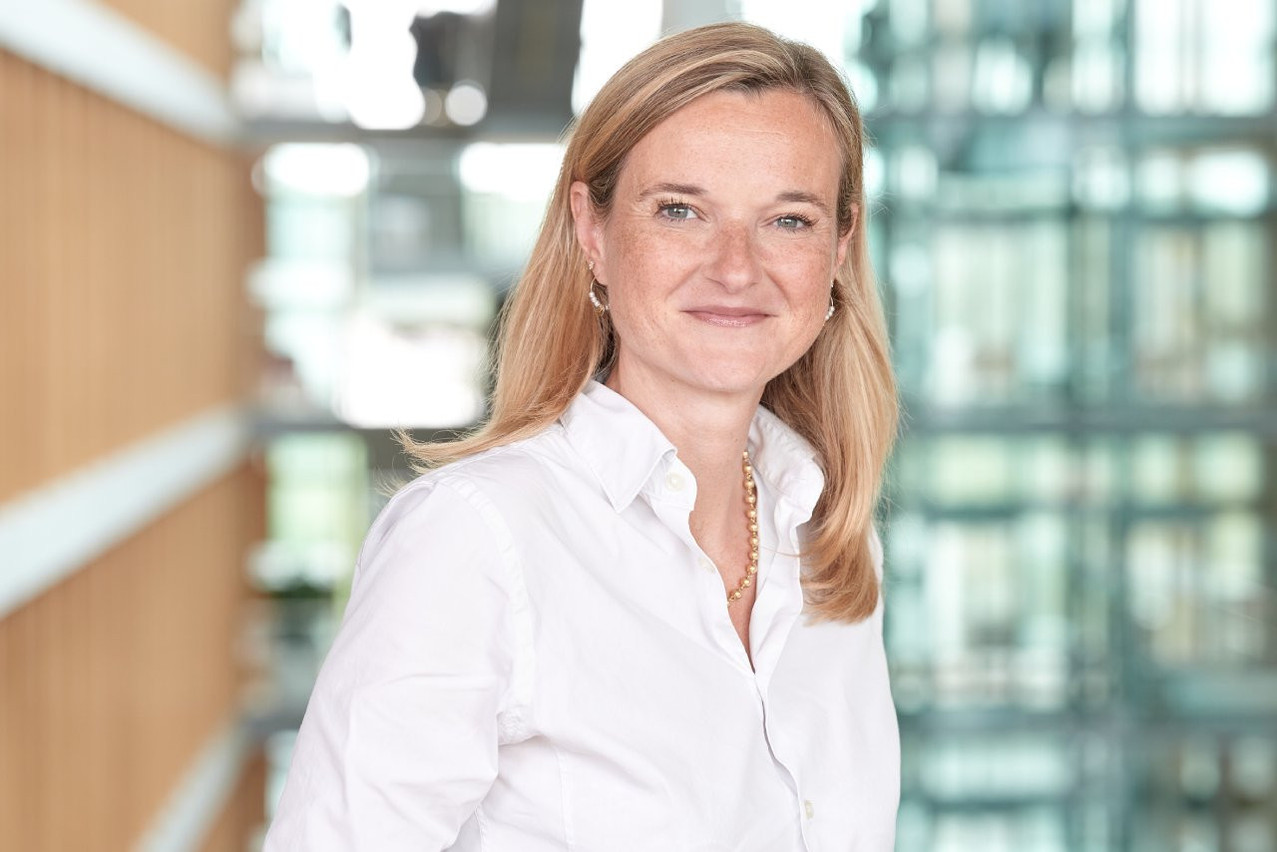
When we talk about proximity management, we spontaneously think of physical proximity. For you, what really creates proximity, beyond the simple fact of sharing the same workspace?

For me, proximity is the ability to create links between people. In practical terms, that starts with getting to know your colleagues. Taking an interest in the person, more than the job, in what they do, what they want in terms of a career, what's going on for them at work and in their lives in general. Creating this closeness means following employees over time, understanding what they go through and not reducing them to a number. We're moving beyond simple physical proximity to relational proximity.
That said, physical proximity remains important. There is no substitute for face-to-face contact. And even at a distance, the fact of seeing each other already adds a lot, because non-verbals, looks and expressions play a major role.
How is this proximity a sine qua non for employees to feel connected, recognised, fully part of'an organisation?
"Because it touches on what I believe are the key ingredients of engagement. I often cite four of them.
The first is being connected. Having access to someone to talk to, a reference person, someone with whom the link really exists. This is psychologically fundamental to fulfilment and commitment in the workplace.
The second is access to information. You can be in contact with someone, but if you don't have the essential information on strategy, priorities, issues, etc., you don't know where the company is going and you can't get fully involved. Conversely, you can have information, but without the human relationship behind it. Both dimensions are necessary.
The third ingredient is trust. Trust in the organisation, trust with colleagues, and vice versa.
The fourth is being valued: feeling that what I do has value, that I'm really making a contribution, and that this is recognised by the team and the organisation.
These four elements are linked to proximity. Physical proximity can help to create and strengthen this bond, but it is above all psychological and managerial proximity that is decisive.
The team leader system plays a key role in recreating 'psychological' and structured proximity, even in dispersed organisations.

In the case of PwC, the'environment is very international. It's a bit of a loaded question, but one that can't be avoided: how do you create, and then maintain, closeness between teams who live and work on different sites, or even in different countries, with cultures that are also very different?
"PwC Luxembourg is made up of more than 95 nationalities. Multiculturalism is a daily reality. It's a tremendous source of creativity and innovation, but also a challenging terrain: language barriers, different communication styles, a relationship to hierarchy that varies from one culture to another, etc.
I'm thinking of the book 'The Culture Map' by Erin Meyer, which I find very enlightening. In it, the author shows how cultures differ in areas such as more or less direct communication, the degree of formality, the relationship to hierarchy... Being aware of these differences is an essential step.
Our approach, at PwC, is first and foremost to look at what brings us together, while celebrating our differences. We have an internal network, Lët'z Connect, run by employees, which organises events to showcase cultural diversity.
At the same time, we cultivate a strong corporate culture, which serves as a common framework. If you come to the Cloche d'Or, you'll see three words on the façade that are dear to us: 'Excellence', 'Entrepreneurship' and 'Walk the Talk'. They don't sum up our entire culture, but they are cultural traits, essential markers. We explain what it means in practice to work at PwC, regardless of nationality.
Then, to manage the geographical distance (satellite offices, teams in Porto, telecommuting employees, etc.), we multiply the channels of communication with our clients.We also train our teams in these new ways of working: how to collaborate remotely, manage time differences, organise information flows and so on.
And then, we have set up a system of team leaders, who play a key role in recreating a 'psychological' and structured closeness, even in dispersed organisations.
In this programme dedicated to team leaders, what are the key skills you're looking to develop?
"In our company, the team leader is first and foremost a reference. Each employee has a team leader, which doesn't mean they work with him or her all the time. They may have different assignment or customer managers, but only one team leader. This role goes beyond 'classic' management and simple activity coordination. It involves building a relationship of trust with the employee, helping them to understand the organisation, its challenges and its changes, acting as a relay for governance and management, particularly during periods of transformation, while also adopting a coaching stance to support individual development.
This is a demanding role. So we're looking for people who can develop this local management and embody the culture and behaviour expected of them. To ensure that they can really fulfil this role, we limit the number of people we support. On average, a team leader supports up to six employees. The idea is to give them the time and space they need to fully play this triple role: relationship, relay, coaching.
The team leader's role is not to replace operational managers, but to complement and stabilise the support.

How do I'ensure that my team leader and my direct manager speak with'one and the same voice? With two different channels, isn't'there a risk of conflicting messages?
"This is a real question. In some professions, the manager and the team leader are one and the same person. In others, particularly audit, employees work on several assignments, with different assignment managers throughout the year. In this case, it is difficult to talk about individual development if the person is only exposed to each manager for a few weeks. Hence the importance of having, in addition, a single team leader who follows the employee over time. The employee receives feedback from their assignment managers, and this feedback is accessible to their team leader, who aggregates it, discusses it with them and ensures this common thread of development.
The role of the team leader is therefore not to replace operational managers, but to complement and stabilise support, where assignment managers, by nature, change more frequently.
What role does HR play in'accompanying and supporting managers in this day-to-day proximity posture?
"Our role, on the HR side, is really to equip and support team leaders. Every year, new people become team leaders, so we have to select them, explain to them clearly what we expect of them and offer them a specific induction programme. You don't become a team leader overnight.
Development programmes are put in place: training, workshops, practical tools - for example, how to conduct a development interview, how to give feedback, how to deal with a tricky situation, how to structure the relationship with your team members, etc.
We also work a lot on the team leader community. The famous '70/20/10' rule speaks for itself: 10% learning through training, 20% through exchanges with peers, 70% through practice. We therefore organise times for team leaders to share their experiences: 'I had such and such a case, how did you manage it?', 'What worked for you?', etc.
Team leaders are also essential relays for what is being decided in the organisation: strategy, developments, changes. So they need to be well informed themselves. We have a performance management cycle with target setting, regular reviews and key moments, and we support team leaders so that they have all the tools they need to make sure these stages run smoothly.
Who can become a team leader?
"We select our team leaders based on certain levels of seniority, depending on the business. We're not going to ask juniors who've just arrived to take on this role, that wouldn't be consistent. On the other hand, experience does not necessarily have to have been acquired at PwC. Someone who joins the company as a manager, with several years' managerial experience outside, can become a team leader straight away if the role fits in with their position. That was my case: I joined 18 months ago and immediately took on this team leader role for my direct team.
For employees who have grown up internally, joined as juniors and then risen through the ranks, it's not a formal call for applications, but a dialogue between the business and HR. We identify people who have an appetite for this role, who embody the culture and expected behaviour, who can be role models and good relays. At the time of the population reviews, we identify potential new team leaders, then approach them to offer them this role.
The aim is to develop real, authentic, individual and intentional proximity.

Should we see this as a promotion?
"It's not a promotion in the traditional sense. It's an additional role, with an additional level of responsibility, which is taken into account in the assessment. The team leader is assessed not only by his or her own team leader, but also through feedback from the people he or she supports. This enables them to continue to progress in this role.
At PwC, you talk about "proximity intelligence". How might this approach evolve with the'IA, asynchronous working, new modes of collaboration?
"You learn as you walk. For me, 'proximity intelligence' is the ability to find the right balance between empathy and investment in the relationship on the one hand, and clear limits on the other - including for oneself.
Bonding is essential. But for team leaders, it's just as important to preserve their own well-being, their own 'harmony' in life. I prefer this term to 'work-life balance', which implies a rigid 50/50. Harmony is what's right for each person at a given moment in their work/life balance. So we're also providing support to help team leaders find that harmony.
At the same time, our hybrid ways of working continue to evolve. In recent years, there has been a lot of talk about 'where': office, home, satellite office, other continent. Today, the questions are more about 'how' and 'when'. With AI, for example, an employee can ask a question to a tool rather than to their manager or colleague. This brings autonomy and efficiency, but it can also reduce certain human interactions. Asynchronous collaborative tools allow everyone to work at their own pace on a shared document, which offers flexibility, but here again, direct exchanges can be reduced. Yet these interactions are still key to creating and maintaining links, and therefore for local management.
Hence, in my view, a major challenge: to be even more intentional in creating links. No longer relying solely on the 'natural' interactions of everyday life, but deciding to take the time to talk to each other, face-to-face, on a regular basis. A more individual, more systematic closeness that is built over time.
Finally, the real challenge, with the'IA, isn't'it to succeed in maintaining, or even building, a proximity that is not artificial?
"Yes, absolutely. The aim is to develop real, authentic, individual and intentional proximity in a world where physical proximity is less systematic than it used to be and is no longer the sole norm.
And it'is it exciting or is it scary?
"I find it exciting. Society is changing, working methods are evolving and tools are advancing very quickly. It's much more stimulating to be on the train and be part of building these new ways of working than to watch it go by."