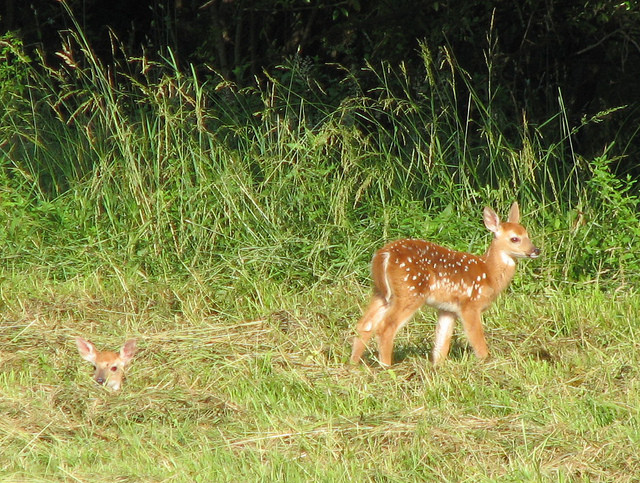
However, the rescue centre (Centre de soins pour la faune sauvage) of the natur&ëmwelt ASBL (the NGO nature&environment) said on Tuesday 2 May that most of these young animals did not need any help, as mothers or the parents had only left their babies for a short period of time (for example, to look for food).
The NGO states that wild animals are better off with their parents than with humans.
Removing them from their natural habitat and getting them used to humans and different food represents a very stressful situation for these young animals and can often end deadly.
Natur&ëmwelt has published some advice for anyone who finds a young animal and wants to protect it.
Birds
If you find a young bird, you should first of all move away and leave it alone. Very often, the parents are already flying around nervously. When they go looking for food, they leave the children alone--some only visit their children to feed them. When birds are getting ready to fly, they sometimes look for food themselves, but are still being fed by the parents themselves. If you have the feeling that a bird is in a dangerous situation (near cats or cars), the young bird can be touched and placed on a tree or a hedge.
Mammals
The same goes for young mammals. Mothers often leave their babies to flee danger--in this case from you, pedestrian, or from your dog, or to distract you from the baby. If you want to make sure the animal is safe, you can go back after 3 or 4 hours to see if it is still there. Most of the time, you’ll find that it is gone. To remove the mammal from a dangerous situation, it should only be touched with a cloth, which you should rub against grass beforehand, and put the mammal in a safe spot nearby. If the mother can smell you, it will abandon its child.
Feeding
Do not attempt to feed or raise a young animal yourself. Raising an animal appropriately for its species needs a lot of experience, knowledge and time.
Furthermore, it is forbidden to raise wild animals in Luxembourg and is seen as animal torture.
Rescue centre
The rescue centre takes care of every wild animal in need. If you are unsure of whether an animal is in need, you should always observe these recommendations, and call before bringing a wild animal to the rescue centre.
Tel: 26 51 39 90
Opening times: May-August) daily from 8-12 and 14-20.30
Website: www.centredesoins.lu