Here are 3 ways to reduce your ecological “food”-print in Luxembourg.
Try vegan/vegetarian restaurants
Meat diets are contributing to the increase in the amount of methane and CO2 emissions, causing the greenhouse effect. To put this in perspective, 14.5% of greenhouse gases are coming from livestock. An Washington Post article states that one person could avoid producing 331kg of carbon dioxide in the atmosphere simply by eating beans instead of a steak once a week for one year.
This is why some people decide to adopt a vegan or vegetarian diet, or simply reduce their overall meat intake. Thankfully, Luxembourg has a wide array of restaurants and bistros offering vegan and vegetarian food options. Beet, Rawdish, Glow,Happ, Victorine, Cocottes, Bloom coffee shop, Nirvana Café are just a few. Adapting to the urban lifestyle, a lot of these places also offer catering services and cooking classes for those interested in learning all the secrets of a tasteful vegan/vegetarian diet.
Go for locally-sourced products
To avoid producing more greenhouse gas by flying in a steak from Argentina, you may decide to buy more locally-produced groceries. Some restaurants in Luxembourg even promote the fact that they work with local suppliers. This is the case of Victorine, Beet,Happ, and Cocottes, to name a few.
You may also want to visit some of the many open markets Luxembourg offers. Diekirch, Esch-sur-Alzette, Bonnevoie, Dudelange, Ettlebruck, Kayl, and, of course, Luxembourg City all have their own markets filled will bio, fresh and/or locally-produced goods.
Consider plastic packaging alternatives
Single-use packaging is gradually being replaced by alternatives. The EU government voted in 2018 to ban the use of 10 single-use products by 2021. This is why citizens of Luxembourg have now come up with various ways to reduce single-use packaging. For instance, restaurants like Victorine sell takeaway items in reusable glass jars or packaging made of PLA (a bio-plastic) which is compostable.
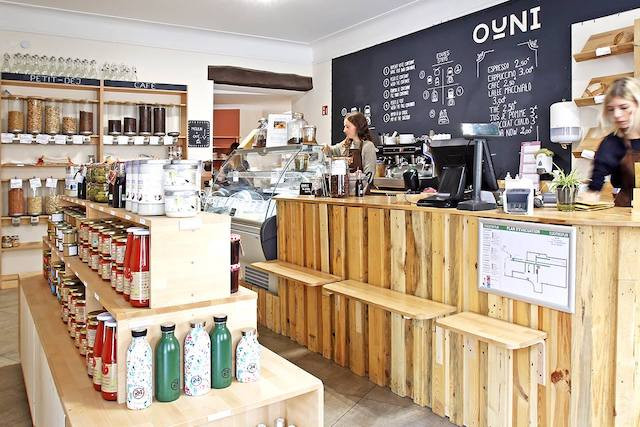
For groceries, Ouni was the first organic and package-free store in Luxembourg City and recently opened a second site in Dudelange. The products are exposed without any plastic wrappers, and it is up to you to bring bags, glass jars and bottles, and other containers to carry your groceries. Containers are also available on site, with a deposit fee.
This could help the issue of domestic waste in the country, given that Luxembourgers were recorded in 2016 as trashing over 600kg of waste per person per year (over 100kg more than Europe’s average).