Jess Bauldry: Was there a marathon in Luxembourg before the ING night run?
Erich François: Luxembourg was the last capital city in Europe to have a marathon. It’s strange. I always ask myself why no one had the idea before. There was a marathon in Echternach, but never the capital.
How has the Luxembourg marathon evolved since the inaugural edition in 2006?
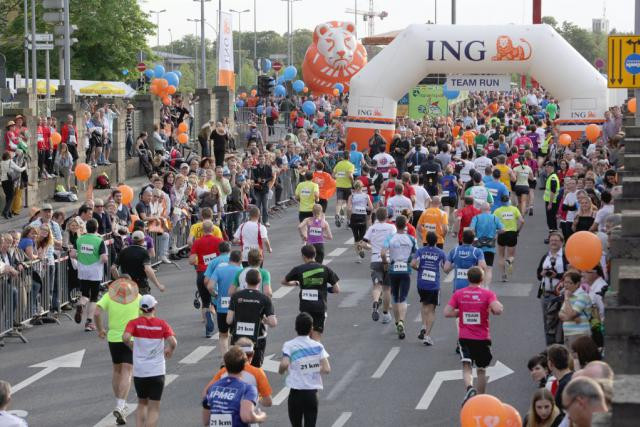
In the beginning we took bets on how many people would enter. The highest bet was 2,800. In that first year we had 6,000 entries. Now we have 15,000. [It’s been] sold out since January. It’s really strange, every year we say ‘let’s take another 1,000’ and still we sell out earlier than the year before.
We had a waiting list this year, but we closed it after one day because we had 2,000 people. This is why my company is called Step by Step because it’s important for me that we have a high quality. We would make more money if we took more runners. But if we don’t have high standards it’s not Luxembourg.
I will be happy when the tram can bring people from the airport to Luxexpo and from Leudelange to the gare. It will be more sustainable and give me more space in the future. With the tram in future on the outskirts, we will be able to take up to 20,000 runners.

Photo: Sven Becker/archives Founder of the ING Night Marathon Luxembourg Erich François
Where do runners tend to come from?
70% of the entrants are non-Luxembourg residents. Our marathon has among the highest population of non-resident runners. I would say 10% come from over 1,000 km away to run.
Why did you choose to end the race on Avenue J F Kennedy and will the route ever change?
If you’re in a small city and you need a start and finish in the same place, you cannot do it inside the city because you cannot get cars and people there. You need a point outside where everyone goes and then they run into the city centre. We started at the Coque for five years. But we couldn’t possibly change the route.
One rule set by the Luxembourg government is that everyone in Luxembourg who has a car and has to be able to go with his car during the event, not only to the marathon. There’s no city in the world where that’s the rule. This is why it’s hardly possible to change the route. Every year we’ve new building sites. The route has to be 42.195 kilometres. We’ve a guy measuring that.
How has construction of the tram helped or hindered this year’s race?
I work very well with the organisers of the tram. So I’m always informed about what they are doing. This year the service Voirie will put down tarmac especially in areas where there are building sites.
They do it temporarily because they like the idea of having a marathon. In future we will never be able to use the tram lines for the marathon because we will always cross it and the tram will have to stop.