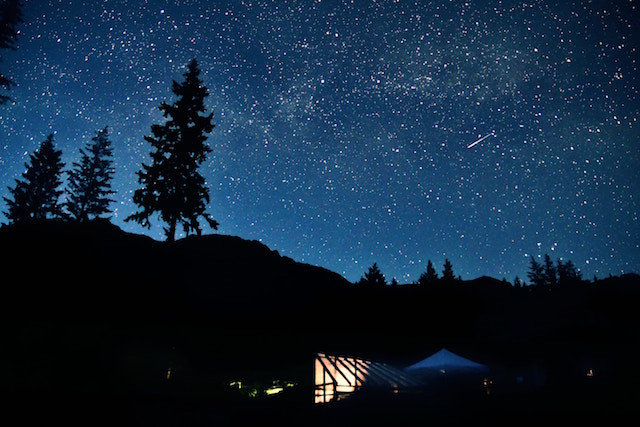
The Perseids occur every year when the earth passes through the debris trail of the Swift-Tuttle comet from 17 to 24 August. This year stargazes have the best chance of catching a meteor or shooting star during its peak on the nights of 11-12 August and 12 to 13. During this time, if the sky is clear, stargazers may be able to spot 80-100 meteors per hour.
The best conditions for spotting shooting stars are a clear dark sky. Because around those dates the planet will approach a new moon, the moon will be a crescent and is expected to set before the shower begins after midnight, making the show even more spectacular.
How to get the most of the Perseids this year
- Being in the northern hemisphere, where the shower is clearest, Luxembourg is ideally located to watch the show. But light pollution can limit what you see. Find a place away from built-up areas with as a little light as possible.
- Lie down. It’s a wonderful show but not worth getting a crick in your neck. Spread a blanket on the ground or take a camp bed, stare at the sky for around 30 minutes to let your eyes adjust and sit tight for a few hours.
- Bring insect repellent. If you’re lying on the ground in the countryside, it will make all the difference.
- Be safe. Don’t lie in the middle of a road. Choose a location that is safe and does not block other people’s access.
- If the sky is overcast or you simply cannot be in a place to view the shower, watch it online here from 11:30pm (CET) on 12 August.
Fun facts
Did you know that the debris cloud of the Swift-Tuttle comet is about 10 million miles wide and 75 million miles long;
The debris trail consists of bean-sized meteors which hit the Earth’s atmosphere at about 35 miles per second;
Most meteors disintegrate at a height of 50-60 miles from the Earth’s surface;
The streak of light stargazers see from the meteors is an effect of the conversion of kinetic energy into heat. The heat strips electrons on air molecules and conversts them into ionized gas or plasma, which creates the trails we see;
The Swift-Tuttle comet measures 16 miles across;
The first record of the Perseids shower was by a Chinese skygazer in 36AD.