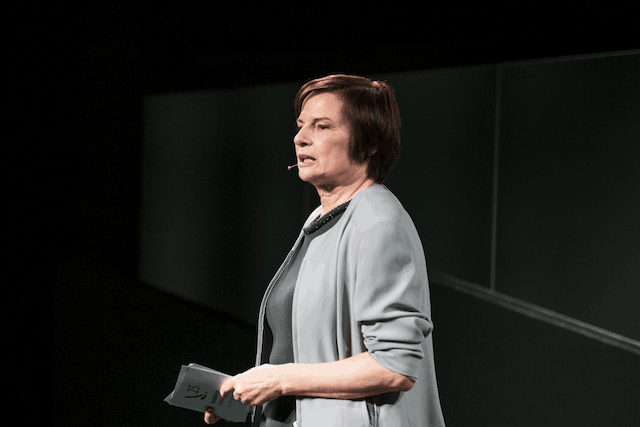
Jess Bauldry: In 25 years of working to prevent and combat cancer in Luxembourg, what has been the most ground-breaking moment for the Cancer Foundation?
Lucienne Thommes: I think the most ground-breaking when it comes to prevention work was the anti-tobacco law of 2006. It was the first law we had that prohibited smoking in restaurants. We spent a lot of hours and years lobbying to get at least one anti-tobacco law. We’ve a little industry here and they were lobbying from their side. At that time, most of our prevention was in tobacco control and to have a law forbidding smoking in restaurants was a really big step in the right direction. Changes followed that became more restrictive.
Considering patient support, we’re proud of the first relais pour la vie [relay for life] that we started in 2006. In the beginning we were afraid that no one would show up. At that time you would never say “I have cancer”. You would say that you’re ill. Then you would read in the paper that he died after a long battle with illness. I think the relais pour la vie at that time was very important because it stopped cancer from being a taboo and showed cancer patients they were not alone and that there was support for patients and people were ready to help.
Cancer was responsible for over a quarter of deaths in Luxembourg in 2016 (according to government figures). Lung cancer claimed the most lives. What steps does your foundation think the government should take to help reduce lung cancer?
The most important step that’s not being done is for the government to dramatically increase the price of cigarettes here in Luxembourg. That’s the only solution. The World Bank says that with such a measure, just increasing the cost by 10% would help reduce smoking. It would stop young people from starting to smoke because it would make it too expensive. That’s our main goal, that the children who come into the world today will be a no-smoking generation.
We’re lobbying a lot at the health ministry and the minister is well aware of the measures to take. But, unfortunately, the finance minister is less enthusiastic because our cigarette prices are very low compared to neighbouring countries and so we get a lot of money from them. We’re probably the only country where cigarette taxes bring more money in than the cost to the public purse of deaths and health problems related to smoking.
Today there are several cancer fundraising and support organisations in Luxembourg. In your view, what is still missing from the cancer research, treatment support and education landscape in Luxembourg?
For patient support, we see that having cancer can create substantial financial issues. We get more and more requests for financial support from patients. In Luxembourg they have a lot to pay. It’s often small things but if you don’t earn a full wage, it’s difficult to cope financially. Then there’s the problem of taking a break from work. It will become increasingly important in coming years because treatment is getting better so people can go back to work. But it’s not easy for them. We still have to address this.

The relais pour la vie, pictured in 2011, started in 2006. Photo: Luc Deflorenne/archives
Cancer research is an ongoing process, which we strongly support.
What we would like to see is a single hospital where all of the cancer patients are treated here in Luxembourg. Not every cancer is treated in every hospital. For us it’s important we get at least one cancer hospital or one network where the specialists get together.
What do you expect to be the next cancer challenges or trends and how is the Fondation working to combat them?
There will be huge changes in patient care and everything to do with cancer treatment. Artificial Intelligence will bring a lot of changes over the next 10 to 15 years. There will be changes in the landscape of cancer support for oncology. We will see more and more people get cancer because we will live longer. And we will have fewer doctors, that will be a problem. Prevention will get increasingly personalised: everyone will check their own risk factors. I think everything will get more individualised when it comes to prevention and the same for treatments.
One other challenge will be the price of treatment. We have to look into it and get the best treatment for the best added value.
What does the Fondation Cancer hope to achieve in the next 25 years?
We will have been successful if there’s less cancer, so for us prevention will still be important. Supporting research will still be important for us. We hope that treatments will improve and that people will become less frightened of the diagnosis of cancer. Perhaps you won’t be cured but you will still be able to live a long time with cancer, like it is possible with diabetes. Quality of life for people living with cancer, that’s something we want to achieve.
Then patient-led centres and helping the patient to cope better and having some changes in the social environment, for example better reimbursement for some medicines.