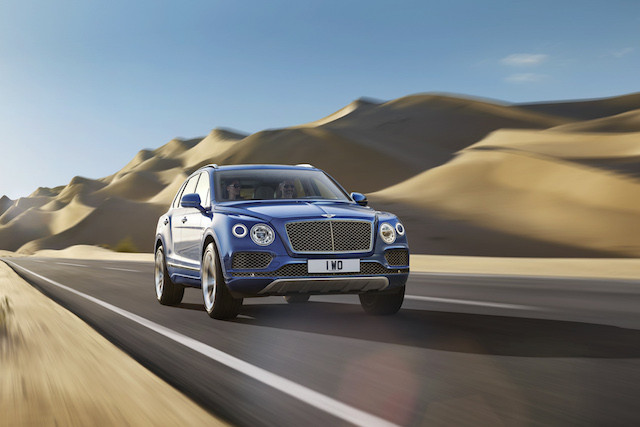
Over the past 15 years or so, we’ve seen a steady rise of SUVs and other crossovers all over the planet. That is to say, bigger cars than hatchbacks or saloon cars, usually with off-road vehicle features like raised ground clearance and ruggedness, and available sometimes with four-wheel drive.
Those are not proper 4x4s like Land Rovers or Toyota Hilux, vehicles that have been made to deal with any kind of rough terrain and that can be used as a real workhorse in every situation. They are rare enough around to be ignored here.
We are talking about SUVs; the ones that will never do a bit of off-roading--which is what they have been partially designed to do. The ones whose drivers are too scared to scratch the shiny paintwork on the school run. It’s a shame there are no mud paths between Belair and Belle Etoile, really.
Why are they so appealing? Especially here in our tiny country, with such small roads and small parking spaces? Is it because they look bigger than regular cars and people have a feeling of security, or maybe they just want to be physically sitting higher up on the road? Is it a social statement saying, “my car is bigger than yours, now get out of my way”?
Some say that you have a better all-around visibility then in a normal sedan or hatchback. It may be slightly true if the car in front of you is smaller, but not if you have a SUV--which is more than often--in front of you.
A lot of people in city centres fall into the trap of buying one of these huge vehicles and they don’t know or they forget about some key factors when it comes to cars: size matters. The bigger a car is, the heavier it will be. And weight might be the biggest enemy of any car.
The heavier a car is, the bigger the engine must be. To move its excess mass and retain some decent performance, the engine must be more powerful which will consume more fuel, pollute more and be more expensive to buy and insure. If a car is bigger and heavier, it will need bigger tyres to fight the effects of its mass in acceleration, braking and cornering (and they will be more expensive to replace).
Servicing costs will be higher too: the heavier the car, the bigger the servicing parts (like brake discs or braking pads) will be due to the extra weight.
Performance will be reduced. Not only in terms of how fast the car is, but how well it would perform in emergency cases. If the vehicle is heavier, it will never be as nimble as a smaller car, so avoiding obstacles can be much harder. And the handling of some of those SUVs are absolutely dreadful; comfortable maybe, but you cannot sense anything about what’s happening on the road. But by far the biggest inconvenience is the increased braking distance. The more weight, the bigger the distance. In some situations, all you need is to brake half a metre less to save someone’s life.
We are not in a communist country where everyone should have the exact same cars (what a boring world) and banning those vehicles would be absolutely ridiculous and wrong. If an SUV is your dream car, good for you, buy it. But people need to think a bit further ahead before buying one these giants, and maybe they’ll find out that there are much better alternatives. Some estate cars are cheaper, faster, more economical and friendlier to the environment, as comfortable and as practical, but crucially handle and brake much better.