For the first time ever, the Cour des Comptes (comptroller and auditor general) has issued a report on the Luxembourg army’s budget and staffing, and it is not flattering.
From dilapidated barracks to badly planned investments, and the absence of strategic planning in defence spending and recruitment, the report (in French, PDF) gives a stern assessment on the state of the army and national defence, noting a neglect by politicians of all colours over the past two decades.
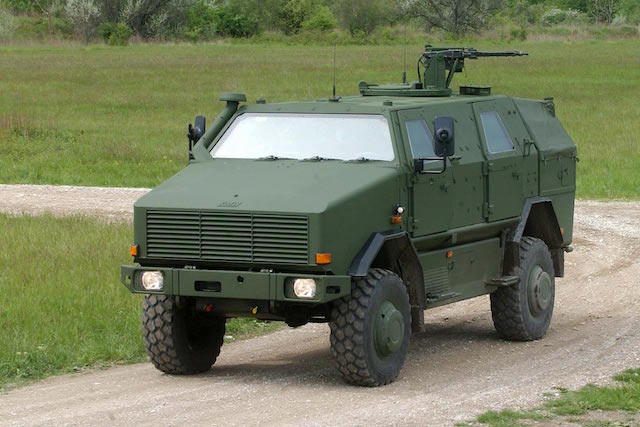
Let’s start with investments. In 2014, Étienne Schneider, the defence minister, noted that the army’s equipment did not align with its needs. The military owned 48 Dingo armoured vehicles, when 20 would have been enough, and there was nowhere to house them all. There were not enough trained personnel to operate them, and there was no space for the newly acquired Dingo simulator either. Two years later, the Dingo simulator still has no dedicated building even though it has been delivered. In its official response to the auditor’s report, which was published in late October, the Defence Department said the building should have been finished that same month. In mid-November, work was continuing.
In 2005, an A400M military plane was ordered, yet reported delays mean that the estimated delivery date is now in 2019. The Defence Department responded that there would not necessarily be any delivery delays and cost overruns with the Airbus order. At the same time, Luxembourg has agreed to finance part of a military airport to house its plane in Belgium; but the Belgians have not even decided on the site of that facility.

Étienne Schneider, the deputy prime minister and defence minister, speaks with Lt Gen Wolfgang Wosolsobe of the European Union Military Staff during a meeting of EU defence ministers in Brussels on 17 November 2015. Photo: European Council
Some buildings in the barracks on the Herrenberg in Diekirch are in an advanced state of dilapidation. The report said that renovations should be speeded up to give personnel a modern and adequate infrastructure to work in: the attractiveness of the army is at stake. In terms of recruitment, the army is doing badly and barely manages to maintain 2007 levels.
To fulfil Nato obligations, the current government has pledged to increase defence spending from 0.4% to 0.6% of GDP by 2020. Its objective has been to favour investments which have a positive economic effect on Luxembourg from 2016 onwards. However, the Military Equipment Fund has dedicated €328m in 2016 for “other spending to increase military efforts” which does not list a single specific investment. The Defence Department argues that the projects will be identified as the planning effort develops, and in line with evolving bilateral and international needs.
Finally, the “white book” promised by the defence minister in 2015 on Luxembourg’s defence policy is still not published; the one from 2014 was binned a year later for being outdated. If a new white book is published, it would increase transparency on defence policy and would inform the public and parliament on what the government’s strategy actually is. Schneider said that the environment has changed and the Defence Department has employed more staff to produce a new strategy adapted to the changed geopolitical environment.
This article was first published in the Winter 2017 issue of Delano magazine. Be the first to read Delano articles on paper before they’re posted online, plus read exclusive features and interviews that only appear in the print edition, by subscribing online.