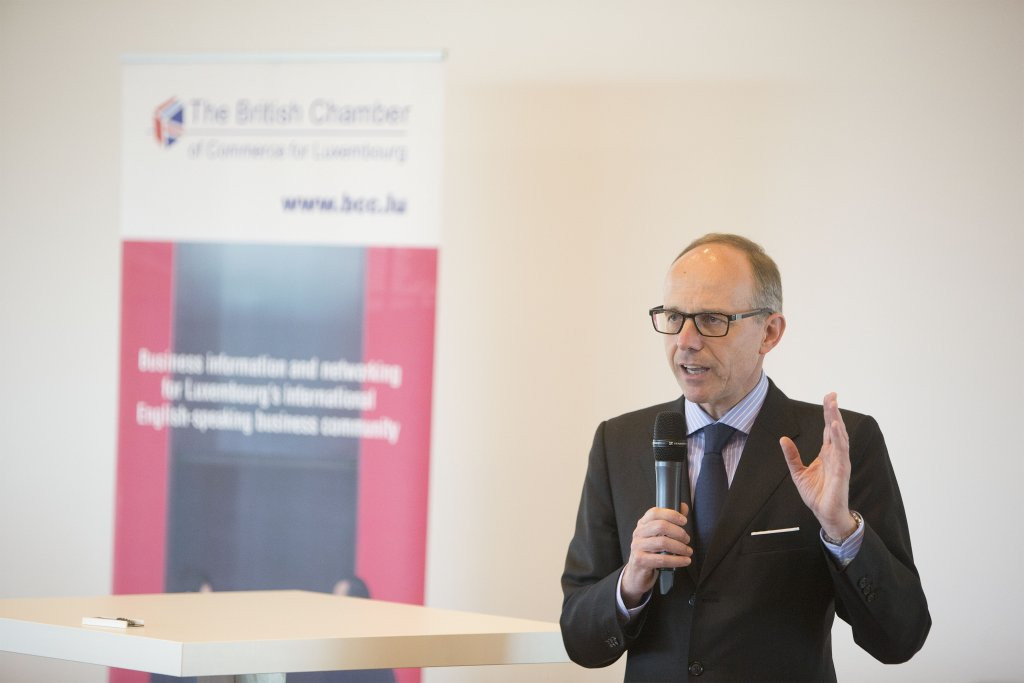
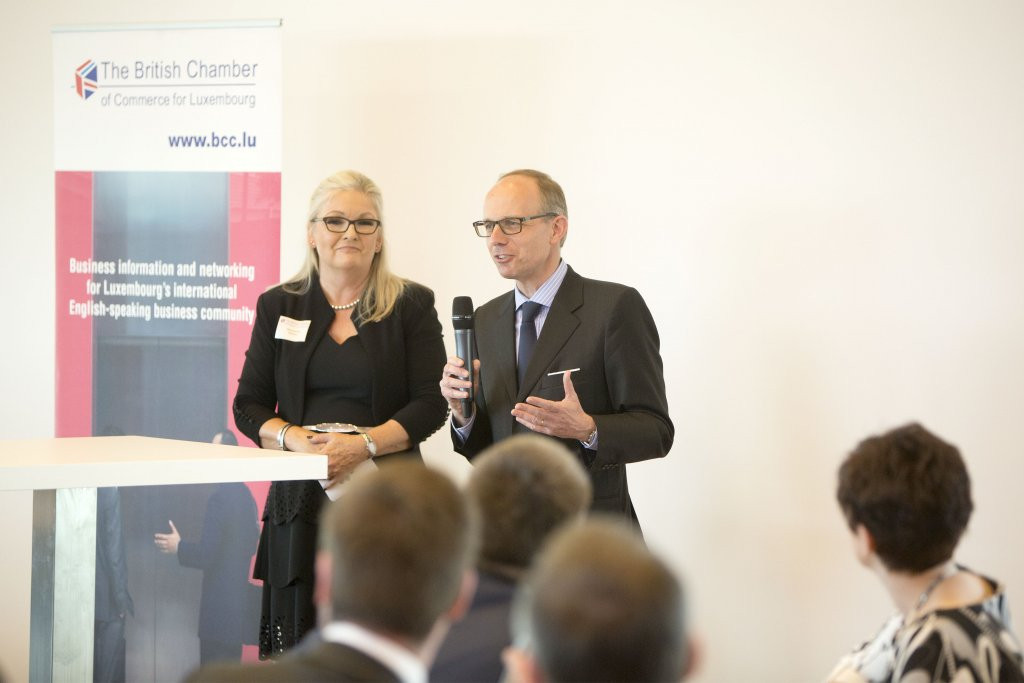



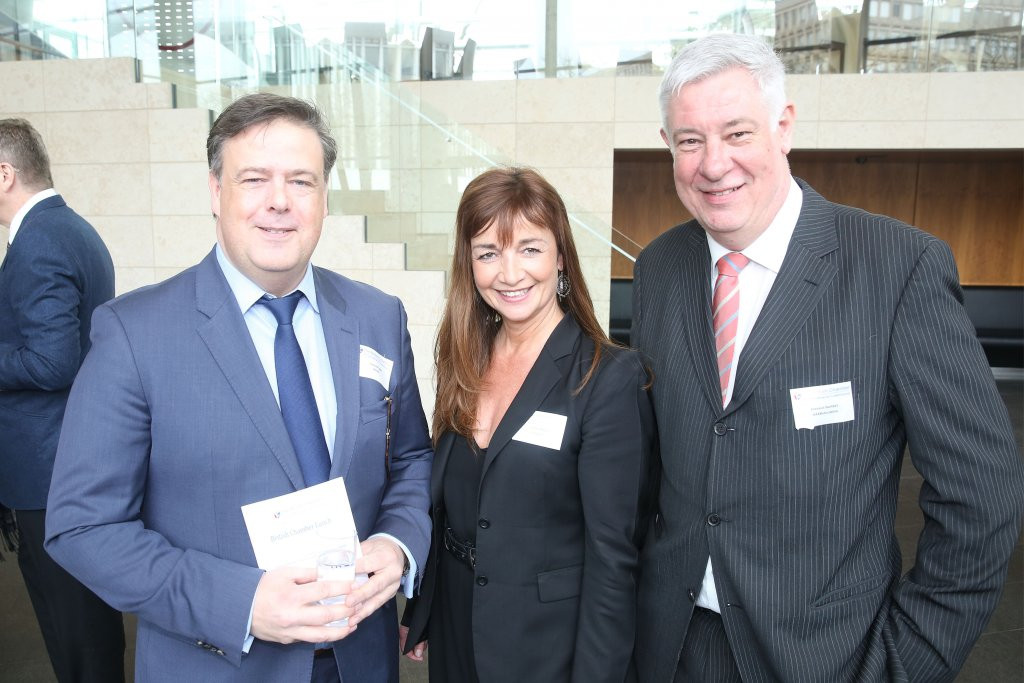




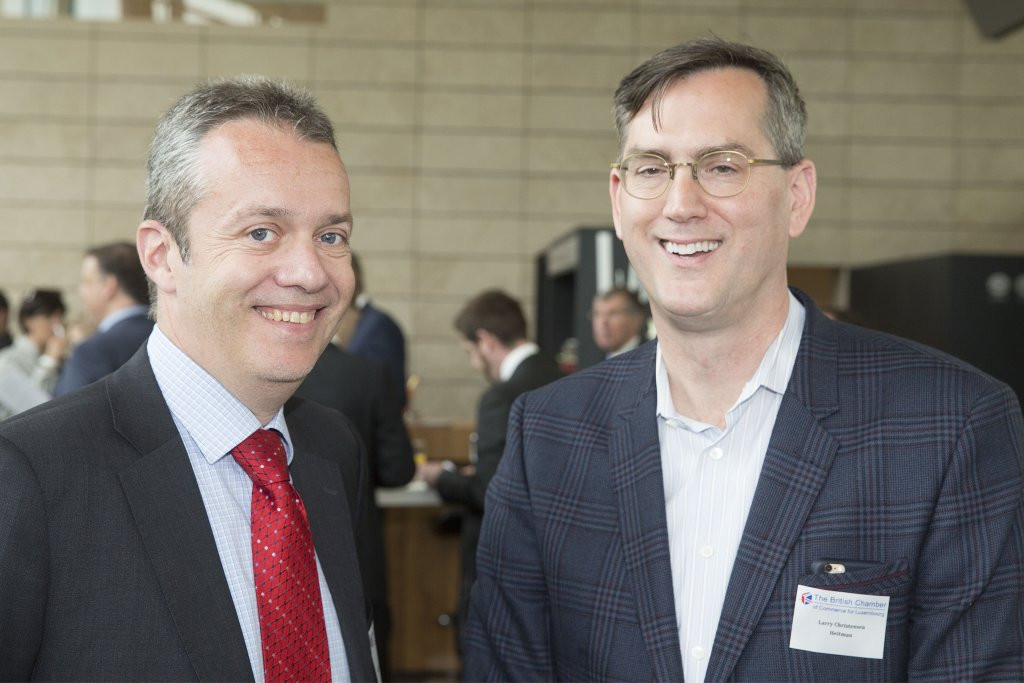


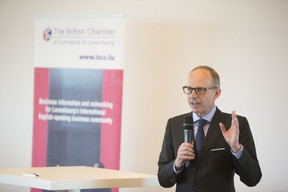
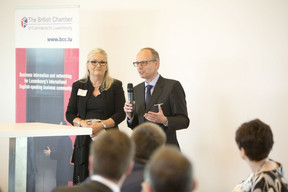
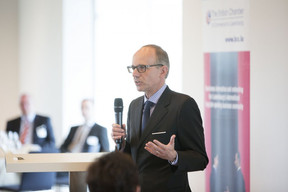
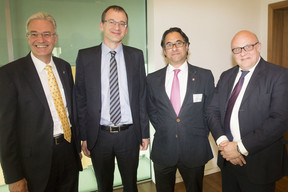
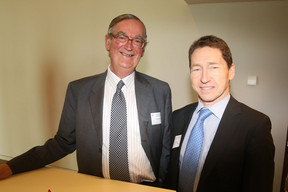
If, as former British prime minister Harold Wilson claimed, a week is a long time in politics, then two and a half years should be an eon. But former finance minister Luc Frieden seemed to turn back the clock during a speech to the British Chamber of Commerce for Luxembourg on Friday. Frieden addressed the chamber on a number of occasions while in cabinet, but this was his first public appearance in Luxembourg since returning from a two-year stint living in London, where he was vice chairman of Deutsche Bank--a role he took up after resigning his seat in parliament in September 2014.
His return to Luxembourg half way through the current government’s term of office has been viewed by some commentators as a sign that Frieden is considering standing for the CSV opposition party in the next election. But there was no hint of that during a speech that addressed his thoughts on the future of European integration, using the 1946 Churchill quote ‘Let Europe arise’ as his title.
The speech was one in a series that the British chamber is hosting ahead of the UK referendum on its future in the EU--the chamber has already heard Nigel Farage of Ukip and will next month be addressed by Paddy Ashdown of the European Movement.
Frieden reminded his audience that the EU was formed to foster peace and prosperity. The former has been taken for granted, he said. “That was different for the generation of our parents and grandparents, but we have been living in peace for the past 70 years.”
Focus on right investments
However, Frieden admitted that prosperity has not been achieved, and cited the 25 million unemployed in the EU as one of the reasons why it is easy to see why some people have given up hope in the European project. “Nevertheless, I believe that Europe has a lot to offer and has a lot of possibilities.”
Growth is too low and the crisis is still with us and the investment climate is not good, he said. However, he thinks Europe provides the opportunities to improve growth, but that both companies and governments need to act to stimulate this. “We need to focus on the right kind of investments.”
This includes digitalisation and R&D--he called for tax breaks for research. “That is probably easier to achieve than to wait for governments to do it [invest in research] or give subsidies to companies.”
He also called for more movement of people to stem the rise of unemployment, especially when it comes to highly qualified people. “Most people stay within their borders. We have to encourage people to move to places where they are needed, both for people who are in jobs and for the unemployed. Some kind of Erasmus programme, as we have it for students, might be necessary for researchers, for highly qualified people might be necessary even for those who are unemployed.”
Speak positively
Frieden said that politicians--and especially politicians in the UK--are often not “courageous enough” to speak positively about the EU. They fail to talk about the less spectacular decisions of key importance, but rather focus on the disagreements. From Jack Straw to George Osborne, Frieden said that British ministers did an excellent job for the UK in Europe but that they didn’t speak about it. “What [British prime minister] David Cameron now says, that Britain will be stronger, safer, better [in the EU], he didn’t say over the past five years.”
As for the leave campaign’s arguments that the UK could be like Switzerland or Norway if it opted out of the EU, Frieden explained that many of his Swiss ministerial colleagues seemed frustrated that decisions that affected Switzerland were being taken but that they could not participate.
He hopes that the British people will vote with the remain campaign to stays in the EU, for the good for the union and for the good of the United Kingdom. “It is an illusion to think a country can be independent and sovereign in an interconnected world.”