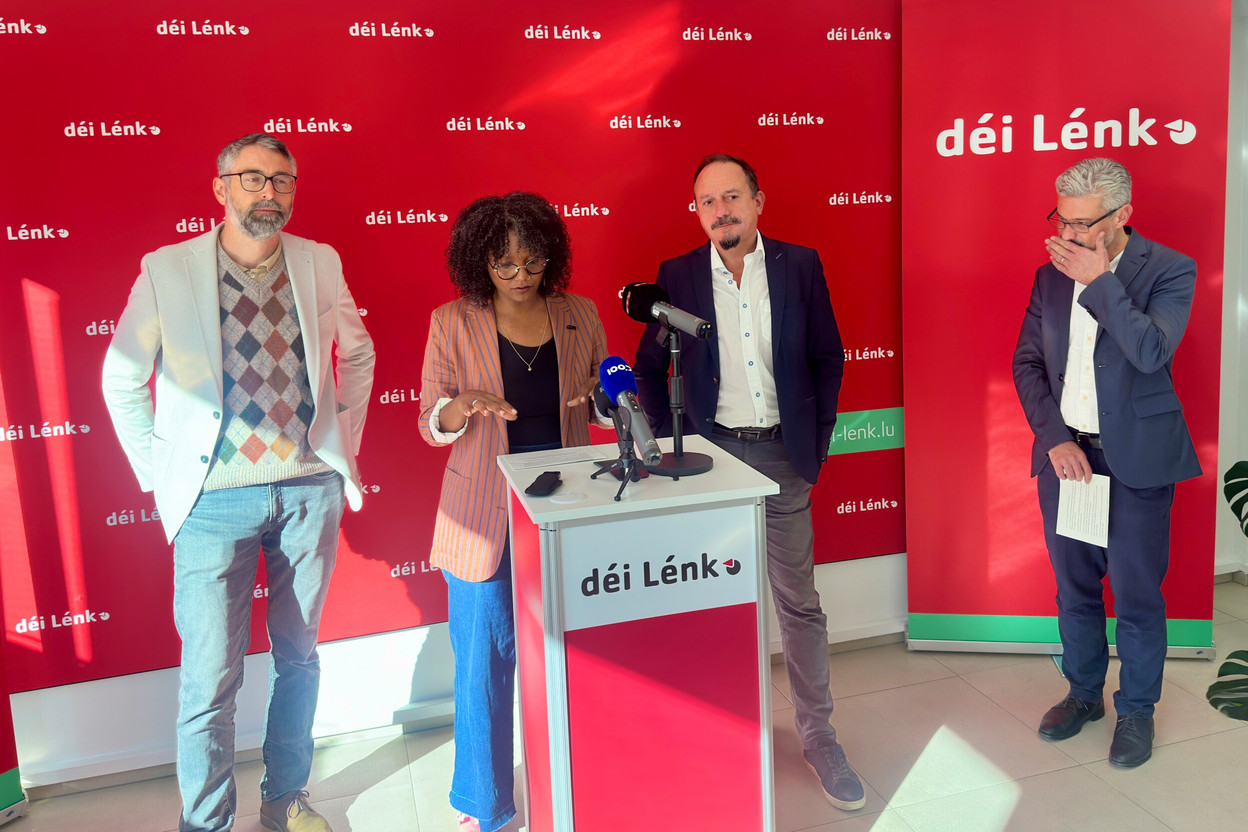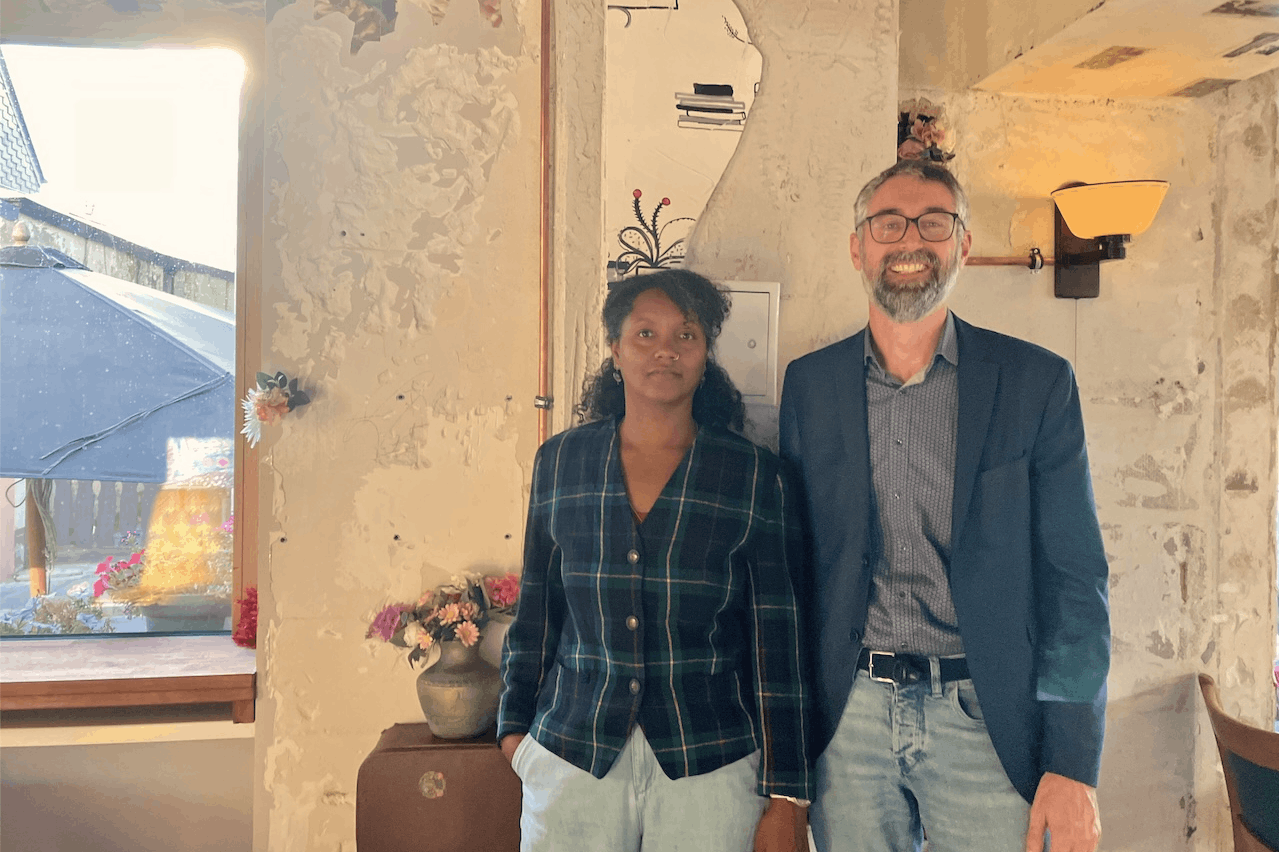
To enter the House without distancing oneself from those who have no voice there. That is the shared ambition of 

For Gary Diderich, this conviction has long justified his focus on civil society. Having become involved in environmental protection at a very early stage – first at local level, then at national and European level – he gradually broadened his campaign to include social justice, peace and an alternative form of globalisation. After a spell with the Young Greens, he chose to distance himself from party politics for around ten years.
“I tended to believe that change comes from the grassroots,” he explains. His return to party politics began to take shape following the 2005 referendum on the European Constitution. Within the ‘no’ camp, he identified a progressive current that was critical of the economic direction of European integration, but which was under-represented in the Chamber. When déi Lénk asked him to stand in the 2009 elections, he accepted. This was followed by the establishment of the Differdange branch, a local council seat and the role of spokesperson.
From culture to the fight against discrimination
For Ana Correia da Veiga, her commitment initially took the form of voluntary work, centred on promoting Cape Verdean culture. Cookery workshops, dance and cultural transmission: the aim is, in particular, to enable young people to reconnect with their roots. This work led her to meet other organisations, then to train in peer education and to work with young people on issues of discrimination and the mechanisms of exclusion.
Politics thus builds on the work carried out on the ground, working directly with people. And, in her view, her parliamentary mandate should enable her to give that work greater reach. Being an MP facilitates access to institutions and provides the means to take action, but it also means keeping ‘one’s feet on the ground’.
The two elected representatives have announced monthly drop-in sessions to hear about the difficulties faced by members of the public: education and childcare for Ana Correia da Veiga, and housing for Gary Diderich. This is a way of bringing real-life situations into the political debate. Gary Diderich emphasises that parliamentary responsibility involves listening, but also ‘amplifying the voice’ of the public.
Children and housing as priorities
Ana Correia da Veiga intends to focus her efforts on education, children, young people and the family, which she regards as closely interlinked issues. She takes a critical view of the Frieden government’s family policy. She believes that financial support is not enough when the cost of housing eats into the support provided to households. She also wishes to shift the debate towards the time parents have available for their children. This issue ties in with déi Lénk’s call for a reduction in working hours.
Gary Diderich, for his part, places rent caps at the top of his list of priorities. He wants to revive the bill already tabled by his party, convinced that such a measure could have a direct impact on household spending. His programme, however, goes beyond rents: it includes bringing vacant properties and unused building land back into use, developing affordable housing and setting up a public construction company. According to him, the latter would help retain skills and the workforce in a sector facing difficulties. Both elected representatives also advocate professional support for housing co-operatives, going beyond simply making land available.
A new generation being groomed behind the scenes
The challenge now is to turn these priorities into results with two seats in the opposition. The new MPs are calling for the ability to scrutinise government action, but also to propose alternatives and build majorities on certain issues. Above all, they reject the idea that the rotation would mean starting their work from scratch. Ana Correia da Veiga has worked as a parliamentary assistant and is familiar with both the issues and the procedures. 

“Now they’re in second place and we’re in first,” she sums up. Gary Diderich sees this arrangement as an opportunity to “start afresh twice with all our energy”. The handover brings new faces and shifts the priorities. It is now up to them to show what their experience on the ground can contribute to parliamentary work.