(To our readers: Paperjam’s editorial team spent Thursday and Friday in Dudelange, meeting the political, social and economic players in this municipality of 22,000 inhabitants. This article is part of that “concentrated” approach. We hope you enjoy reading these articles.)
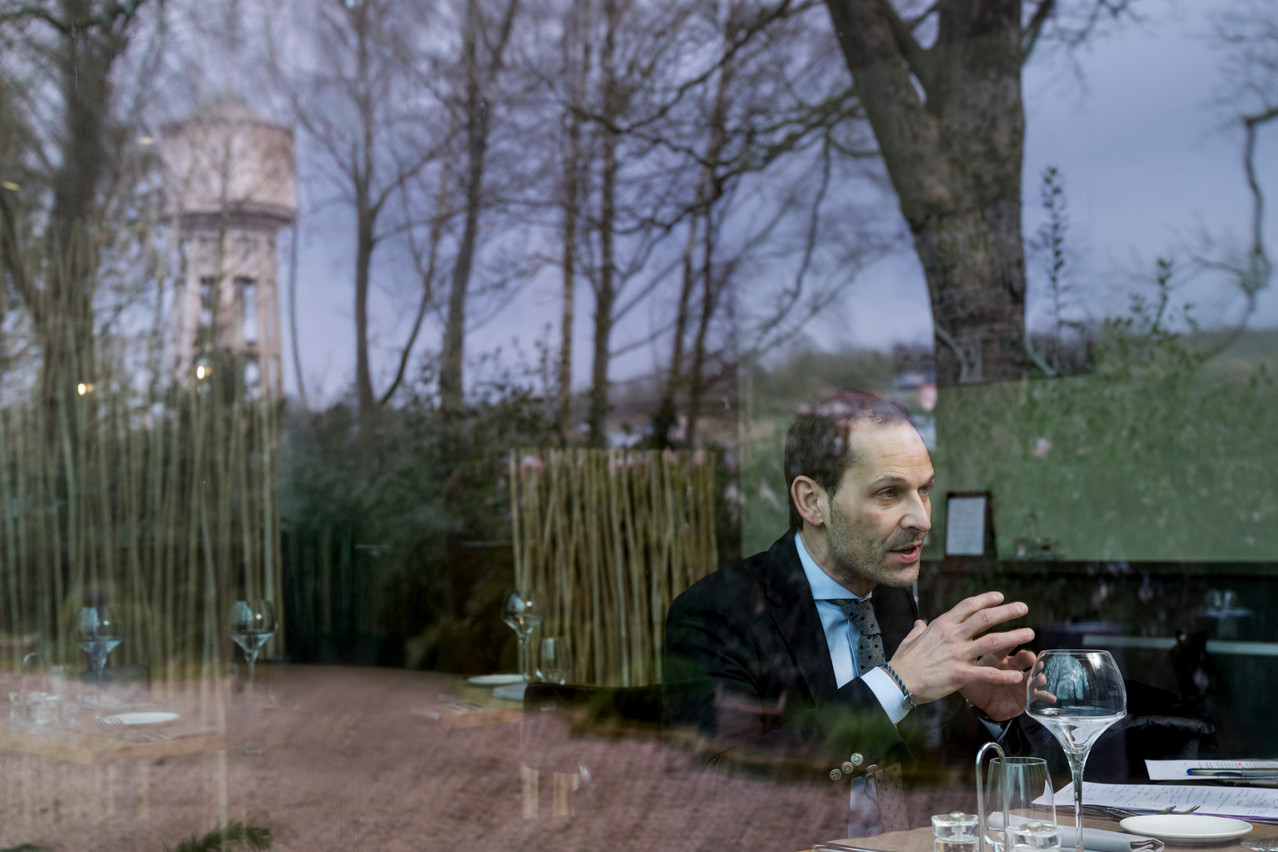
As mayor of Dudelange, 
The regional branch of Adem? “We defended it tooth and nail within the local council,” explains the mayor. “Dudelange’s vocation is to be a centre for regional development. We have, for example, a regional cultural centre, a regional library, a regional music school and a branch of the national health fund. To take Adem away from us is to deprive ourselves of one of the pillars of this vocation. It would mean sacrificing all the collaborations and synergies we had put in place.”
It’s a setback--with the tacit agreement of the local CSV--but one that has encouraged him to continue developing his town’s regional vocation. First by attracting new government services, but also by developing existing ones. He intends to take full advantage of the development of the Neischmelz site, a former industrial wasteland that is giving way to a new district. In the coming months, Dudelange will attract the Centre national des collections publiques--a place open to the public where the works of Luxembourg artists will be grouped together--and regional branches of the direct taxation, basic education and international protection departments. Coworking spaces for government departments will also be developed.
Biancalana also intends to take advantage of existing infrastructures such as the National Health Laboratory and the research activities that go with it, or the CFL multimodal hub. “Our challenge is to connect the city with government services and also with businesses. We need to bring all these players together so that they can take advantage of the municipal services that we offer as a city--trade, gastronomy, public and municipal services, leisure activities.”
Economic diversification on all fronts
Against this backdrop, the closure of Liberty Steel has left a bitter taste in his mouth. “We can only regret that all the promises that were made in terms of development and investment have not been kept. The site’s potential has not been exploited. The country has lost all its specific knowhow and production.”
But this “human tragedy” should not obscure the fact that Dudelange is an industrial town. As a regional hub, the municipality--in partnership with the state--is seeing its business parks develop. “Industry remains an important pillar for the town. We have ongoing discussions with the players--Ampacet, Eurofoil and others--to find out about their concerns and seek solutions.”
This desire for economic diversification is also reflected in the town’s commercial policy. In Dudelange, the percentage of empty commercial premises is 6%, compared with 11% nationally. The town has set up a city manager and, faced with empty commercial units, is taking the initiative of renting them out itself so that they can be sublet, mainly to innovative activities or to fill gaps in the commercial offer. “A long-term initiative that is beginning to bear fruit.”
The fact that the population of Dudelange has strong purchasing power helps.
31,000 inhabitants maximum
This dynamic environment is attracting people. At present, the municipality has a population of 22,000. “Our development is taking place in an orderly fashion. While the architecture of the town is dominated by single-family homes and small buildings, the Neischmelz project will enable the population to be denser. 1,600 homes will be provided. However, this does not mean that Dudelange will grow forever. As part of the reform of the PAG [general development plan, or plan d'aménagement général], we carried out a theoretical exercise: calculating the maximum number of inhabitants we could accommodate. The result is 30,000 to 31,000 inhabitants.”
The population of Dudelange is made up of 60% Luxembourgers and 40% foreigners. These are mainly Portuguese, French, Italian and Belgian nationals. And the town is attracting more and more English speakers. “What sets Dudelange apart is its balanced mix of socio-professional categories. There are few major disparities, which strengthens the social cohesion of the population.”
Difficult quest for representativeness
Biancalana wants to integrate non-Luxembourgers into local political life. To achieve this, a whole participatory policy has been developed. “As part of the Neischmelz project, we asked residents of neighbouring districts to give their ideas and express their fears. We have also developed various forms of citizen participation, including a participatory budget with a budget of €110,000. We have asked the University of Luxembourg and its ‘citizen participation’ unit to develop other tools. A whole dynamic is being put in place.”
The question of political representativeness in Luxembourg is a subject close to the heart of Biancalana, a politician of national stature. For the past two and a half years he has been vice-president of the LSAP with Francine Closener.
Having 48% of non-Luxembourgers participating in the country’s economic life without having anything to say about the country’s politics is a major concern. “Of course, there has been progress in terms of access to nationality and language requirements. But it remains limited from this point of view. At the LSAP, we have embraced the idea of allowing non-Luxembourgers to take part in national elections. Participation is subject to the condition that they have previously taken part in local elections. Thanks to the relaxation of the residence clause, many people were able to take part in these elections.”
A new generation
Another project close to his heart is that of rejuvenating the party. “We want to give young people a greater say in our governing bodies. We have rejuvenated the party’s steering committee, both the previous one and the current one. We have also given our young activists more visibility and more responsibilities. A successful gamble if you look at our latest electoral results. Young people are often criticised for their lack of experience. Above all, they have a different way of doing things and approaching problems, which is no less bad. They also need to be supervised and guided. It takes a lot of energy and a lot of commitment, but it’s worth it.”
After 20 years in government, the LSAP has entered a phase of opposition. Often, a cure for opposition can be a good thing, a way of regenerating oneself. Biancalana agrees. “When you're in government, you’re bound by a government agreement on the projects that are put in place. As part of the opposition, we are freer, which allows us to develop new visions and a new dynamic. This freedom in our positions and our proposals--always realistic proposals--is bearing fruit at the ballot box.” While awaiting the LSAP’s return to office--a return it hopes will be swift--the LSAP assumes its position as an opponent. “Constructive opposition. We support the things that we think are good for the country, such as tax cuts. We also try to give impetus.”
This article was originally published in French.