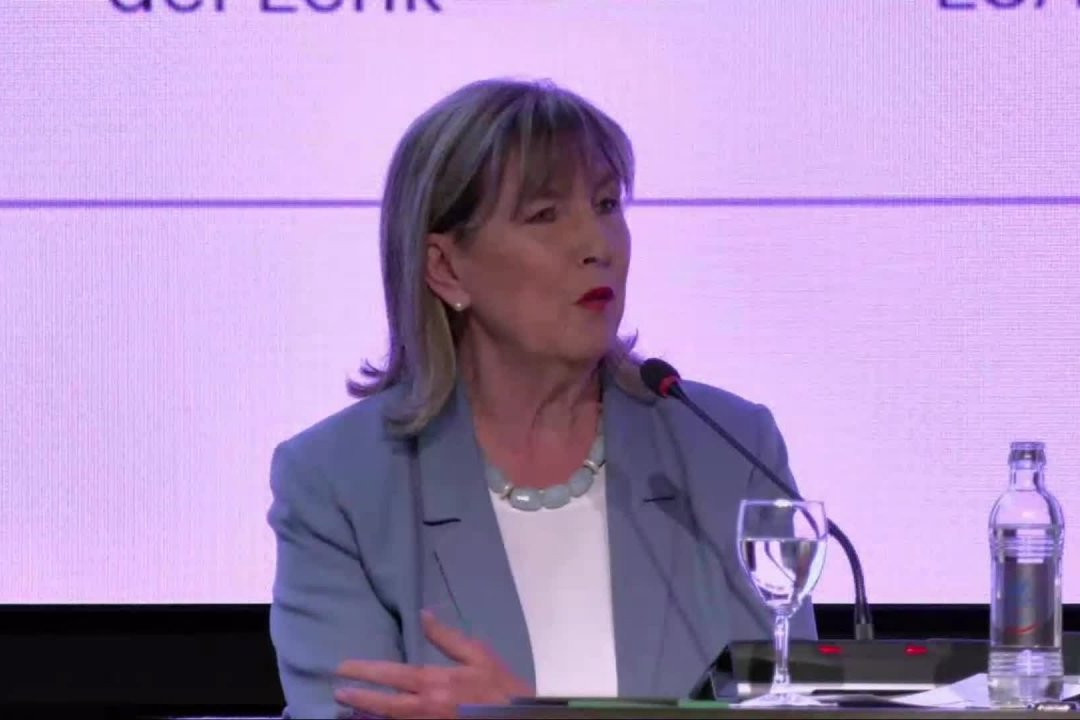
Could the DP’s hegemony in Luxembourg City be challenged after the municipal elections on 11 June 2023? While the electorate of Lydie Polfer’s DP is dwindling, the CSV, led by Serge Wilmes, managed to bounce back in 2017 and François Benoy's déi Gréng party has grown at every poll since 1999. Gabriel Boisante will have to reverse the trend of a LSAP that has been in decline since 1993. Photo montage: Maison Moderne

Could the DP’s hegemony in Luxembourg City be challenged after the municipal elections on 11 June 2023? While the electorate of Lydie Polfer’s DP is dwindling, the CSV, led by Serge Wilmes, managed to bounce back in 2017 and François Benoy's déi Gréng party has grown at every poll since 1999. Gabriel Boisante will have to reverse the trend of a LSAP that has been in decline since 1993. Photo montage: Maison Moderne

With just a few days to go before the local elections, the capital faces a radical choice: continuity with a DP that has reigned since 1969 but whose electorate is dwindling, or renewal led by a growing déi Gréng party and a CSV that managed to bounce back in 2017.

Continuity or renewal? With just a few days to go before the local elections, the question is being asked in a caricatural way in Luxembourg City. The DP has ruled the capital without interruption since 1969. The current mayor of the city, Lydie PolferLydie Polfer (DP), who is standing for re-election, has held the post for a total of 27 years: a first period from 1981 to 1999 after succeeding her father, Camille Polfer, and then continuously since 2013, following Xavier BettelXavier Bettel (DP), who has since become prime minister.

So will the DP continue its uninterrupted reign since 1969? Looking at the figures, the party was still dominant in 2017, with 30.04% of the vote, five points ahead of the second-place CSV (25.03%). But the party’s momentum is clearly on the wane: its results have fallen poll by poll since 1999, from 39% to 30% of the vote and from 11 to nine seats on the local council.

The DP list in 2023 has, however, been boosted by the appearance of an important new figure: minister Corinne CahenCorinne Cahen. In the 2018 legislative elections, she won 8,107 votes in Luxembourg City, very close to Lydie Polfer’s 8,252 votes. This is reminiscent of the 2011 municipal elections, when Bettel beat Paul Helminger, the outgoing mayor, to the top of the list by a narrow margin of 514 votes.

The rebound of the CSV

The DP’s coalition partner, the CSV, experienced a steady downward trend from 1975 to 2011, dropping from 34.6% to 19% of votes. But the party rebounded to 25% in 2017, following the appointment of Serge WilmesSerge Wilmes as head of list. Wilmes could even have been tempted to form a majority with déi Gréng and LSAP in order to secure a post as mayor in 2017. It’s a scenario that remains conceivable for 2023--especially if the DP continues to fall and the déi Gréng party manages to break through its “glass ceiling” of five seats.

In any case, this is the declared ambition of the Green Party, which for the first time has officially nominated a candidate for the post of mayor in the person of François BenoyFrançois Benoy--a sign that the party now considers itself to be a legitimate candidate. In fact, déi Gréng can legitimately hope for more: although it has had no more than five seats on the local council since 2005, this should not hide the fact that the number of votes in its favour has been rising steadily since 1999.

The situation is more complex for the capital’s fourth party, LSAP, which has been in decline since the 1980s, falling from 24.4% in 1981 to 11.1% in 2017. The two new heads of list, Maxime Miltgen and Gabriel BoisanteGabriel Boisante, will have to succeed in reversing this trend--while compensating for Marc AngelMarc Angel’s departure to the European Parliament--to retain their three seats, or even hope to win more.

What about the smaller parties?

The smaller parties will also be able to add their grain of sand to the equation. Déi Lénk seems to have consolidated the two seats it has held in the capital for the last two elections. The ADR, for its part, is in more difficulty: the only member elected in 2017, Roy RedingRoy Reding, gave up his seat during his term of office, and his successor, Marceline Goergen, joined the CSV list. It also remains to be seen whether the Piratepartei, which gained 2.64% in 2017, or newcomer Fokus will also be able to make an appearance on the local council.

This story was first published in French on Paperjam. It has been translated and edited for Delano.