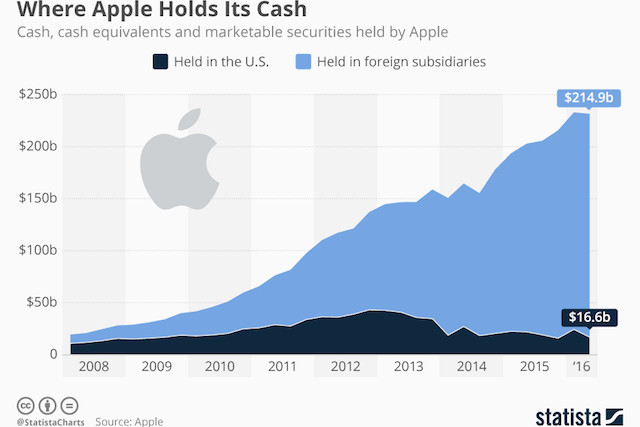
The company, which holds large amounts of cash in its foreign subsidiaries, could be hit with a tax penalty as high as $19 billion, according to estimates by investment bank JPMorgan.
The Commission had opened investigations against Apple in June 2014, alleging the company of having been given special tax benefits for setting up shop in Ireland. Both Apple and the Irish Department of Finance have denied the existence of a special tax deal which could potentially have violated EU state aid rules.
Apple isn’t the only U.S. company under scrutiny for allegedly dodging taxes in the EU, which is why the U.S. Treasury Department (PDF) has now weighed in on the matter. In a report published on Wednesday, the Treasury alleges the EU’s governing arm of initiating “disproportionately more investigations against U.S. companies” and expresses “strong concerns” about the Commission’s cases against Apple, Starbucks and others.
As our chart illustrates, Apple is currently holding more than $200 billion in foreign profits outside of the United States. Bringing that money back to the United States would require them to pay the corporate tax rate of 35% plus state taxes which would amount to more than $80 billion.
Apple CEO Tim Cook has publicly spoken out against this rule, saying that his company wouldn’t repatriate any of its foreign cash until “there‘s a fair rate”.