Does more need to be done to change Luxembourg’s key economic sector? Is there sufficient transparency in a world scarred by the financial crisis? Will the business model survive?
Regulation, technology and unusual interest rates have already done much to change the global financial sector, and make many businesses less profitable. The 2007/8 crisis spurred the introduction of new, expensive-to-implement rules, and made it impossible for banking secrecy to survive. We are also still living with the economic aftershocks, with low (and even negative) interest rates making it difficult for banks to earn well from the traditional business of managing savers’ deposits.
Then there is technology, with the likes of peer-to-peer lending and blockchain posing new challenges. As a globally significant financial centre, Luxembourg is directly impacted. Should more be done?

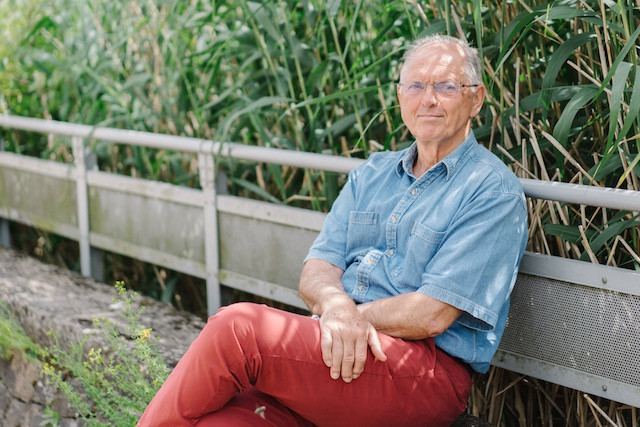
Philipp von Restorff is speaking against that motion during the Oxford style debate, held the evening of 9 November. He is pictured here in a portrait taken earlier this year sfor Delano by Marion Dessard.
“The financial services sector has changed considerably since 2008 and still is in a process of change,” comments Philipp von Restorff, head of communication with the Luxembourg Bankers’ Association (ABBL). “Creating a new one is not necessary.”
Some campaigners are not so relaxed. “We need to have a fundamental rethink as to what economy we want but also what society we want,” Luc Dockendorf of Tax Justice Lëtzebuerg told Delano in March this year. This group is concerned that international finance has excessive control of politics, economics, culture and media. Luxembourg being a prime example of what critics term a “captured state”.
Not so, says von Restorff: “The Luxembourg financial centre is more than 150 years old. It has grown organically, in parallel with political, economical and legal evolutions.”
Evolving expectations
Maybe underlying forces are making further change inevitable. “Throughout Europe business conditions are difficult and technology is bringing change, thus putting profits under pressure,” notes Alfred Steinherr, professor of economics and finance at Sacred Heart University.
He senses that more demanding consumers are becoming dissatisfied with services on offer. “Fintech is seeking to replace custom-made services with technological solutions, with the potential that banking could become a commodity.”
These opinions and more will be probed at an event on 9 November organised by the Paperjam Club (part of the same firm as Delano). It will be run using Oxford Union debating rules, at which the “house” will be asked to agree or disagree with the proposition: “A new financial services sector is necessary.”
This article was first published in the October 2016 issue of Delano magazine. Be the first to read Delano articles on paper before they’re posted online, plus read exclusive features and interviews that only appear in the print edition, by subscribing online.