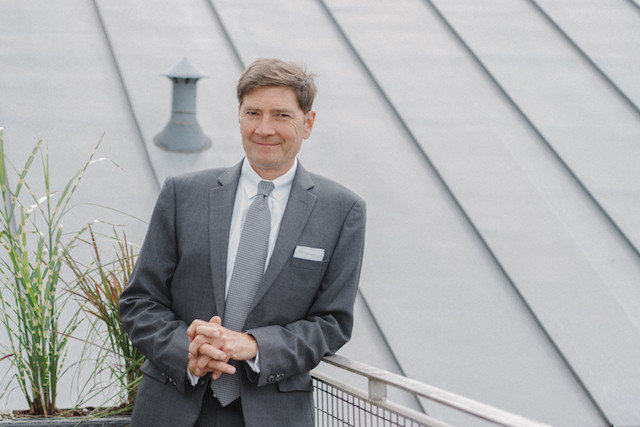
Wendy Casey: What prompted the establishment of the European Fund Administration 20 years ago?
Thomas Seale: In the early 1990s, the shareholder banks recognised the growth potential of the investment funds sector and the fact that individually, they did not have the capacity to invest and build an administration support function. So they pooled their resources, created EFA and hired me to help manage the project. It was an exciting new project, as up until that point my experience of new assignments was that they generally carried a certain amount of history--which in turn entailed a number of limitations. By contrast, this was a unique opportunity to start with a blank sheet of paper.
How has the Luxembourg funds sector evolved in that time?
It’s got a lot bigger and now it’s almost unrecognisable! I became involved in the industry in the early 90s when there was much more focus on round-trip funds--German and Swiss banks setting up Luxembourg funds that were then sold back into their country. Now Luxembourg’s become a global leader in cross-border investment funds and we’ve a really large toolkit of different vehicles at our disposal.
How has EFA adapted over the last 20 years to keep pace?
We’ve paralleled the Luxembourg fund industry in its changes, in terms of size and complexity of funds; you could say we’ve entered the alternative space. We have hedge funds, private equity funds and insurance portfolios, and we cover a broad range of regions including France, Sweden and five other domiciles. In addition, around a third of our business now comes from outside of our shareholders. Within that context, particularly since 2008, there’s been a regulatory tsunami and the level of regulation has become far more restrictive. We try to simplify the lives of our clients by digesting these regulations and coming up with services that enable compliance at reasonable cost.
What’s been the biggest surprise?
That’s a good question. As I get older, I tend to find that it’s people who enrich me the most. I’m a big believer in the power of groups, yet it’s far from easy to get people to work together--when our tendency as humans is to try and solve problems quickly by ourselves. The trick is to avoid uncooperative behaviour and encourage disparate groups to find solutions. What happens then is that the business becomes sustainable and difficult to replicate.
In your opinion, what’s been Efa’s greatest achievement?
It’s that we’ve built up a reputation for excellence. I’d add that we’ve been around for 20 years when most of our competitors back then no longer exist. The marketplace has really changed and we’ve been able to steer through a variety of tempests and storms. We’re still here and have carved out a niche.
Moving back to the present, what’s your number one challenge?
There’s a lot, and I mean a lot of challenges! The regulatory environment is challenging because clients don’t always see value in the regulations imposed upon the industry, and as a result they don’t want to pay a great deal for these services. We’ve also avoided offshoring and operate from Luxembourg because we want to take a high-touch approach, as opposed to a commodity approach. We’re working in a very competitive space, competing with sizeable global players.
What does Brexit mean for Luxembourg?
It’s too early to tell and I’m prudent about making strong declarations. But it’s not all negative and it’s not all positive for Luxembourg. UK-based asset managers needing access to the European market may present an opportunity. At the same time, the UK often took a similar market position to Luxembourg from a lobbying standpoint and we will miss that in European negotiations.
How will Efa be celebrating its 20-year anniversary?
We’re arranging a reception at château Arbed to thank our clients and partners for believing in us. The prime minister and the [crown prince] will be in attendance. And then the very next morning we’ll begin to work on the next two decades.
This article was first published in the October 2016 issue of Delano magazine. Be the first to read Delano articles on paper before they’re posted online, plus read exclusive features and interviews that only appear in the print edition, by subscribing online.