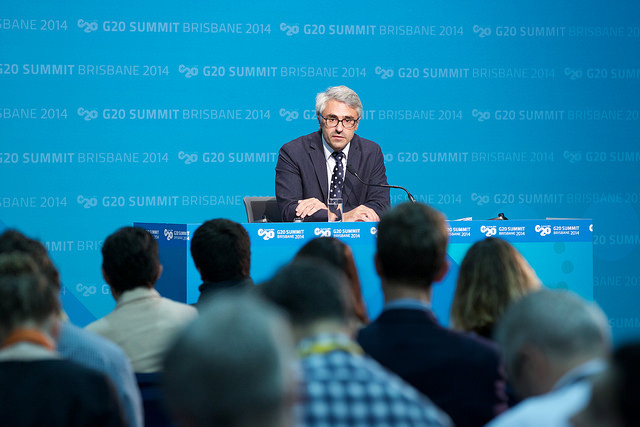
When holding the rotating presidency of the EU council of finance ministers, from July to December 2015, Pierre Gramegna successfully negotiated a new European law requiring tax administrations to exchange details on each national tax ruling. The deal was criticised, as it excludes the European Commission, which initially wanted to be part of the exchange. But everyone praised the speed of the negotiations, which only took a few months, something quite unusual in tax matters.
“The current Luxembourgish government is very cooperative and very eager to fight tax avoidance,” the German Liberal MEP Michael Theurer told Delano. “It is very different from the previous one, which set up these rulings.”
The Organisation for Economic Co-operation and Development’s Pascal Saint-Amans, who is behind the “Beps” action plan designed to fight tax dodging at global level, has the same praising tone. “Luxembourg is fully playing the game at OECD level. At EU level, we can see that their sovereignty matters but they’re not a blocking force,” he said in an interview.
But sources close to the talks are much more sceptical, and suggest that Luxembourg is still eager to protect the advantages linked to its historical tax policy. “Since the end of its EU presidency, its officials are less motivated by tax cooperation,” said one source, pointing at the difficult negotiations of the anti-tax-avoidance package which was agreed last June. Another source said that the country remained cooperative, but suggested the Grand Duchy took advantage of the Irish and Belgian positions--two countries which threatened to block the deal.
“Over-reliance”
The Grand Duchy is also opposing the commission’s proposal to impose public country by country reporting, which would require companies operating in the EU to publicly disclose information such as profits they made and tax they paid. The commission managed to find a legal basis which would only require the greenlight of a majority of member states, as opposed to the unanimity rule in tax matters. The Grand Duchy was furious.
“Luxembourg is cooperative only on the surface, but it doesn’t want to change its business model,” said the German Green MEP Sven Giegold. “They stole millions of euros from neighbouring countries, but never recognised that they did anything bad.” When presenting itself as virtuous, it still challenged the commission’s decision to order Fiat to pay back €30m in taxes to the Grand Duchy. As for the LuxLeaks scandal--described by Gramegna as “the worst attack” his country had ever experienced--the whistleblowers were prosecuted (and face appeals hearings in December).
According to Giegold, Luxembourg will never be more cooperative, because “its whole economy depends on the tax industry,” he said. “The Grand Duchy is over-reliant on this economic sector, which became too powerful.”
This article was first published in the October 2016 issue of Delano magazine. Be the first to read Delano articles on paper before they’re posted online, plus read exclusive features and interviews that only appear in the print edition, by subscribing online.