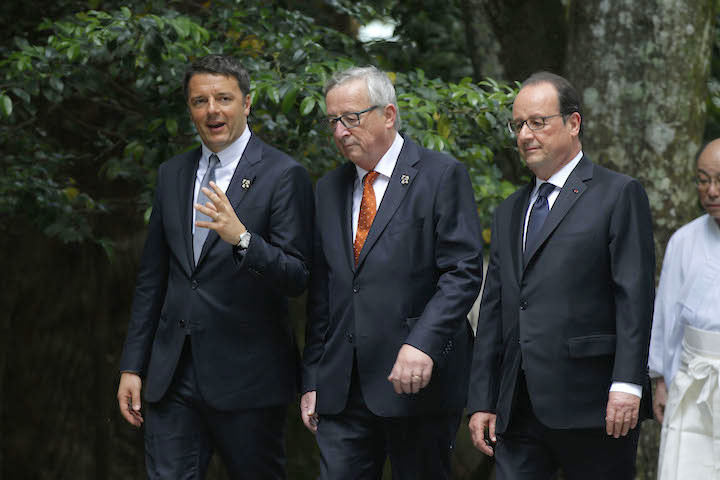
Juncker has failed to bring Europe together, eroded the commission’s credibility, and ceded too much authority to deputies, Politico Europe said this week. Its roughly 3,500 word article was based on “interviews with more than 40 EU politicians, diplomats and officials from countries across the EU--critics, supporters, and members of Juncker’s inner circle--as well as an analysis of his travel and meeting schedules”.
Politico was the most read publication by “Brussels influencers”, according to the “2016 ComRes/Burson-Marsteller EU Media Survey”, published in January. 52% of respondents said they read the title at least once a week and 22% said they read it daily. It was the 5th most influential media source in the poll (behind the BBC, Twitter, The Economist and Financial Times).
The article also revived long running speculation about his health (he is a heavy smoker and has suffered from kidney stones) and repeated rumours that he would resign before the end of his mandate (which his chief-of-staff has dismissed).

Jean-Claude Juncker, president of the European Commission (left), speaks with Angela Merkel, German federal chancellor, and Alexis Tsipras, the Greek prime minister, during a European Council meeting with Turkish leaders, in Brussels on 18 March 2016. Photo: European Council
In addition, Juncker favours France and Germany at the expense of smaller and newer EU members, the piece suggested.
However, the Luxembourger was defended by a French MP (who said his performance has been “really positive”) and France’s European commissioner (“I think he’s made the right decisions”). Both are members of the centre-left Socialist party, while Juncker is part of the centre-right European People’s Party umbrella, which includes the CSV.
Juncker was Luxembourg prime minister between January 1995 and December 2013, and served as head of the Eurogroup council of euro zone finance ministers from January 2005 to January 2013. He became president of the European Commission in November 2014; his term ends in October 2019.
Politico started in the US in 2007, with a self-reported print circulation there of around 33,000, and monthly online readership of 14m, according to Quantcast. It launched a European edition last year; Politico said it distributed 30,000 copies of its EU print magazine and reached 1.5m readers online.
The article was published by Politico on Thursday.
