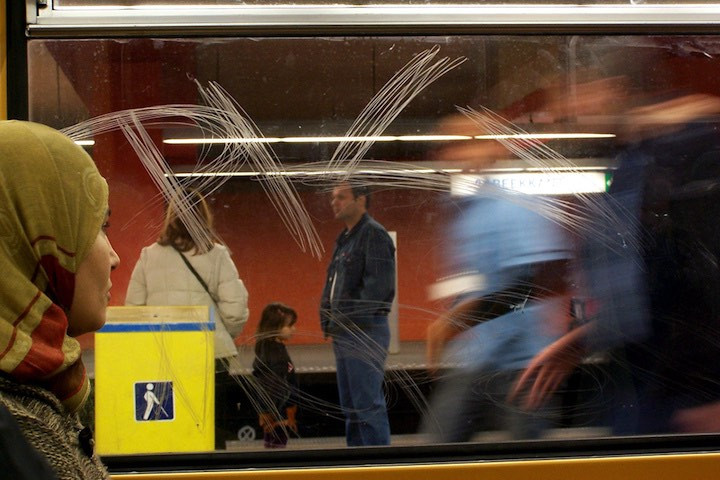
The case stems from Samira Achbita, a receptionist employed by the security firm G4S in Belgium. After she had worked at G4S for three years, in 2006, the company introduced a formal policy that “employees are prohibited, in the workplace, from wearing any visible signs of their political, philosophical or religious beliefs and/or from giving expression to any ritual arising from them,” according to court documents.
After announcing “her firm intention, as a Muslim woman, to wear the Islamic headscarf, Ms Achbita was dismissed”. She began legal proceedings in 2007. Last year a Belgian appeals court asked the European Court of Justice if the company’s policy constituted “direct discrimination” under EU rules.
It is the first time that the ECJ has considered a headscarf workplace ban, wrote Juliane Kokott, one of the court’s 11 advocate generals, who issue preliminary opinions.
On Tuesday, Kokott said: “The fact that a female employee of Muslim faith is prohibited from wearing an Islamic headscarf at work does not constitute direct discrimination based on religion… if that ban is founded on a general company rule prohibiting visible political, philosophical and religious symbols in the workplace and not on stereotypes or prejudice against one or more particular religions or against religious beliefs in general.”
The matter will now be considered by a panel of ECJ judges, and a final decision is expected within two to four months. The justices are not required to follow the advocate general’s opinion, but they typically reach the same conclusion.
The case is C-157/15 (Samira Achbita and Centrum voor gelijkheid van kansen en voor racismebestrijding v G4S Secure Solutions NV).
