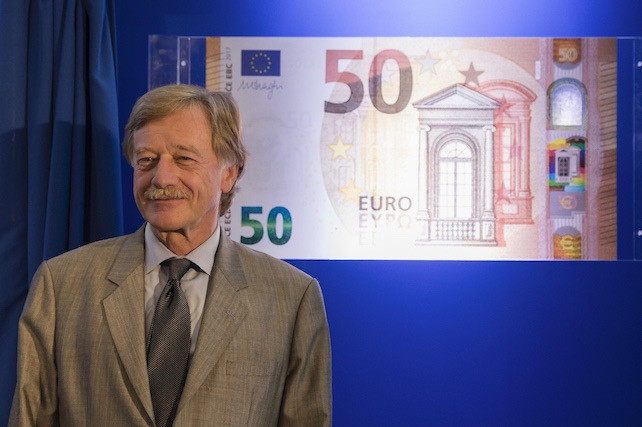
Shadow banking has helped meet demand in corporate lending over the past eight years, but might prove to be a fickle solution, he added.
Mersch is a member of the European Central Bank’s executive committee and was governor of the Luxembourg Central Bank between 1998 and 2012. He was speaking Monday evening at a University of Luxembourg public forum in Limpertsberg.
“Analysts forecast that negative interest rates will significantly reduce banks’ profitability over the next five years, with the return on equity in some cases falling from 6.5% to 2%,” stated Mersch, according to a copy of the speech posted on the ECB website.
“Robust business model”
While “ECB staff estimates show that the overall impact on bank profitability of recent monetary policy actions is net positive,” he said, “we cannot ignore” pressure on banks’ margins. “And yet, one also has to ask if a bank that cannot weather headwinds over a few years still has a sufficiently robust business model to stay in the market.”
At the same time, “a negative outlook for banks weighs on banks’ share prices, thereby raising their cost of capital and ultimately decreasing the net return on lending. This may cause banks to become more conservative in their lending to euro area companies and households, which is key for the transmission of our monetary policy.”
Shadow banking
Mersch also called the increase in lending from “shadow banks” (organisations that are not banks that make loans) since the financial crisis a mixed blessing. “Between the end of 2008 and the fourth quarter of 2015, non-banks expanded their share of financial assets held by euro area financial corporations from 42% to 57%.”
This indeed stimulates lending, which is what the ECB’s lower interest rates is meant to do, “as these institutions are to some extent more flexible than banks because they are less strictly regulated and supervised. But at the same time, we need to be mindful that non-banks are also likely to retrench more rapidly in times of crisis,” he commented.
As for the future direction of the ECB’s monetary policy, Mersch concluded: “interest rates can only stay very low over the short term. The longer they remain low, the more pronounced the negative side effects will become.”