As of this writing, the opinion polls are still suggesting the vote will go down to the wire. Traditional telephone polls have “remain” with a slight lead, while online polls indicate that the “leave” campaign has the upper hand--which is odd considering that the polls also suggest that it is older voters in the UK who seem to be more in favour of leaving the EU.
What is even more odd is that the argument for leave seems to be based purely on emotions rather than solid facts. Take Boris Johnson comparing bureaucrats in Brussels to Hitler in an interview with The Telegraph and thus invoking Godwin’s Law. It was at best a distasteful comment, akin to the cowardly attacks by some British newspapers on Jean-Claude Juncker during his campaign to become president of the European Commission, who labelled his father, one of thousands of Luxembourg men forcibly conscripted to fight for the Germans in WWII, a Nazi. That bloody conflict still casts a shadow over Europe.
Indeed, pro-Europeans like Juncker often cite the unprecedented 70 years of peace that has reigned in western Europe since the horrors of WWII as one of the great achievements of the union--Barack Obama joined that chorus in his speech in Hanover at the end of April. Sadly Johnson and Nigel Farage and their ilk seem to revel in some sort of wretched nostalgia for WWII, claiming that if Britain could proudly stand up to the Germans in 1940 it can go it alone again now.
But the world has changed dramatically and even if many willing the remain camp to prevail--both in the UK and elsewhere--acknowledge that significant reforms of the EU are necessary, the arguments for the UK to remain in an increasingly global economy are compelling.
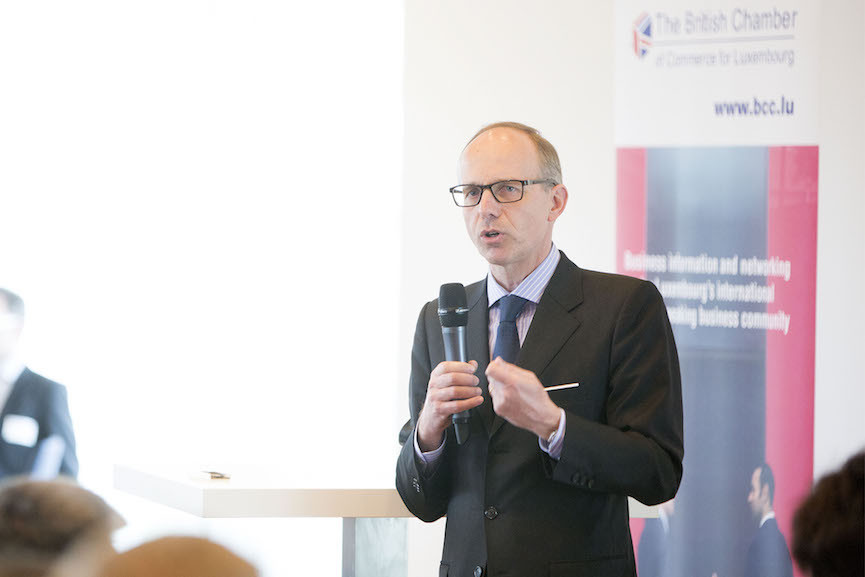
Experienced European politicians like Luxembourg’s Luc Frieden make a strong case when they say that countries on the fringe of the EU, like Norway and Switzerland, are often left frustrated that European Union decisions that affect them are taken without their input. Indeed, Frieden summed up the argument succinctly in his recent address to the British Chamber of Commerce when he said that: “It is an illusion to think a country can be independent and sovereign in an interconnected world.”
We hope that those British expats living in Luxembourg who are eligible to participate vote with the remain campaign on 23 June.
This article was first published in the June 2016 issue of Delano magazine. Be the first to read Delano articles on paper before they’re posted online, plus read exclusive features and interviews that only appear in the print edition, by subscribing online.