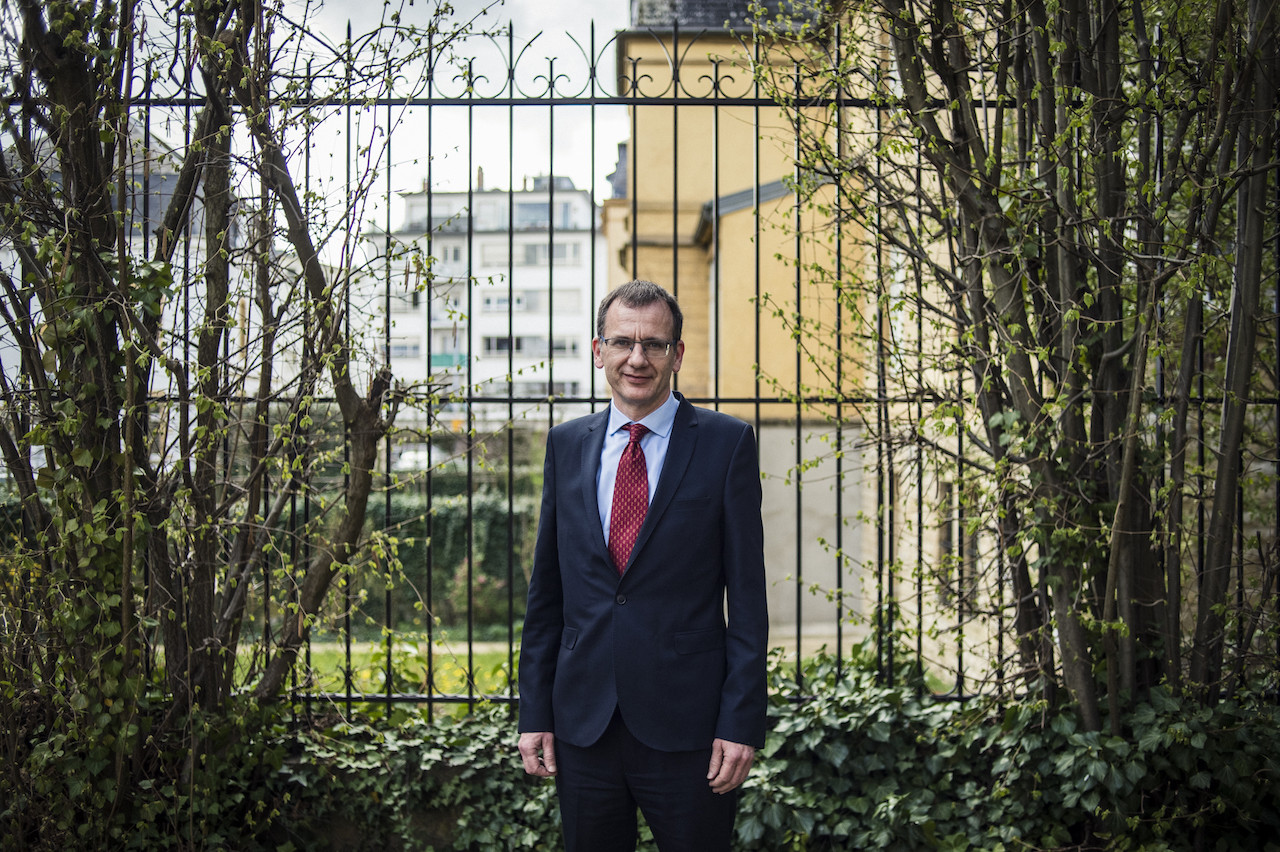
Although there is no “final timetable” in place for invoking Article 50, the UK government will not “drag its feet” over leaving the European Union says John Marshall. “The timing is a sovereign decision for the UK. The prime minister has made it clear that she will invoke Article 50 when we are ready.” The ambassador says that it is obvious that not a lot of work was done in advance of the referendum--held on 23 June--on the sort of relationship the UK would seek to have with the EU in the event of a vote to leave. “That is the work that is now going on apace.”
The responsibility of carrying out that work falls under the stewardship of David Davis, who was appointed Her Majesty's principal secretary of state for exiting the European Union by prime minister Theresa May just last week. “Obviously that is a mammoth, mammoth task,” says Marshall.
Faced with calls from some European Union leaders and heads of government to invoke Article 50 as soon as possible, Marshall says the UK government needs to take time to decide what it wants to seek from its relationship with the European Union post-Brexit. “As soon as possible is a rather vague term, isn’t it? You know, we are not going to be delaying unduly.” He says there is some understanding in Europe that there is a period of preparation necessary. “Because when we invoke Article 50, that’s when the clock starts ticking.”
After that, there is a two-year period before negotiations have to be concluded, although Marshall says there is even a possibility that could be longer “if all 28 member states wanted it to be extended.” However, the British government wants to move forward as quickly as possible he says.
Concerns noted
Meanwhile, Marshall says he fully understands the concerns of British nationals living in Luxembourg and what the implications of Brexit will have on their status. “My experience to date is that British nationals recognise it is very early days and that there aren’t answer to all the questions they have.” He says that residents are keen that the British government understands what their concerns are and that those concerns are reaching the right bit of the government machine.
“We have been feeding into London a lot of the views that have been shared by British residents and interest groups in Luxembourg.” And conversely the embassy is transmitting to residents the latest developments from the UK. There will be no immediate change either to the status of Luxembourgers living or studying in the UK--some first year students had expressed concern over whether the UK leaving the EU before they finish their degree courses might affect their studies. “Nothing changes in the short term while the UK remains a paid up member of the European Union. Beyond that, we don’t know. It all depends on the negotiations. Safe to say the UK higher education system will remain highly attractive.”
As for the new foreign secretary, Marshall says that as Boris Johnson has only been in office for a few days there are no plans yet for his new boss to visit Luxembourg. “Of course in October we have Council meetings taking place in Luxembourg as they do every October, and that will include foreign affairs. So there is a possibility that he will be here then.”