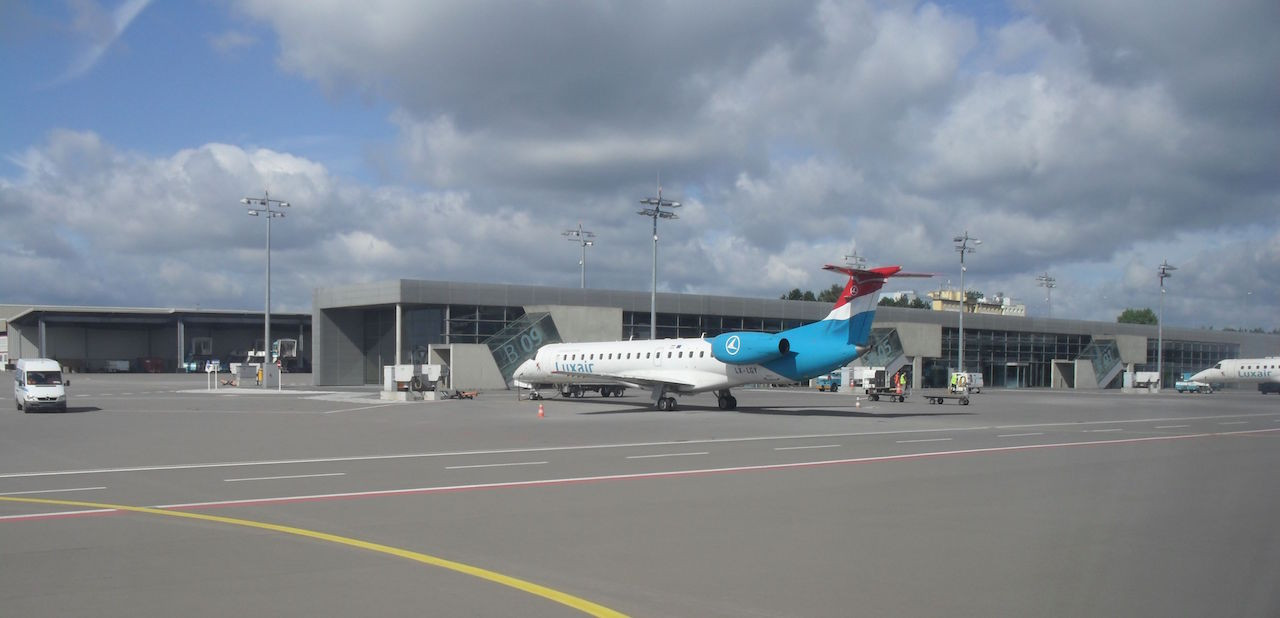
The planned opening date has been brought forward from 2018 to 2017 at the request of François Bausch, minister of sustainable development and infrastructure, to cope with rising passenger demand.
The terminal and the apron areas will be modified to accommodate regional aircraft, such as Luxair’s Q400. It will only be used for destinations within the Schengen zone. Airlines using these aircraft will be able to save costs as passengers will be able to access the aircraft directly from the terminal without having to board a shuttle bus.
Terminal B has been isolated and unused since Terminal A, the airport’s main building, opened eight years ago. It had been connected to the old main building, which has since been demolished, by a covered travellator. Half of that walkway still exists and it will be connected to Terminal A via an extension with access from the departure lounge area--between the bookstore and the Moselier wine bar.
Indeed, lux-airport boss Johan Vanneste said on Thursday that he was pleasantly surprised by the good condition of the Terminal B building--much of its existing equipment is ready to use. Terminal B has 10 departure gates and will add around 700m2 more waiting space to the airport. A coffee and snack bar, maybe a second Starbucks, will be installed near the entrance to the building.
Bausch said that although the airport’s capacity is limited by the fact that it has only one runway--there is no room to build a second--it could handle up to four million passengers a year once Terminal B is operational. The airport currently handles some 2.69 million passengers a year. That is an increase of close to one million passengers since the new airport opened in 2008 and the numbers are expected to continue to grow this year with the addition of routes operated by five new airlines this year including Flybe to Manchester and Birmingham starting in September.
The total cost of the project will run to around €4.5 million.