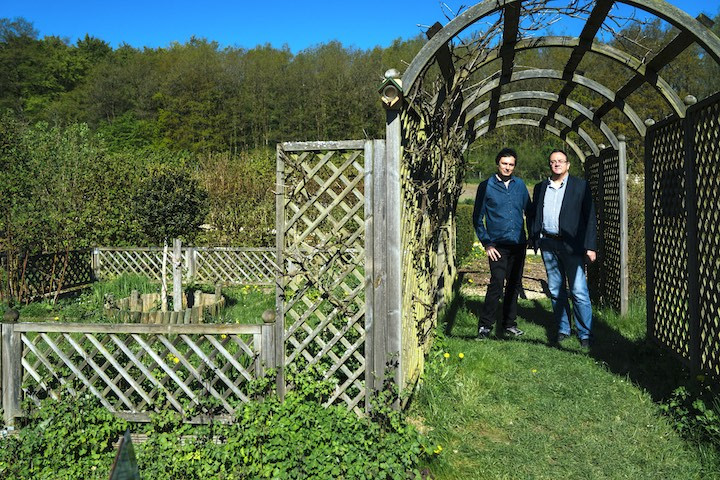
“This year, the festival is hosting 60 stands,” says François Benoy (pictured, left), in charge of communication for the group. “The exhibitors are here to provide information and to sell their products.”
The Festival of Nature has been held in Luxembourg for 20 years. Visitors can learn about nature, ecology, artisanal products and plants. The festival will take place at the Haus vun der Natur (House of Nature) in Kockelscheuer. “Here we have a farm, animals and a lot of space to host this important event,” Benoy explains.
To make sure the event meets visitors’ expectations, natur&ëmwelt is demanding when it comes to choosing the exhibitors. “They have to conform to a certain standard,” says Roby Biwer, the NGO’s president. “For instance, plant sellers can not use pesticides.”
In addition to selling artisanal products and kit like binoculars, the festival organises multiple activities.
Like every year, a theme is chosen. Last year, it was the potential extinction of bees. “For this edition, we will have activities about upcycling,” says Benoy. “We hear a lot more about recycling, but upcycling is about creating something out of waste.”

Attendees at the Festival of Nature in 2013. Photo: natur&ëmwelt
“We count on the youth”
“This festival is an opportunity for us to promote our ideas,” Biwer tells Delano. “We want people to know more about what we are working on: the environment’s protection, managing biotopes and environmental management.”
Last year, 3,250 people attended the Festival of Nature, which took place on a Sunday. “This time, we hope to welcome around 5,000 persons if the weather is good enough,” says Benoy. In his view, the event is an important date for many residents of the Grand Duchy.
And like for any event, natur&ëmwelt has a target audience. “Young parents come to see the festival more and more. We count on the youth. We should raise awareness among the next generation,” Biwer argues. And to do that, the group is pretty active on social media.
Benoy adds that an increasing number of festival attendees come from Luxembourg’s international community. “There are 60 stands, so they wouldn’t normally have a problem with language.”
This article was first published in the June 2016 issue of Delano magazine. Be the first to read Delano articles on paper before they’re posted online, plus read exclusive features and interviews that only appear in the print edition, by subscribing online.
