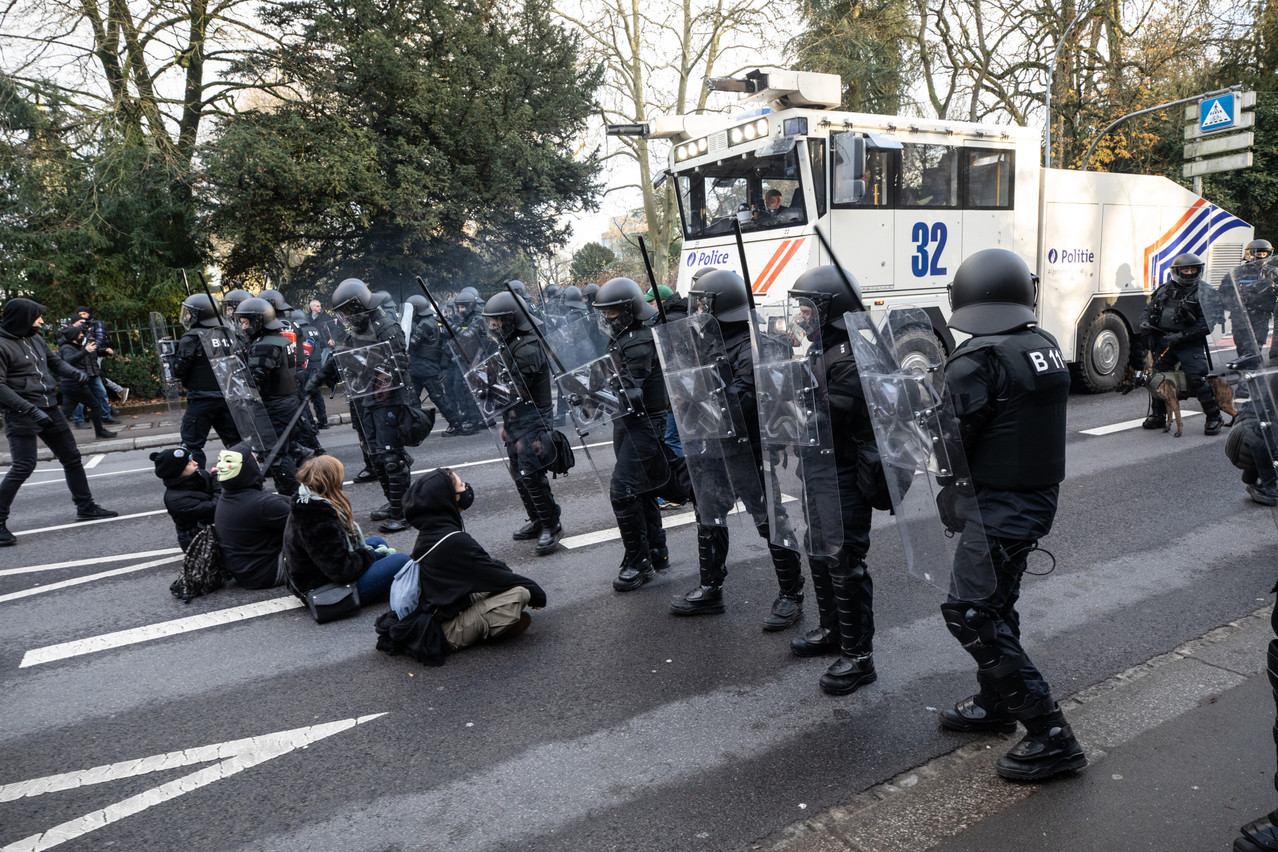
City authorities together with police on 9 December had limited protests to the area between the Glacis and the Place de l’Europe in Kirchberg after demonstrations against covid-19 measures had turned violent.
“We decided yesterday that the zoning would be lifted,” interior security minister Henri Kox said during a press conference: “We must get back to the regular rules.” Protests must be registered with the commune and a path is then agreed with police, for example, to foresee traffic disruptions.
Splinter groups of a protest on 4 December had stormed a city Christmas market, breaking down barriers, with the minister saying they had endangered other people. Another group had gathered outside of prime minister Xavier Bettel’s house, threw eggs and scratched a car parked outside.
The protest zone aimed at keeping agitators outside of the city centre--a move “justified after the experience we made,” Kox said. Police employed a water cannon and reinforcements the first weekend that the so-called “zoning” was in place, but some individuals managed to gain access to streets outside of the perimeter, with some 20 people arrested.
“We don’t judge the opinion of the people, but we ensure public order and that no one comes to any harm. And in the situation from 4 December this wasn’t possible,” said Donat Donven, deputy director general of the Luxembourg police force.
Over the weeks, however, protests against pandemic measures have been peaceful and numbers have dwindled to around 50 participants in past weeks. “Fewer protesters are taking part. The readiness for violence has disappeared,” said Donven.
Zoning a “temporary phase”
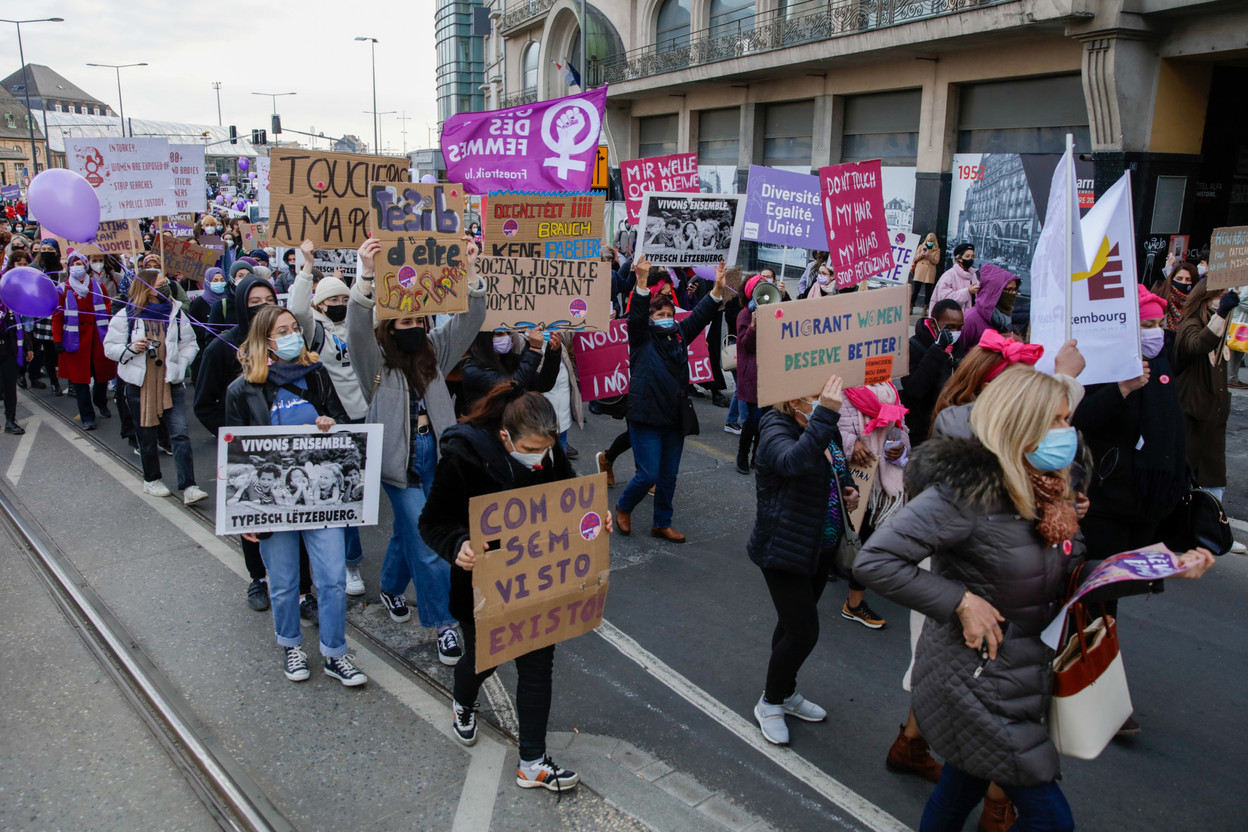
A march scheduled for International Women’s Day on 8 March was set to be limited to the same protest zone. Organisers had slammed the move. “We refuse to be punished because of the wrongful conduct of a small minority,” one of the march’s organisers, Michelle Cloos, had said at a press conference.
With the protest zone lifted effective immediately, the march should be able to schedule its regular route from the central train station to Place d’Armes.
“What we experienced in December wasn’t worthy of our city and our country,” said Luxembourg City mayor Lydie Polfer. “We want to return to a more normal state of affairs.” However, the mayor also warned that this return to normality would hinge on cooperation between protest organisers, police and city authorities.
Groups have been organising weekly walks--modelled on a German protest movement, the “Spaziergänger”. Up to 100 people have been gathering to take walks in the capital in protest. However, as they do no block roads, create noise or otherwise disrupt public order, there is nothing to immediately warrant police intervention. “It is on our radar,” Kox said.
In the wake of the violence in December, several organisers had cancelled their protests. This included Amnesty International, which said it did not want to risk its annual candlelit march to be hijacked or to put participants at any risk of danger. “People infiltrated the protests and gave them a different character,” said Polfer. “This led to the escalation.”
Police will continue analysing protests registered with the commune and assess the risks, Donat said. Over the past weeks, however, fewer officers have been deployed.
“The zoning was a temporary phase,” Kox said. However, a national law to regulate protests should go ahead, the minister said, as well proposals to clamp down on violence against police officers, including spitting at them.