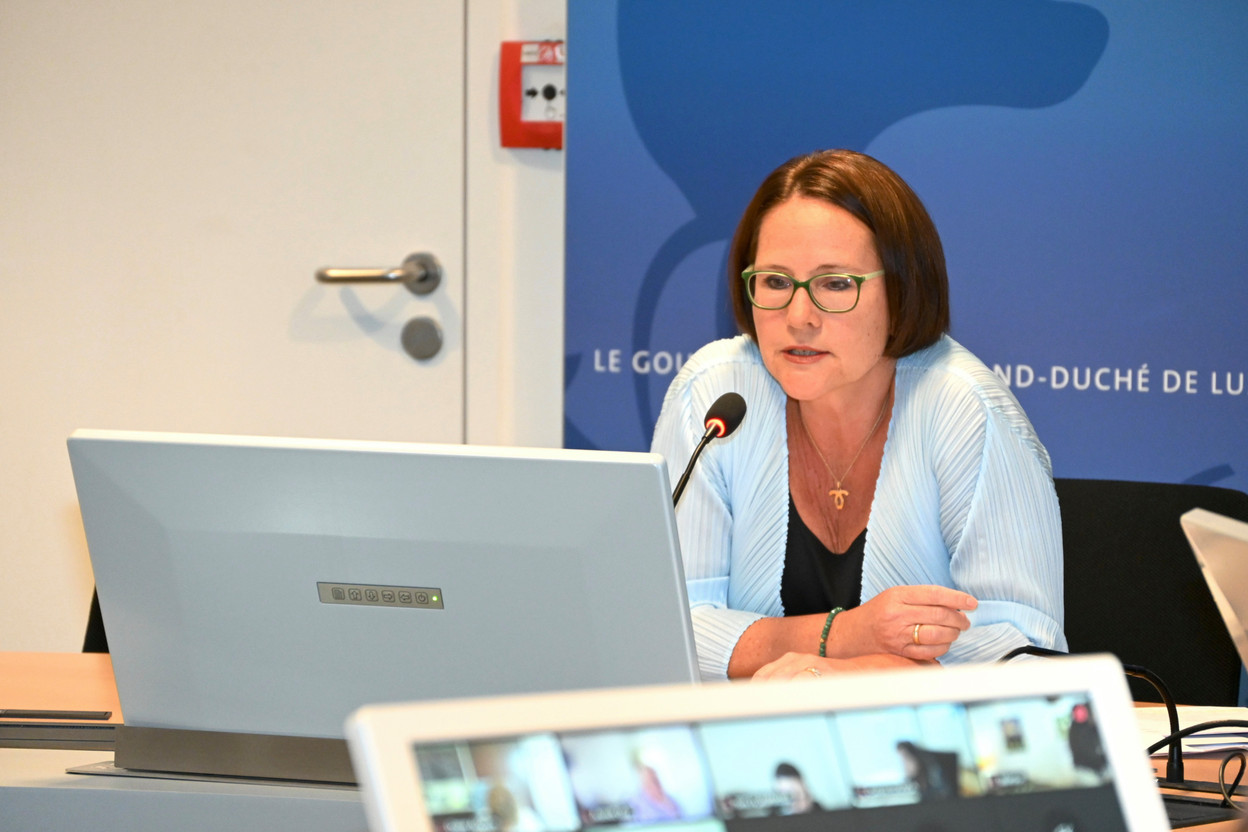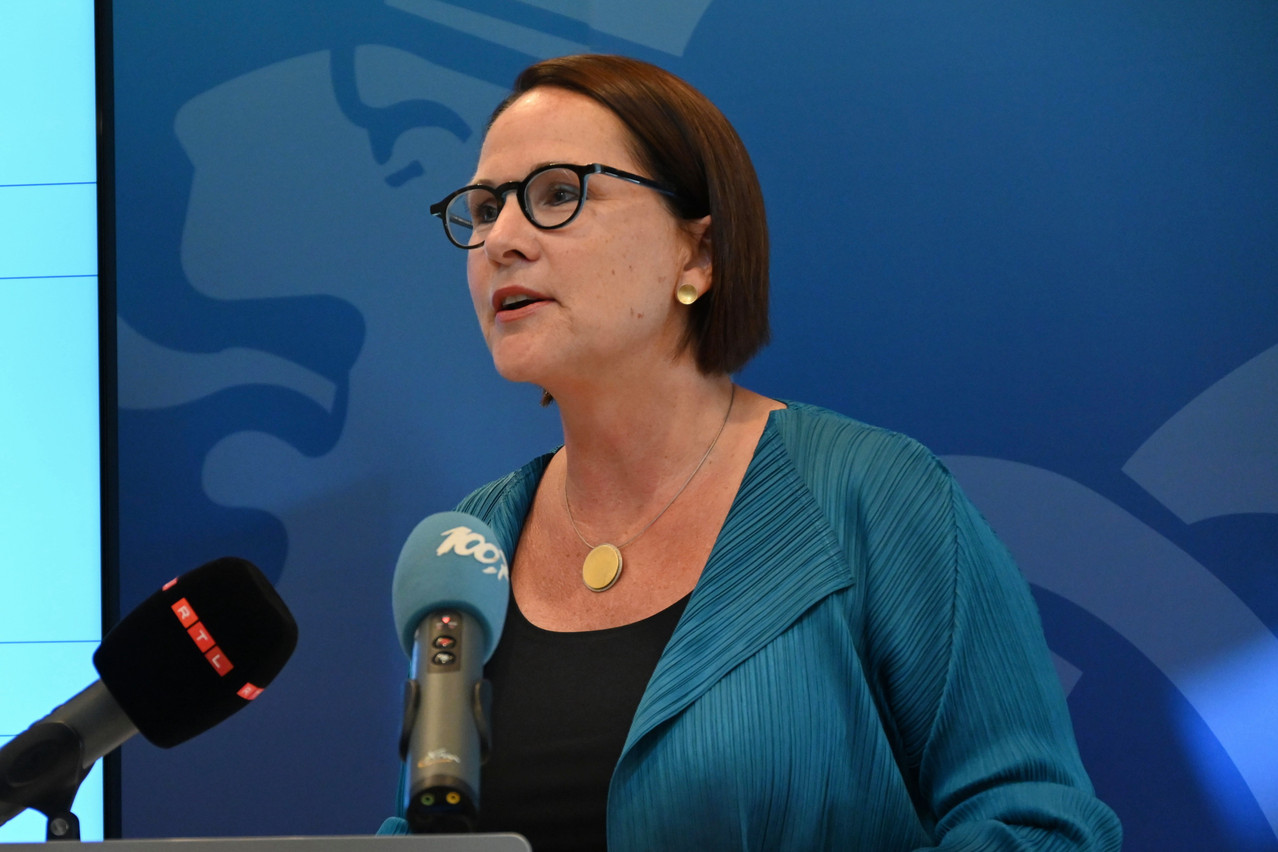
Finance minister 
Backes began her speech by noting that just one month into her role as finance minister, which commenced in January 2022, she faced the daunting challenges posed by the war in Ukraine. This conflict disrupted the fragile recovery from the covid-19 crisis and amplified global inflationary pressures.
In response to these crises, Backes focused on two main priorities: mitigating soaring energy costs and supporting Ukraine.
Crisis management in numbers
To tackle the crisis of surging energy prices, the ministry announced the allocation of a substantial €2.5bn through a sequence of programmes, known as ‘Solidaritéitspak 1.0,’ ‘Solidaritéitspak 2.0,’ and ‘Solidaritéitspak 3.0.’
According to Backes, these tranches of funding have resulted in several significant measures: firstly, the capping of gas and electricity tariffs at a cost of €310m; secondly, the introduction of an energy tax credit (CIE) benefiting approximately 640,000 people at an expenditure of €454m; thirdly, the roll-out of an economic tax credit (CIC) valued at €260m for 2023; and lastly, adjustments to the tax scale in alignment with 2.5 brackets of inflation, starting from 1 January 2024, at an annual cost of €300m.
In addition to domestic initiatives, Luxembourg has been active internationally, allocating €188m for 2022 and 2023 to provide Ukraine with military equipment and refugee care.
The country has also frozen €6.2bn in assets belonging to Russian individuals or entities as part of its commitment to 11 sets of EU sanctions, clarified Backes.
The importance of financial centres
The financial sector remains crucial to the national economy, contributing 25% to the GDP, generating budget revenues of €4bn and providing employment opportunities for around 67,000 people, noted Backes.
Given the overarching importance of international financial centres in Luxembourg, Backes emphasised that since taking office, she has visited nine countries, engaged with leaders from over 145 financial companies and negotiated approximately 50 European legislative texts on financial services--all within her 600-day term.
With €5.16trn in assets under management in Luxembourg, Backes underscored the ministry’s constant dialogue with the financial sector to identify new opportunities and, if needed, adapt legislation to create an environment conducive to the global financial services industry.
Balancing the books
Despite a tumultuous economic landscape, Backes emphasised her unwavering commitment to balanced budget policies.
The national debt is currently at 24.7% of GDP, comfortably below the 30% threshold. Without the impact of various crises, the ratio would have been under 20%, Backes contended.
Luxembourg has maintained its coveted triple-A credit rating, she reminded, adding, “Controlling public debt reflects our determination to preserve the country’s financial future for generations to come.”
Future-proofing finance
Digitalisation is also high on the agenda. As of March 2023, Luxembourg enacted its third blockchain-focused law, aiming to pioneer digital assets. With a thriving community of 280 fintech companies, the grand duchy remains at the cutting edge of financial innovation, commented Backes.
Pioneering sustainable finance in Europe
Luxembourg has carved out a significant role in sustainable finance, Backes stated. Accounting for 43% of all ESG funds in Europe, it ranks fifth globally and second within the EU. In 2023 alone, €25m was allocated to the Green Earth Impact Fund to foster ecological transitions in emerging countries.
Talent management and gender equity
Increased budget allocations in 2023 have bolstered the Expatriate Regime and Participative Bonus schemes to attract top talent, underscored Backes. She added that gender equity in finance also remains a priority, with 70 companies already signing on to the recently launched Women in Finance Charter.
Realistic and sustainable fiscal policy
Despite facing challenges, the government has made progress in fiscal policy, particularly in supporting single-parent households and modernising the meal voucher system, boasted Backes.
She elaborated that the 2023 budget increased the single-parent tax credit (CIM) from €1,500 to €2,505 and raised the income threshold for maximum benefits from €35,000 to €60,000. Additionally, the meal voucher system has been updated, with the exempt amount now set at €12.20 and a limit of up to five vouchers usable per day.
Corporate tax credits have also been expanded to include expenses for digital and sustainable transitions.
Climate objectives through fiscal policy
Introduced in 2021, the €20-per-ton carbon tax has been increased by €5 annually. This has led to a 13.26% reduction in diesel sales in the first half of 2023, and a cumulative 16.12% decrease over two years, stated Backes.
Emphasising the ‘polluter pays’ principle, this measure has been adjusted to consider its social impact, she said.
To benefit employees, retirees and the self-employed, a tax credit adjustment is in place. Starting from 2024, Backes confirmed a separate CO2 tax credit will increase from €144 to €168 per year.
In a bid to encourage eco-friendly practices, the ministry has also enacted significant VAT reductions: the rate for the delivery and installation of solar panels on various types of buildings has been reduced from 17% to 3%, and the VAT on household appliance repairs and bike services, including electric bikes, has been lowered from 17% to 8%
Backes concluded her assessment by saying, “Over the last 600 days, my ambition has been to help guide Luxembourg confidently through successive crises. Today, I am proud to see that we have succeeded. Through our actions, we have not only protected purchasing power but also ensured social stability and supported our businesses.”
Backes co-heads the DP’s Centre constituency list in the parliamentary elections to be held on 8 October.