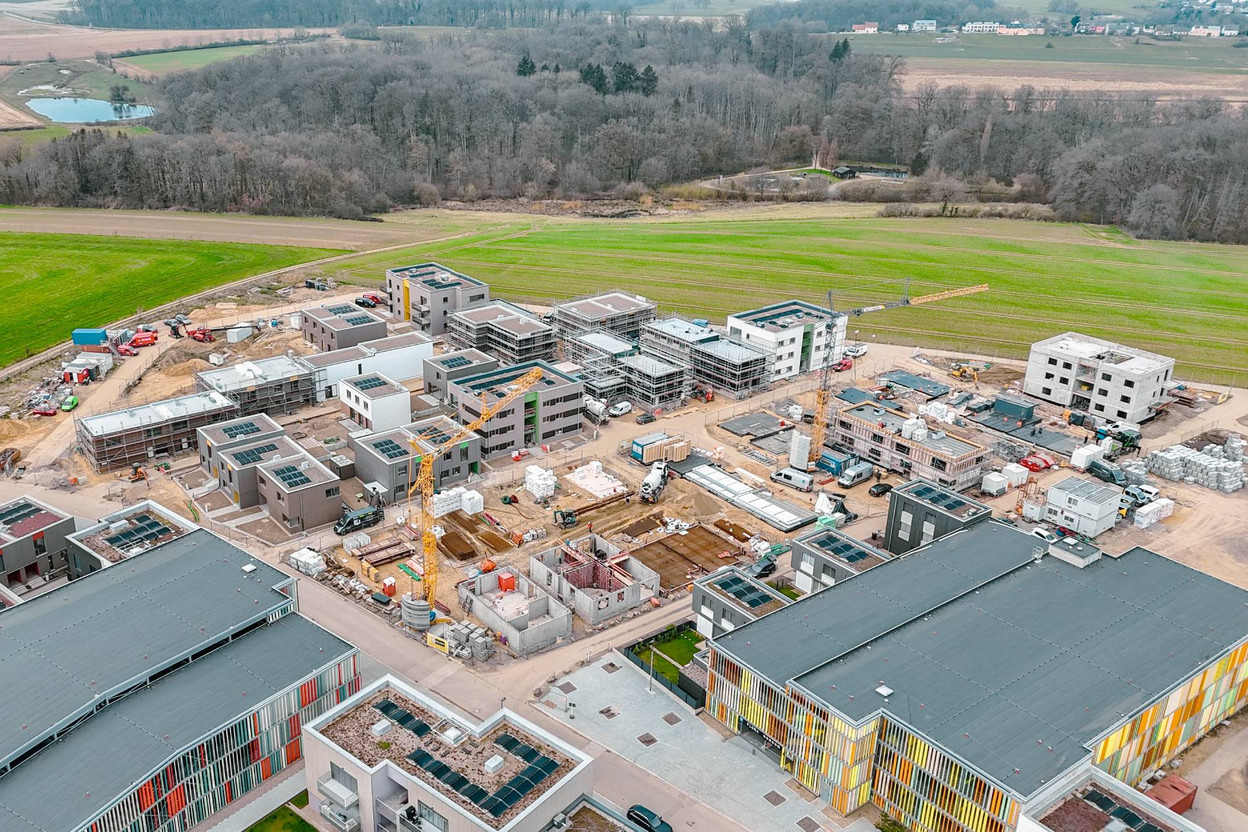
Launched in July 2024, Prolog Luxembourg--a joint initiative by Spuerkeess, Bil, Banque Raiffeisen, Banque de Luxembourg and the Société Nationale de Crédit et d’Investissement unveiled at Logement Dëch--has been of interest to basically no one, because its initial parameters were not, say the promoters, adapted to market realities.
Initially, the programme required a minimum pre-sales rate of 50% to support a project. This condition, deemed too strict by a number of developers, was relaxed in December 2024: the pre-sales threshold was lowered to 30%. At the same time, the application fees were adjusted so as not to disadvantage smaller-scale projects, explains the ABBL in a press release. These changes have had an immediate effect: developers have reassessed their interest in the scheme, while banks have initiated a proactive follow-up with customers who were previously interested but held back by the initial conditions.
Since April 2025, four formal offers have been made by Prolog for property projects, representing €16.5m in options on flats, for a total development volume of €43m. A fifth file is currently being finalised.
“To put these figures into context, total Vefa (sales before completion) transactions in Luxembourg in 2024 amounted to €579.6m, of which more than half (54.5%) came from purchases made by the state and the City of Luxembourg,” says the ABBL. “In this landscape, Prolog’s targeted intervention represents a contribution that is still modest, but which is structured.”
With an extension until the end of 2025 and a framework now better adjusted to market realities, Prolog Luxembourg will have to capitalise on the continuing economic recovery, investor appetite and the ability of projects to materialise their commercialisation in order to demonstrate its effectiveness.
This article was originally published in French.