You are the first special guest on Nexus Luxembourg 2027, which focuses on technological sovereignty. But can an entrepreneur build European technology leaders whilst relying on non-European capital, markets and technologies?
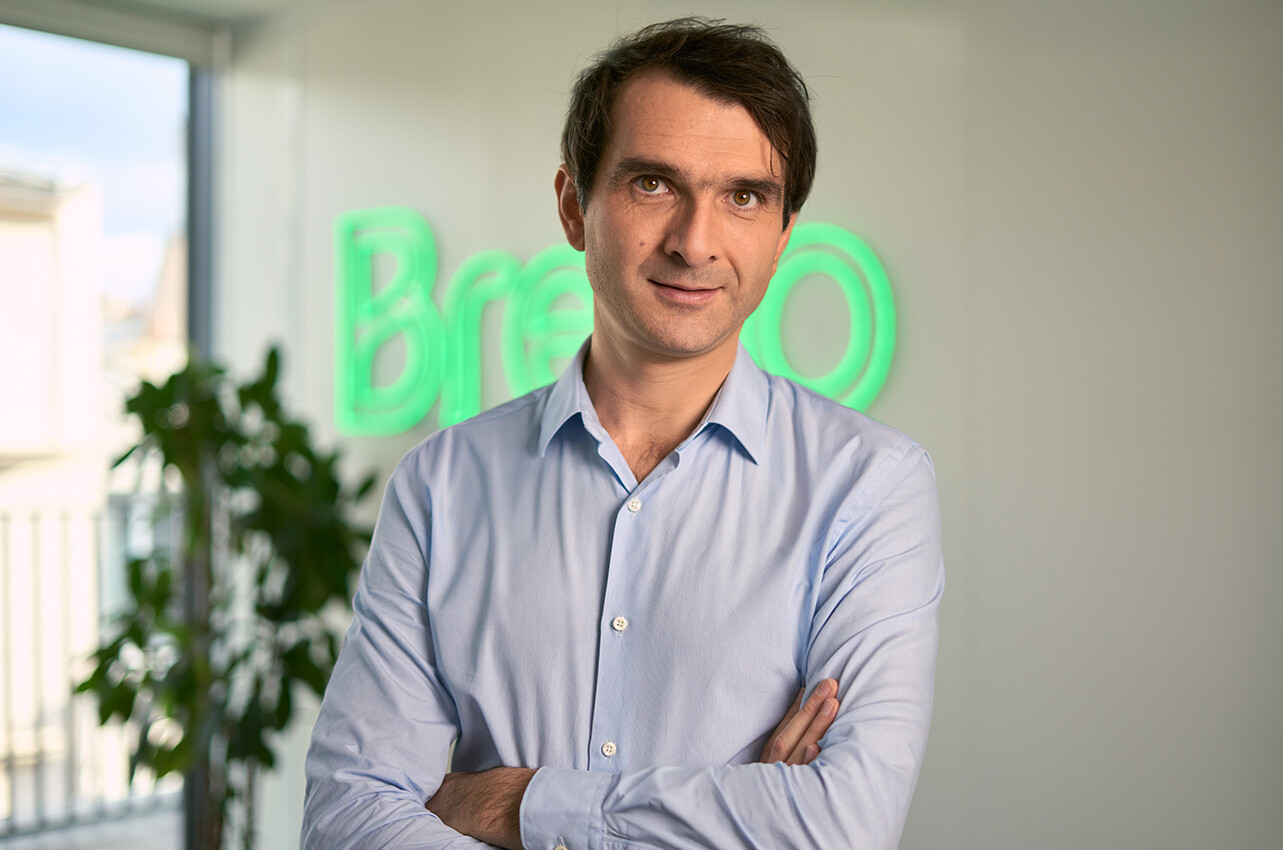
Armand Thiberge. – “Yes, let’s start with that! The answer is yes, we can. What matters is the registered office, the company’s roots in a country, where the employees work, and also who holds the shares. Even though the BPI holds only a small stake amongst our shareholders, there’s a very strict clause in our shareholders’ agreement that prevents us from moving our head office. We have American and British investors, BPI, and then myself and the management team – so to speak, we are Brevo’s largest shareholder. It’s a company controlled by its management, which allows for much greater flexibility and enables us to establish a firm foothold in a country, on a continent.
Take the CAC40, Saint-Gobain: most of the investors are American; there are a few French investors and a few British investors. Is Saint-Gobain an American company? Not at all; it’s a magnificent company with a 360-year history. It’s a company that still does a great deal of business all over the world, but whose headquarters are in La Défense – which is quintessentially French – and nobody in the CAC40 would ever think that these companies aren’t French. The reality today is that capital is highly fluid and highly international. Looking at a company’s capital structure doesn’t really work very well.
In the debate on technological sovereignty, there are many positions that differ greatly from one another. Take, for example, those groups that bring together European technologies and argue that we should adopt them. Or those who say that public procurement should be reserved for European companies. Where do you stand in this debate, from a slightly more political perspective on technological sovereignty?
“Over the past few years – thanks to Trump and Putin – there has been a growing realisation that we lack sovereignty in key areas, such as digital technology and defence. A revolution is currently underway in the field of AI. I find it rather sad that there isn’t a single European company that has taken on this challenge, apart from Mistral AI. [However] Mistral is a company that is now focused on services and [therefore] no longer develops models. It was the last company that wanted to develop models. The top 100 LLM models in the world are all Chinese or American.
European countries need to join forces because we do not have a single European market; we have ‘markets’.

We need a European initiative involving people who build models, not just those with the infrastructure. Because these days, there’s a lot of talk about data centres – they’re important, I agree – but we also know that software is absolutely crucial. Building models is quite complicated, after all; it’s engineering, a lot of tinkering, and knowledge that you build up over time. You can’t just wake up tomorrow and become an LLM model developer. The Chinese are providing us with open-source tools. Frankly, they’re brilliant – thanks to them – but how long will they keep doing this? Little by little, it’ll come to an end. European countries need to get together and stop saying: ‘I’ve got a French champion called Mistral’, ‘I’ve got a German champion’!
European countries need to join forces because we don’t have a European market; we have ‘markets’. And so, there are no venture capital firms that will fund a project in a small country like this. France, too, is a small country compared to the United States. We need private capital and private governance, because it is not governments that know how to manage start-ups – on the other hand, they must provide the capital, be shareholders, and hold a golden share that specifically enables them to ensure that intellectual property remains in their hands and does not end up in the United States. Why doesn’t this exist? It’s a great mystery, and it’s a real shame!
A few years ago, in the start-up world – and perhaps more so in Luxembourg than in Paris – it was said that a tech entrepreneur in Luxembourg had to design their product with a European scale in mind from the outset. After all, just because they capture 100 per cent of the Luxembourg market doesn’t mean they’ll become rich. You designed and developed Brevo as a product that would operate directly on a European or international scale. Was that your intention from the very beginning?
“I was lucky enough to set up my business in India. I’d finished my studies and had decided to spend a year there. It was a bit of a twist of fate. But anyway, I immediately wanted to set up a business targeting the global market. And we’re lucky to be in the CRM sector. CRM is the same all over the world; the needs are the same everywhere. There are very few regulatory barriers. It’s just that the Chinese don’t use email, so for us that isn’t a market, but the rest of the world needs a CRM system and a way to communicate with customers. They all need to communicate with customers, segment them, and develop sales and marketing strategies for them.
So, our service is, by definition, very global. We have small clients, so our distribution is also very digital: people sign up online, and the service is on a digital platform too. Our second-largest market is the United States. France remains our largest market. However, the majority of our customers are still in Europe. Even though the United States is our second-largest market, Europe accounts for 70% of our customers.
Your clients entrust you with their contacts, their messages, some of their expertise and their business. Do you use their data to train your models? To what extent does a client retain ownership of their sensitive data?
“No. I think it’s a difference that’s almost civilisational in nature. The way we treat people’s personal data is different. We have the GDPR, the European data protection regulation, which is completely at odds with the Cloud Act in the United States – adopted at around the same time – and which allows the US government to access virtually everyone’s data. It is therefore clear that the approaches taken are very different.
Individual freedoms are truly at the heart of European software, which is less the case in the United States and, of course, even less so in China.
Of course, people need security, but individual freedoms really are at the heart of European software, which is less the case in the United States and even less so, obviously, in China. We’ve chosen to have our servers 100% in Europe, and to run a company that is also European. Because it’s all very well to have data in Ireland, but if it’s Amazon running it, that raises questions.
So no, we’re 100% with OVH; our data is stored on European servers, and obviously we’re not going to use our customers’ data. It’s their business data, their customers! There may be some experimental work, but customers must give their consent to share a pool of data. These are small things we can do, but only on an experimental basis and with the customer’s explicit agreement.
Apart from its lower price, what competitive advantage does Brevo have over Salesforce, HubSpot or Microsoft?
“We’ve really made a commitment to making everything accessible. That might mean the price, but it’s also about how easy it is to use and how powerful the solution is. In other words, you can do loads of things with Brevo in a very, very simple way, without any technical knowledge and for a very reasonable entry-level price. It’s the combination of all these factors that means we now have more customers than Salesforce – more small businesses, of course. Salesforce has a much higher turnover because they serve large enterprises, whereas we tend to serve smaller businesses.
In defence as in AI, it’s the same struggle
Why would the founder of a customer relationship management software company like yours suddenly decide to branch out into anti-drone defence?
“It’s true that, on the face of it, we’re a long way from customer relations, but that’s only at first glance. There is, after all, a link when it comes to issues of sovereignty. I’m campaigning to create a true European AI champion capable of developing models, and I believe a revolution is taking place in the defence sector. We’ve realised this from what we’re seeing in Ukraine: warfare is set to become heavily robotised. Today, if we look at the number of people fighting in Ukraine, 70 to 80% of the damage and casualties are caused by drones.
For me, it was the desire to save lives [by working] on defence systems to intercept suicide drones. I’m really delighted to be speaking in Luxembourg because we must stop saying ‘France’ – we need to talk about Europe, Europe, Europe! We are Europeans; we really need to make this shift in mindset and tell ourselves that we must think of Europe before we think of France. Our defence project, Stryx AI, is designed to make a contribution.
For those who aren’t very familiar with Stryx AI, could you explain in simple terms to non-experts exactly what this company does and what you actually produce overall?
“We’re developing a drone interception system. We’re really focused on the front line; we’re not necessarily protecting capital cities, such as Kyiv, which are being targeted by drones that are practically missiles. On the front line, you have soldiers in the trenches, equipment, artillery and tanks. It’s a trench war in Ukraine; the positions are relatively static.
And how is the war going? Drones are being sent into the trenches to kill soldiers, destroy equipment and artillery, and blow up tanks. These are small drones known as FPV [First Person View], weighing less than ten kilos, measuring 40cm by 40cm, with an explosive payload of 2 or 3kg, controlled via a joystick by an operator. Our solution [involves detecting the approach of] the drone using anti-drone radar; [then] automatically, when the drone arrives, launching another drone to collide with the incoming enemy drone. It is a solution to protect against the drone threat on the front line.
And what are you developing? Software, or hardware as well?
«We’re developing everything! We’re developing the radar, the drone and all the guidance software technology. It’s an end-to-end system that we’re offering and are currently rolling out to our customers. We work closely with the DGA in France and with regiments in Ukraine.
We learn from an outdated product; we innovate; we keep moving – we need to be extremely agile.
The war in Ukraine also shows that anti-drone technology is evolving very rapidly and can quickly become obsolete as drones’ capabilities increase. Anti-drone detection and combat capabilities are evolving almost as fast. How will you avoid developing a solution that will be obsolete before it has even been put into production?
“That’s a very good question. We’re always making predictions about what’s going to happen. For example, very early on, we foresaw the advent of fibre-optic technology, which renders drone jamming ineffective. We realised we couldn’t rely solely on jamming because, in the future, everything will be connected via fibre. There are technological decisions to be made. There’s also feedback from the field: we need to talk to the soldiers, ask them where things are heading and whether what we’re proposing will still be relevant in the future.
And the third answer: agility. We have to accept that things become obsolete. We learn from an obsolete product, we innovate, we adapt – we have to be extremely agile. It’s an incredibly difficult shift in mindset for government departments, for the DGA, and for the military, because they’ve been approaching warfare in the same way for nearly 50 years. There, in Ukraine, they have no choice, so they’re adapting, changing their tactics and using new weapons. The DGA realises it needs to evolve quickly too, but it’s not easy.
What is your personal limit when it comes to this issue? It’s technology that can certainly do the job, but there may be bugs or glitches that result in loss of life.
“It’s certainly true that we work for our allies. As a country’s arms manufacturer, it is France that approves or rejects purchases, so we can’t just do as we please. We focus on defence, as we intercept drones. We do not develop attack systems that could cause fatalities; these are solely systems designed to save lives. Secondly, we aim to have a civilian component: the situation in Ukraine is extremely urgent, but in the future – whether for a football match, a concert or VIP events – civilians will need to be protected from drones. We’re in discussions with the gendarmerie and the police because they have significant needs. Drones are becoming part of our everyday lives, not just those of the military.
Compared to Stryx AI, where does the money come from to fund the company’s development?
“We have investors. I funded the start-up. These are quite capital-intensive projects because we’re setting up factories and buying hardware and equipment, which are expensive.
More energy for energy
The third area of your work is energy. What progress have you made, and what are your views on this?
“Sovereignty, always! That’s my guiding principle. We’ve seen it again with the Strait of Hormuz: we’re hugely dependent on hydrocarbons. Secondly, it’s also a personal matter: we need to ensure we leave our children a world with as little carbon as possible. It’s a twofold motivation. The two main issues are: how do we develop renewable energy? That was the first project [Solarinblue, ed.], which involved installing solar panels at sea because there’s more space there and it means we avoid using agricultural land. But the issue of renewable energy production has come a long way.
Today, the problem is intermittency and storage. The sun and wind are intermittent – how can we meet people’s needs on a continuous basis? [With Ironflow Batteries], we have developed a new technology for stationary batteries that take up a great deal of space [in the form of large tanks] – iron-based liquid batteries [Redox Flow technology, ed.], which are much cheaper than lithium batteries and enable us to store megawatts or gigawatts when there is wind or sunshine, and release that energy at night, in winter, or at 6 p.m. when everyone is coming home from work and using electricity. This means we don’t have to burn coal and gas during peak demand periods.
It’s all down to political will. If we wanted to have a European solar panel giant, it could exist.
Do these technologies break free from China’s stranglehold on renewable energy technologies?
“From a systemic perspective, it’s a question of political will. If we wanted to have a European solar panel giant, it could exist. That is not the case today because we buy from China, but it’s not like AI or Microsoft: tomorrow, we’ll be able to build solar panel factories; the technology isn’t that complicated. Unfortunately, we too are buying Chinese panels for the time being.
As for the second part – storage – the technologies involved are very simple: we need iron and membranes that we buy from the Germans, so we are completely self-sufficient and have absolutely no need for the Chinese. We’re living in a world where we’re going to copy the copiers! They’re good at what they do, so we’re drawing a little on their expertise when it comes to research.
To bring things full circle, are you still able to remain fully involved in Brevo’s day-to-day operations whilst also being active in the energy and defence sectors, which are very energy-intensive? Are you able to manage all three satisfactorily?
“Yes, yes, I’ve got a brilliant team and I know the company inside out, so that helps. I’m at Brevo, by the way. I’m always very, very hands-on – sometimes too much so for some people!
What is the next sector you’re going to move into?
“I don’t know, but in any case, it will revolve around sovereignty, that’s for sure. I love Europe very much; I love my country very much, our civilisation and its values, and I do everything I can to defend them.”