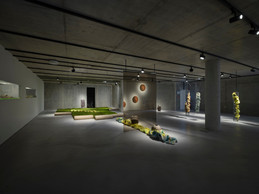
Sensitive ground. That’s the meaning of Sentient Soil, the title of Véra Kox’s new exhibition at the Konschthal Esch. The Luxembourg-born German artist is presenting a body of recent work, some of which is the fruit of residencies at the Bridderhaus in Esch, Ceramica Suro in Mexico, and the Centre d’expérimentation et de recherche sur la céramique contemporaine at the Haute école d’art et de design in Geneva.
Think of clay as a living organism, capable of reacting and experiencing feelings. A thin layer of arable soil on which man depends for survival, yet which he has no hesitation in mistreating, polluting and wiping out. Kox starts from this premise, and uses it to question our world through the material she works with: clay, which she then fires to make ceramics. Her work also refers to a time that is not human, but geological, to natural phenomena, but where man, through his invasive and industrial intervention, upsets the balance.
Precarious balances
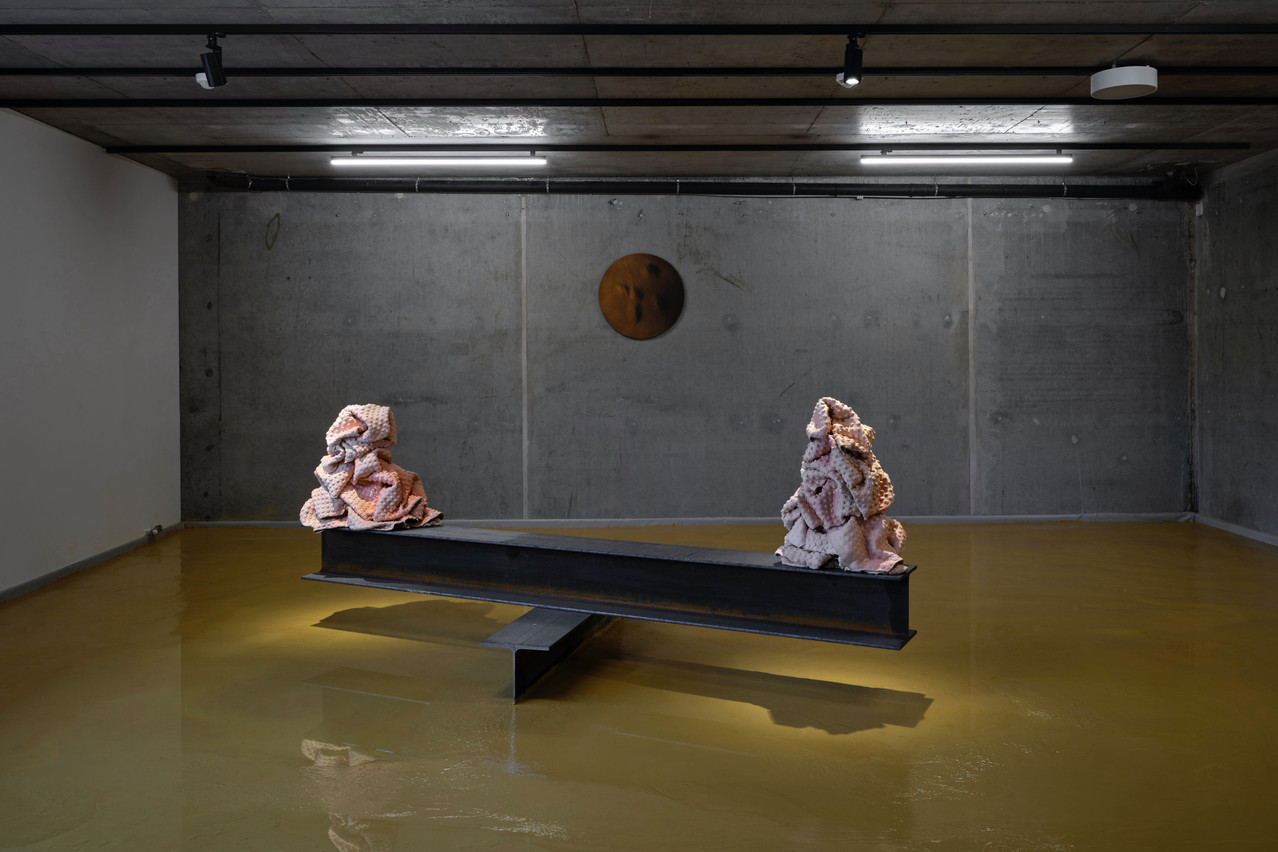
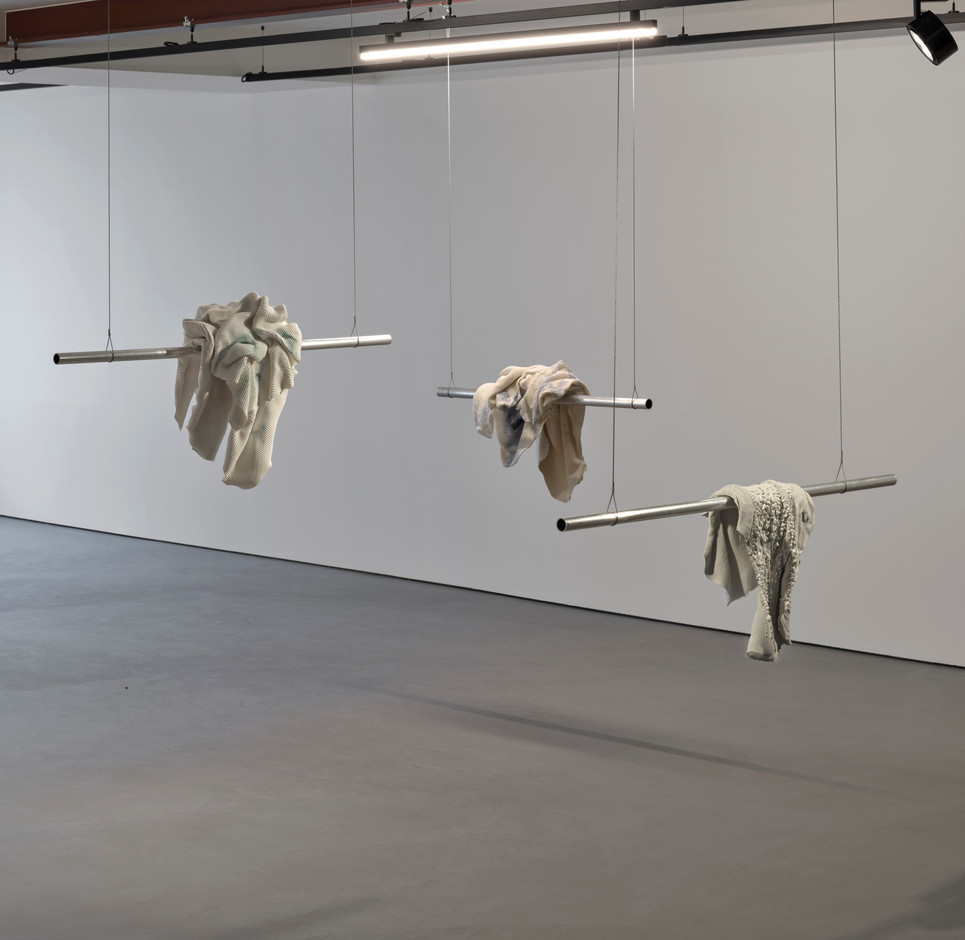
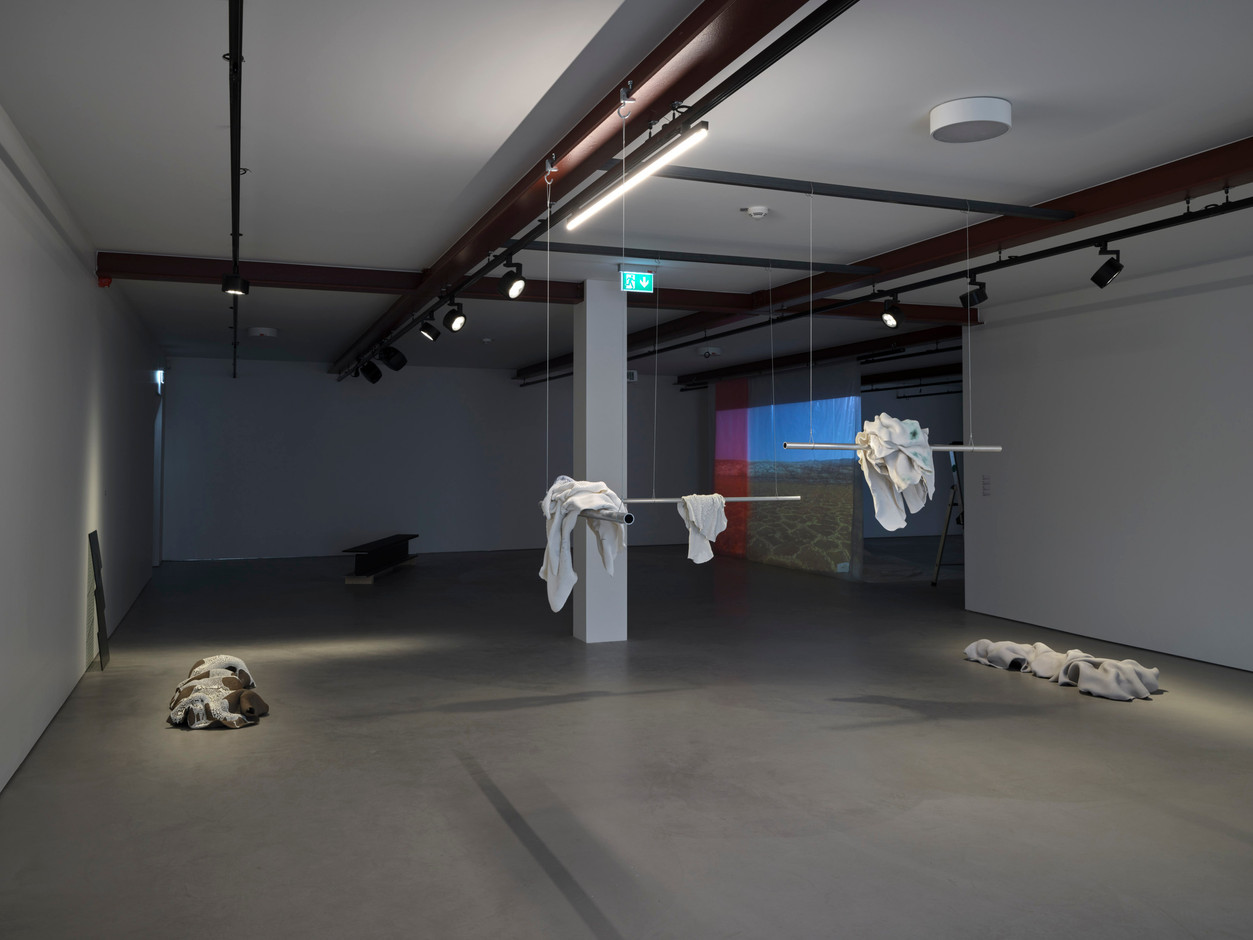
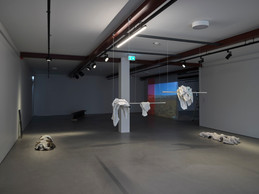
In the first room, Kox creates installations with fragile balances, where ceramic pieces are perilously placed on an iron bar itself suspended in the air by fine wires. A precarious balance that could topple at any moment, shattering the glazed piece into a thousand pieces. “It’s also a dialogue between the hard and the soft,” stresses Christian Mosar, director of the Konschthal Esch. Indeed, in these works, we can distinguish several states of matter: the soft earth, whose shape is dictated by the earth’s gravity and whose surface is marked by the imprint of an industrial textile, and the hardness of the ceramic after firing, which is associated with the cold, rigid steel tube. Like the future of our planet, this work is in an uncertain equilibrium that could topple and explode at any moment--the tension is palpable. It’s also an area of friction between the industrial and the artisanal, the multiple and the unique.
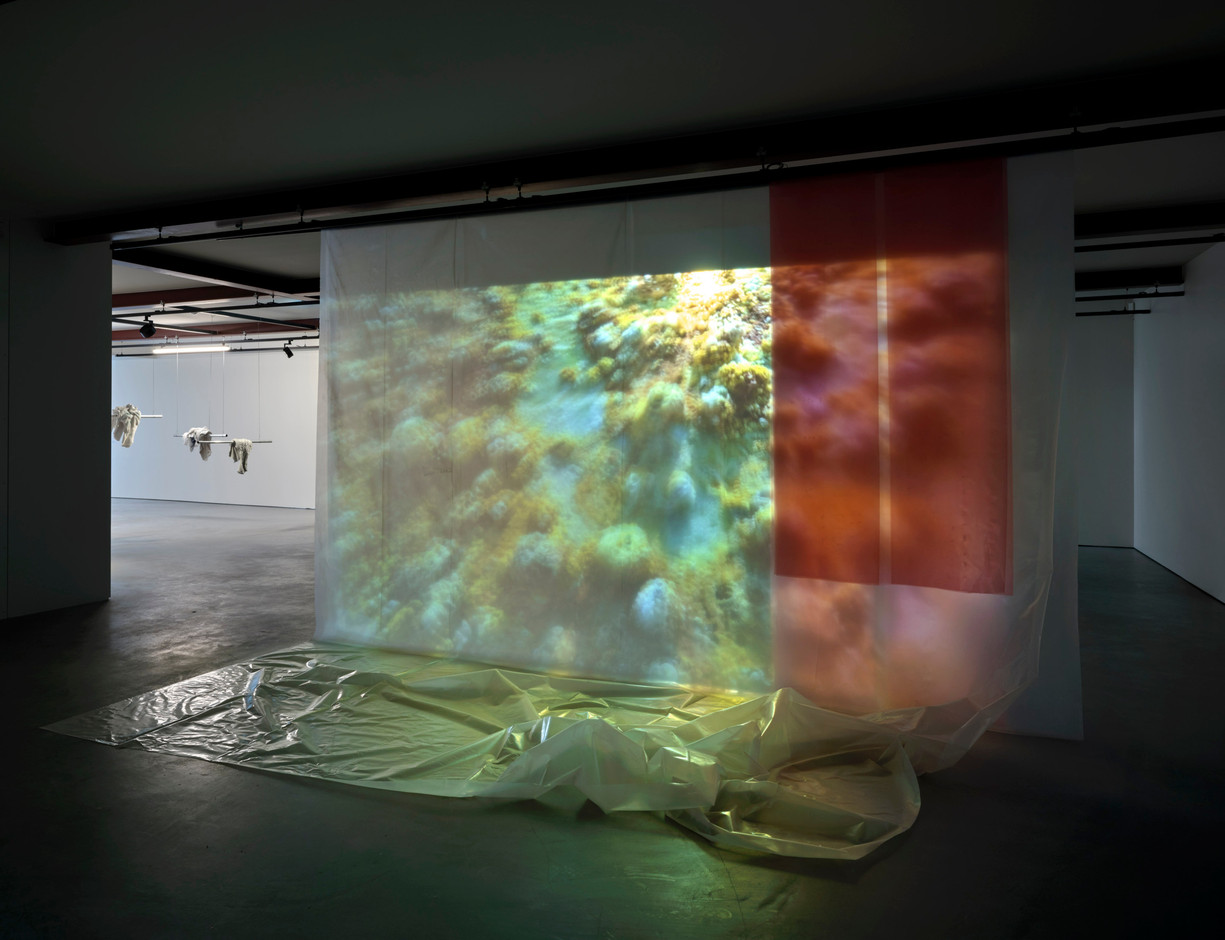
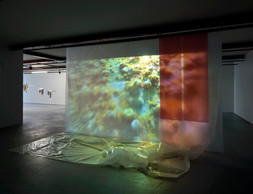
Alongside these works, a video is projected onto a plastic screen. This is the result of research carried out in extreme natural environments, such as the volcanic springs of Dallol in Ethiopia or the Arctic expanses of Spitsbergen, where the effects of climate change are particularly tangible. The aesthetics of the images underline all the more acutely the fragility of these disappearing ecosystems.
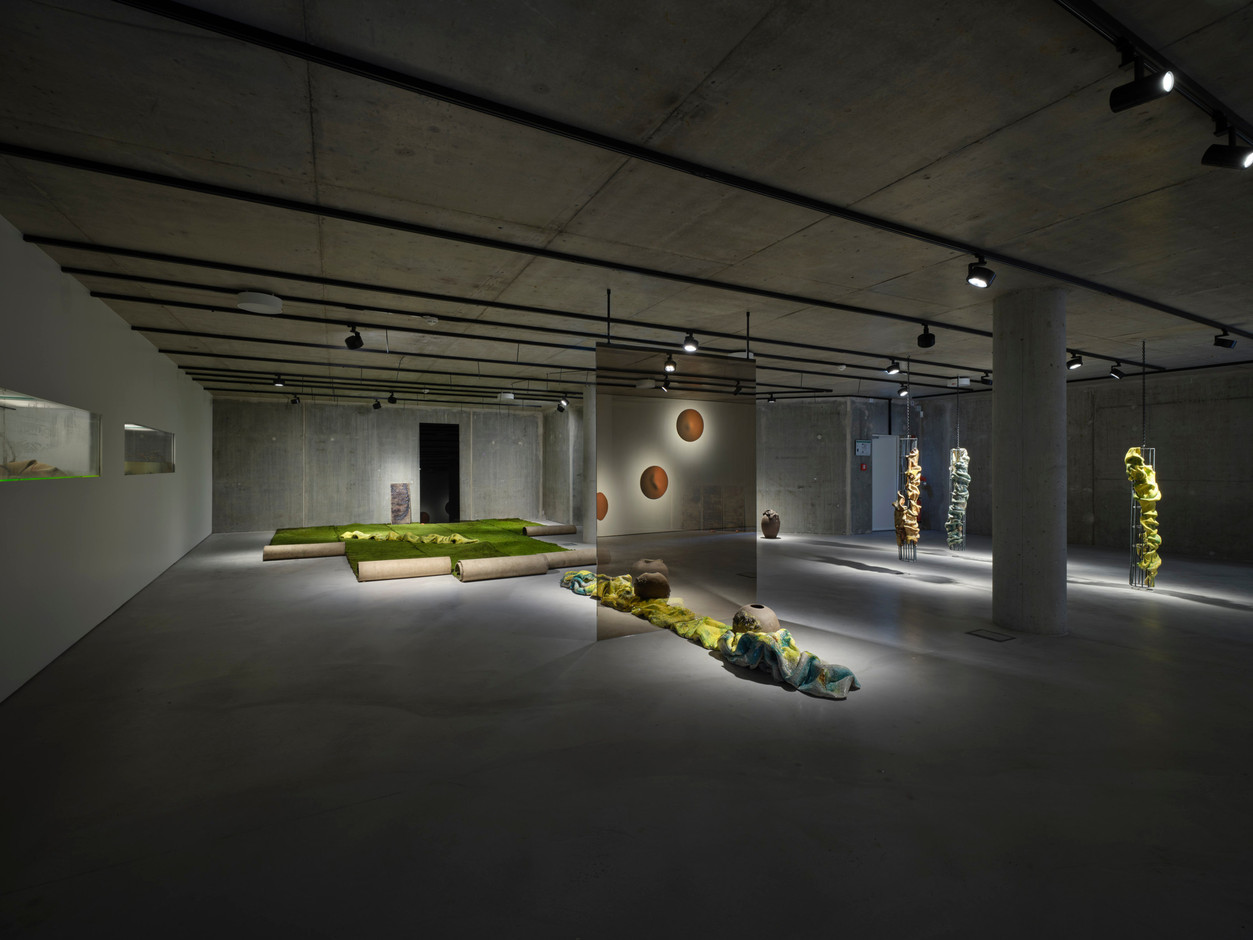
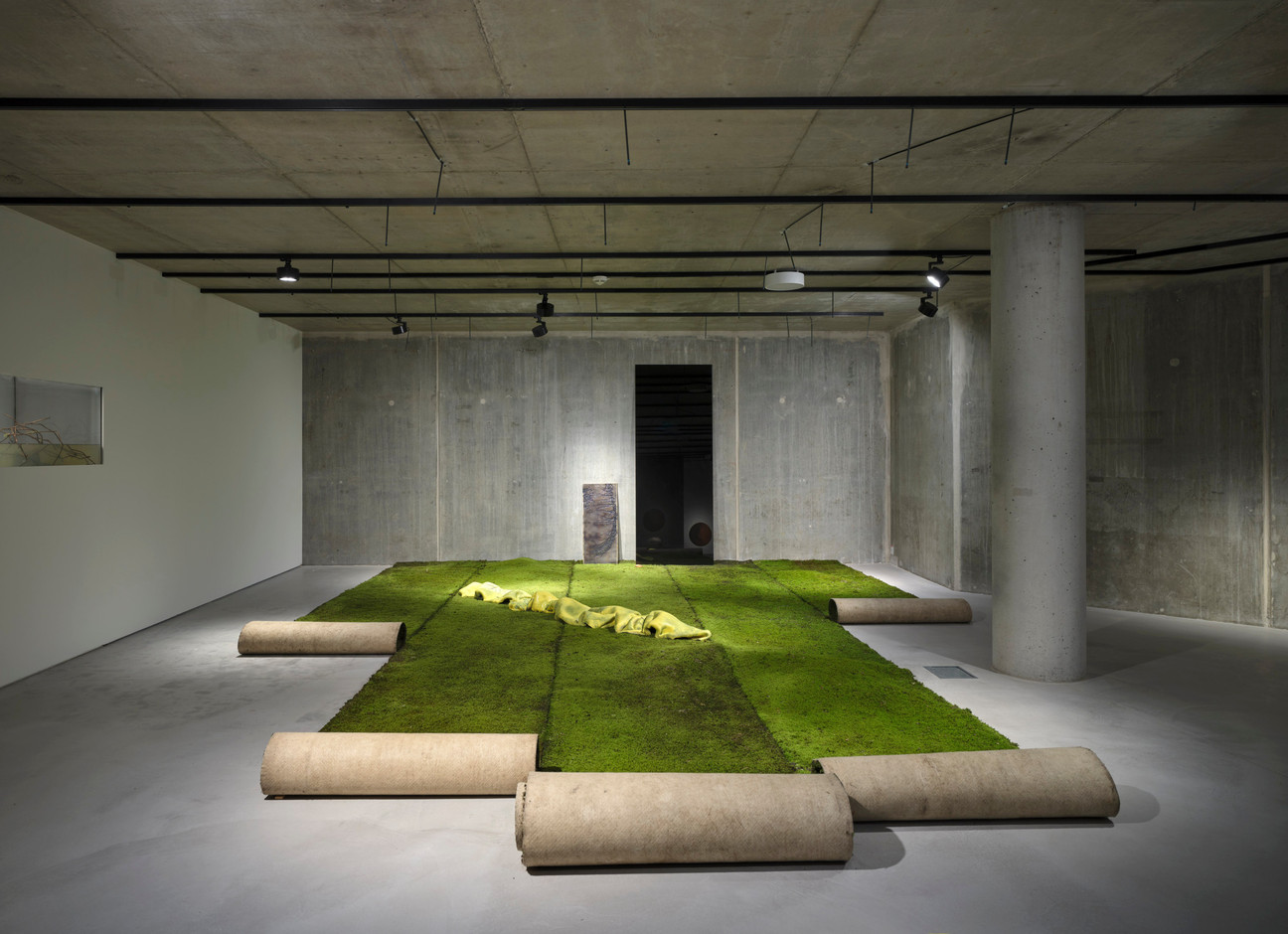
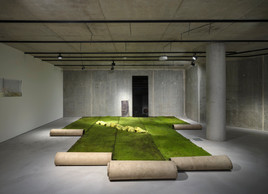
A little further on, rolls of moss are unfurled on the floor. “Mosses are very ancient organisms,” explains the artist. “They were the first element to come out of the water and onto the land. Mosses are also very resistant; in fact, they are the first plant forms to reappear after a disaster.”
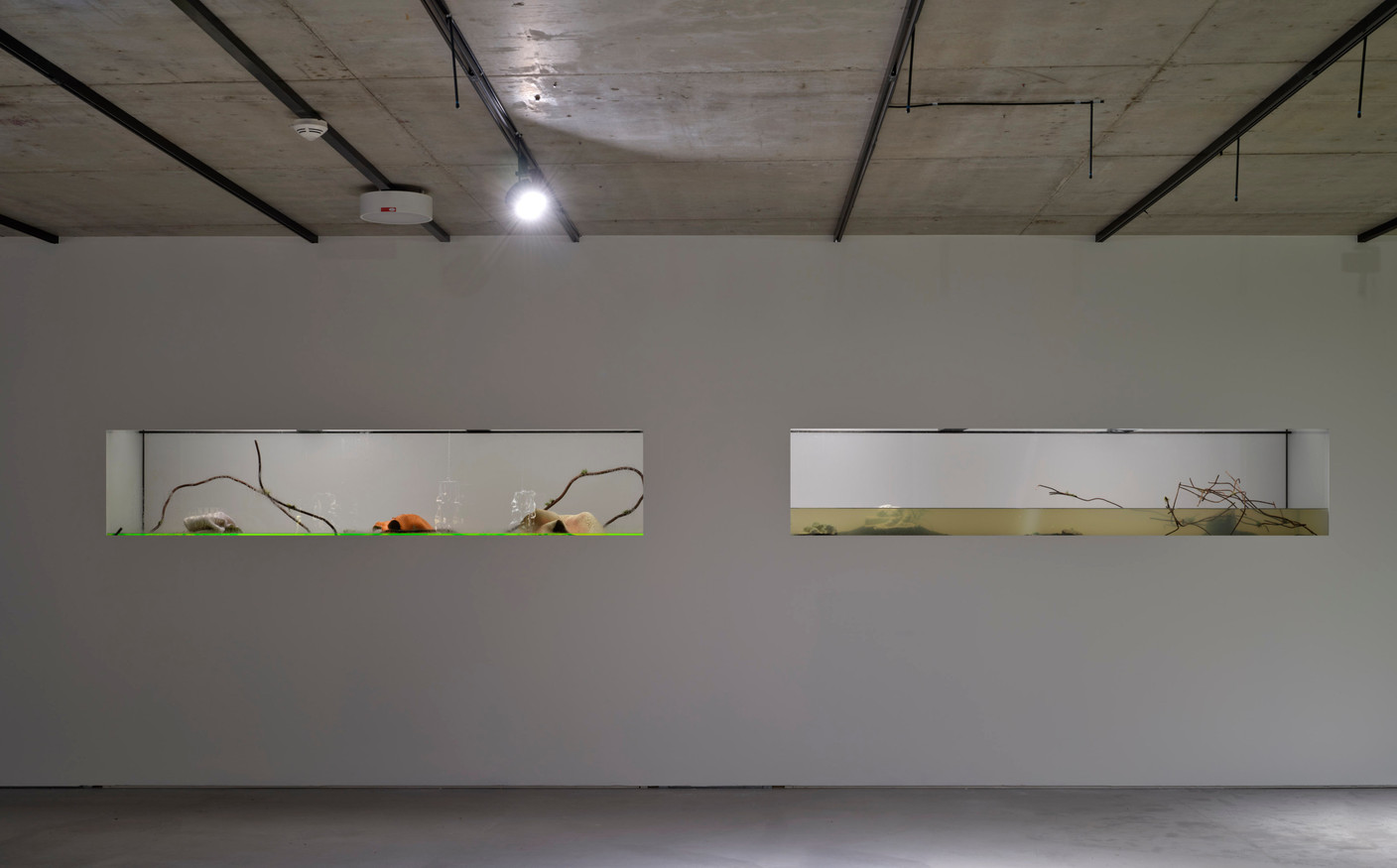
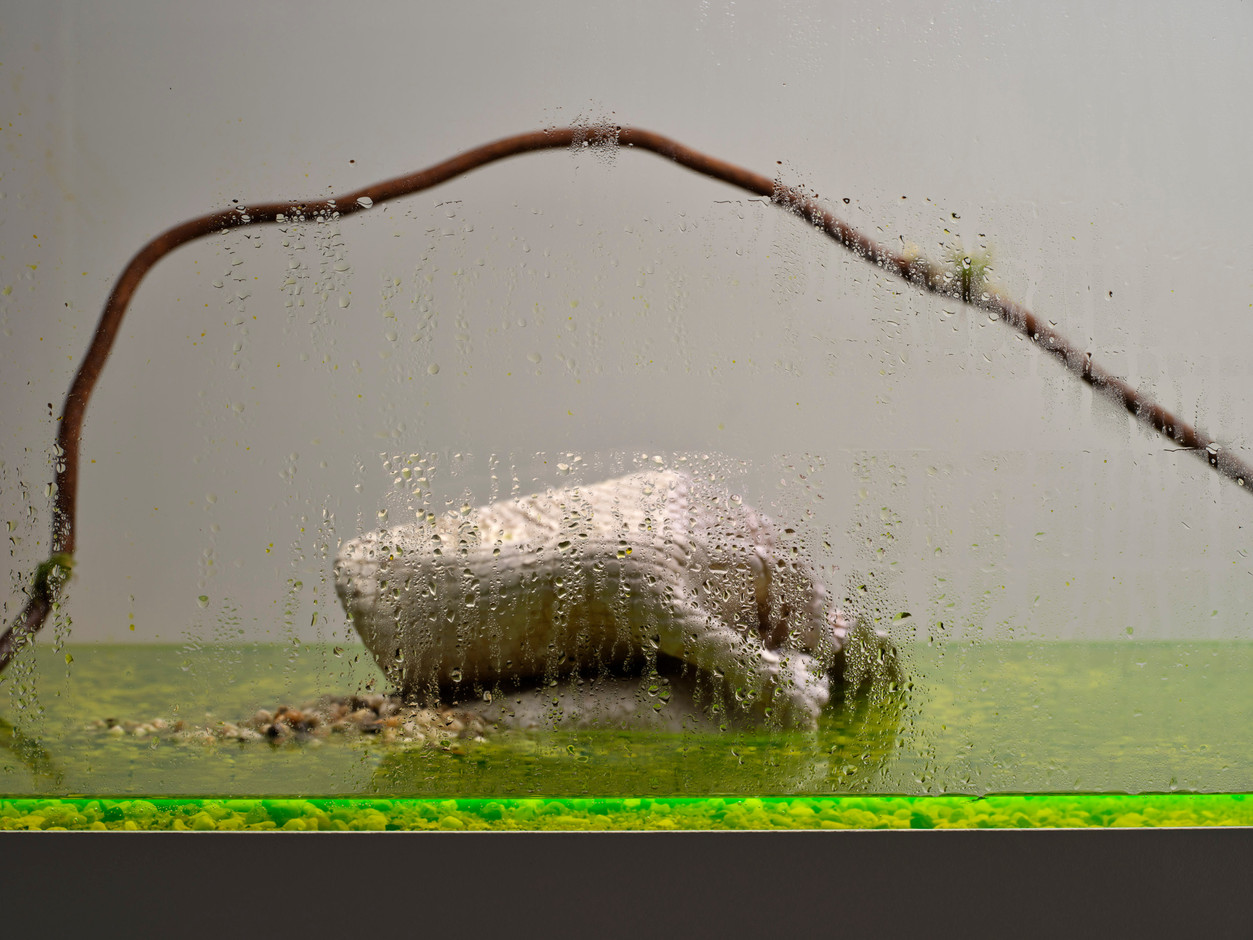
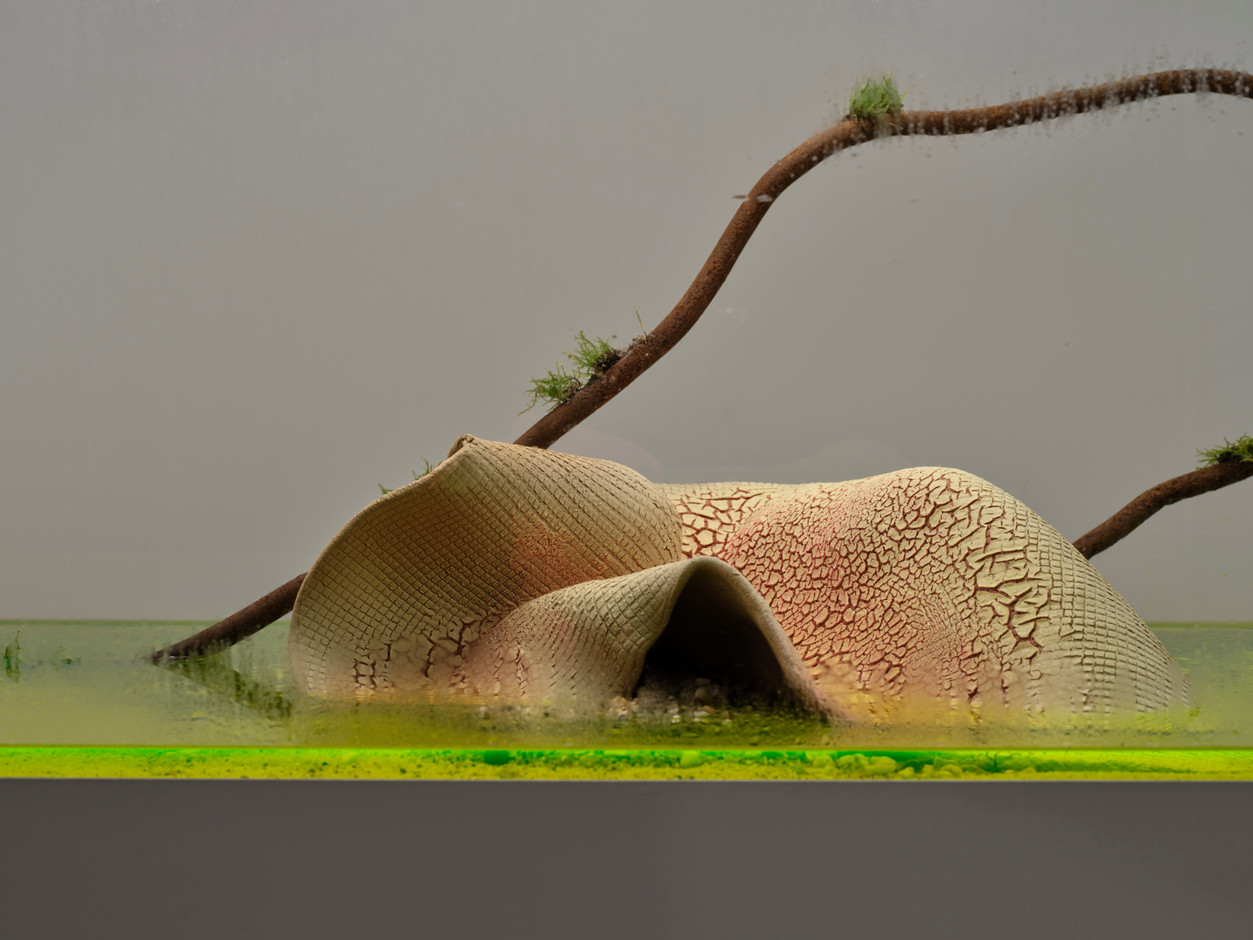
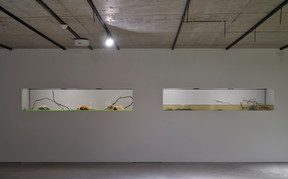
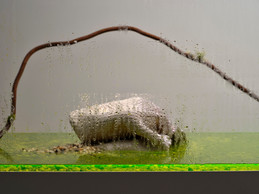
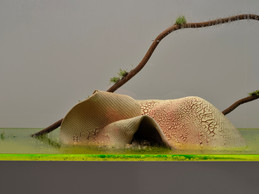
These plant mats are set against aquariums inspired by Ethiopia and the Arctic. The artist has introduced metallic elements that will interact with the water and disrupt this mini-ecosystem.
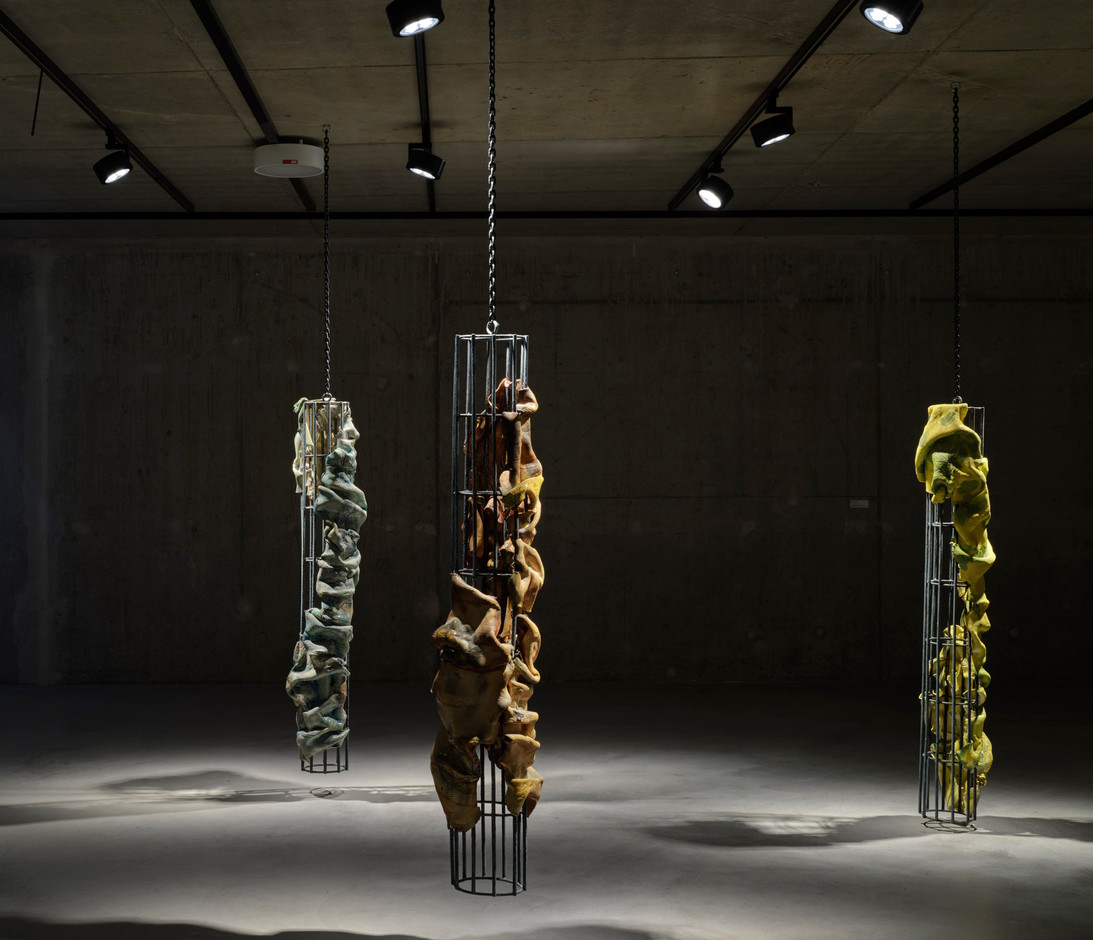
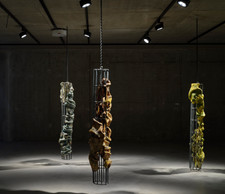
Alongside these are some very large-scale works that may have been produced during her residency in Mexico, “in kilns of almost industrial size,” explains Kox. Here, her work takes on a new dimension, hanging from the ceiling and intertwined with an iron frame around which the ceramic forms wind. The scale of these works is astonishing, given the materials used, and they exude a strong tension between the rigidity of the armatures and the suppleness of the ceramic forms.
Finally, the exhibition closes with an impressive ‘pool’ of clay, initially presented in a liquid state, but which--through a natural process--solidifies as the exhibition progresses. Above this pool of mud are two large steel beams, placed one on top of the other, whose balance--and the works they support--could be shattered by anything.
Vera Kox’s “Sentient Soil” is on display until 19 January at the Konschthal Esch
This article was originally published in French.