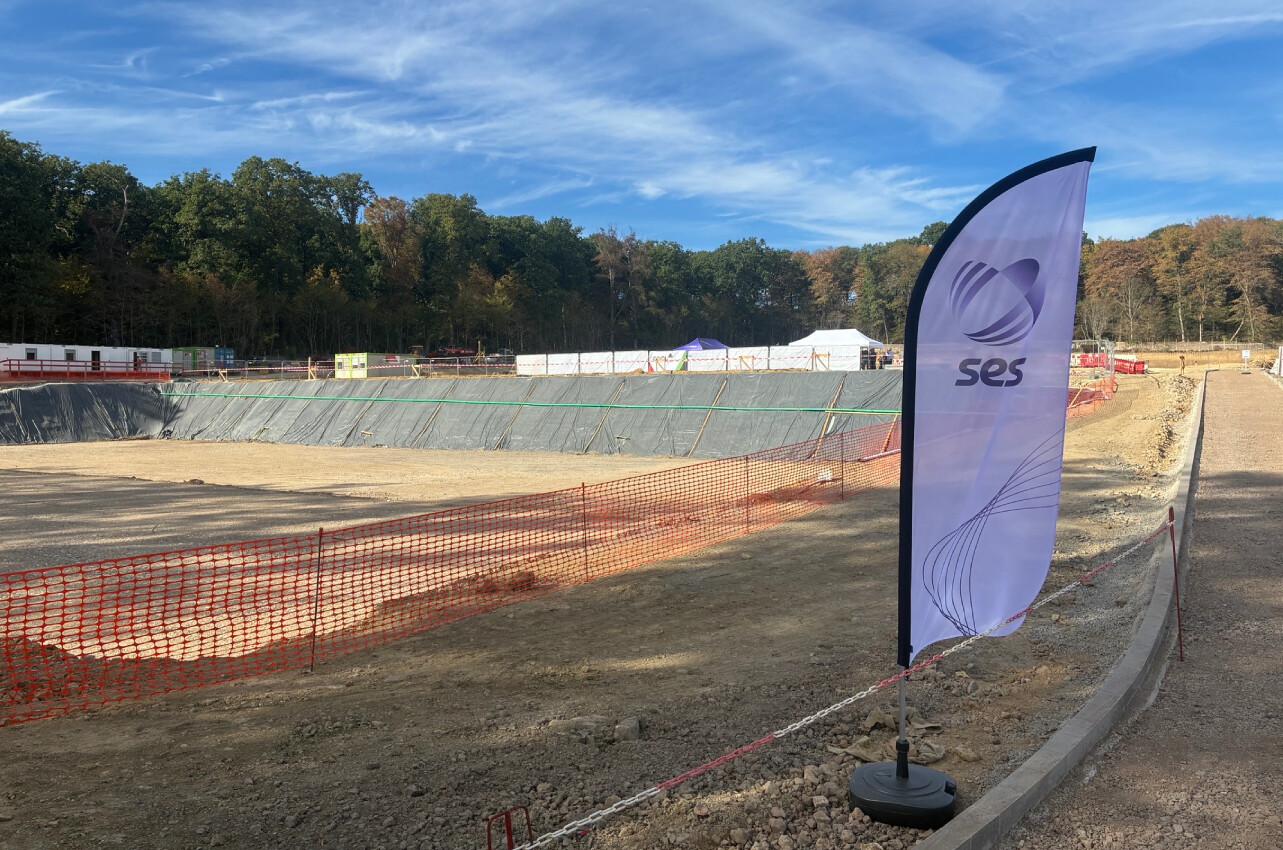
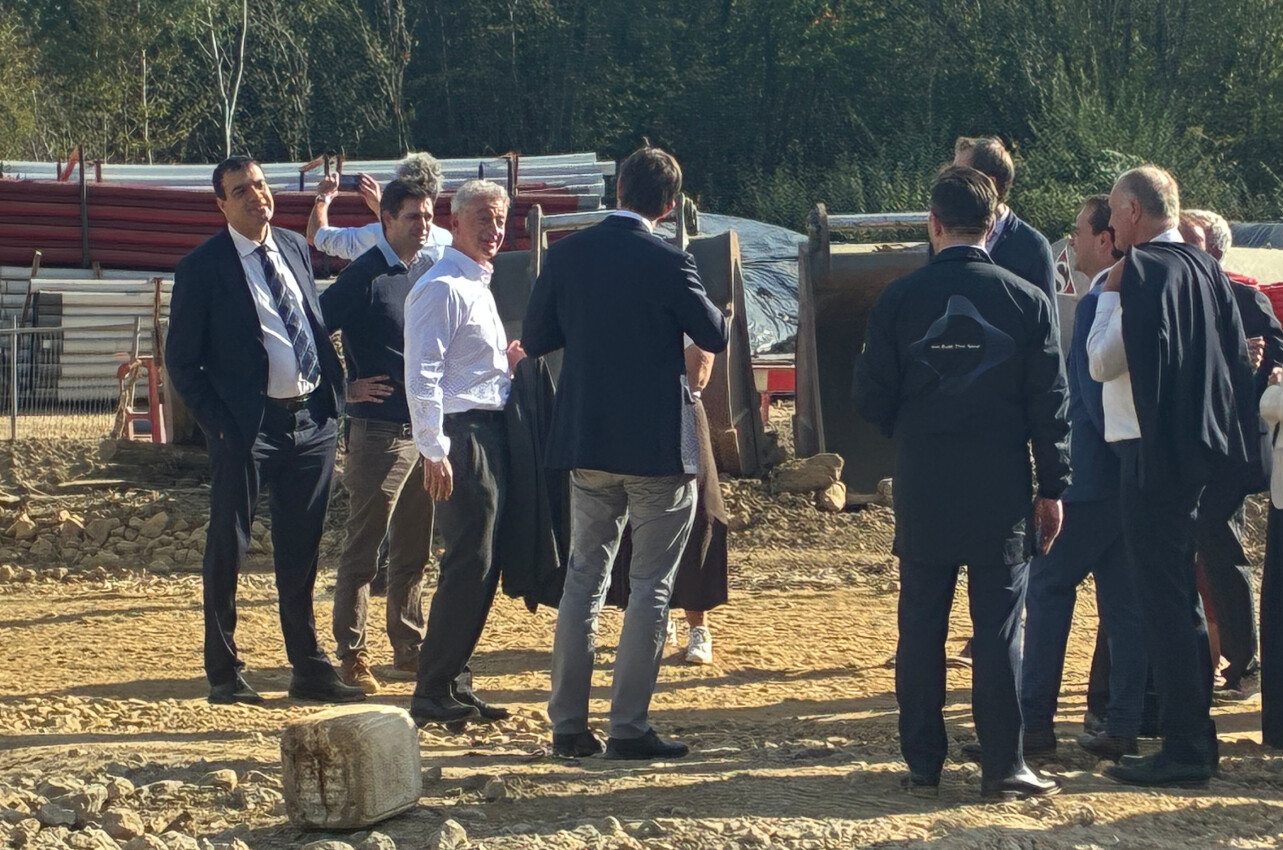
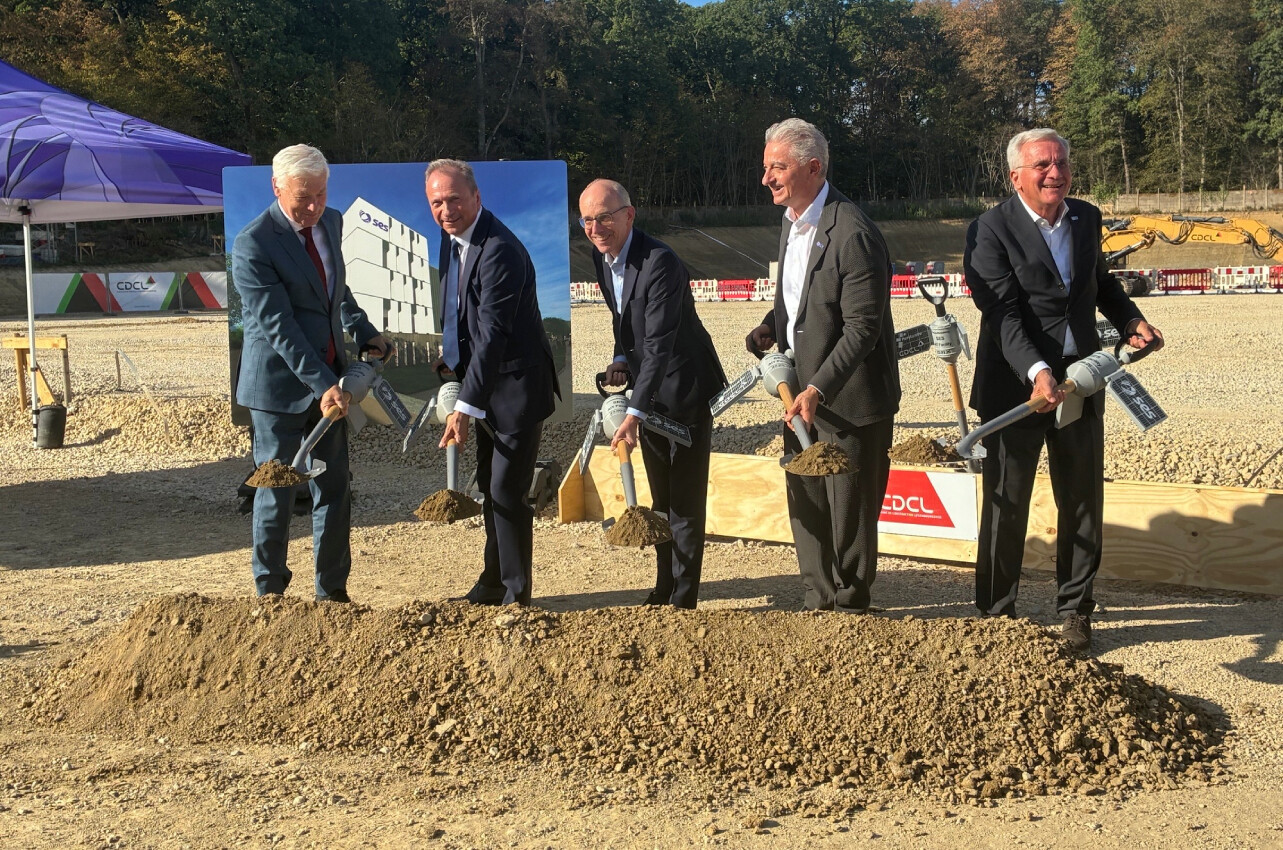
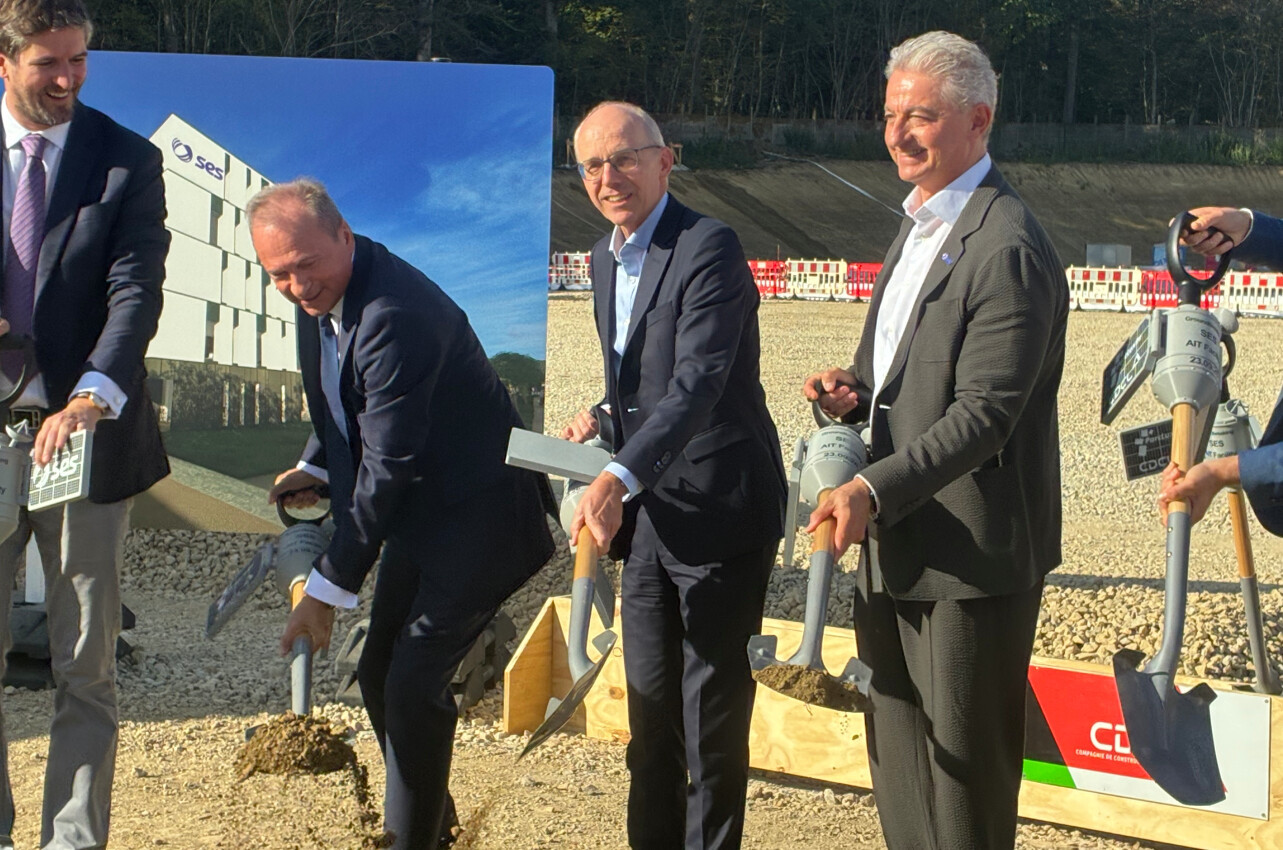
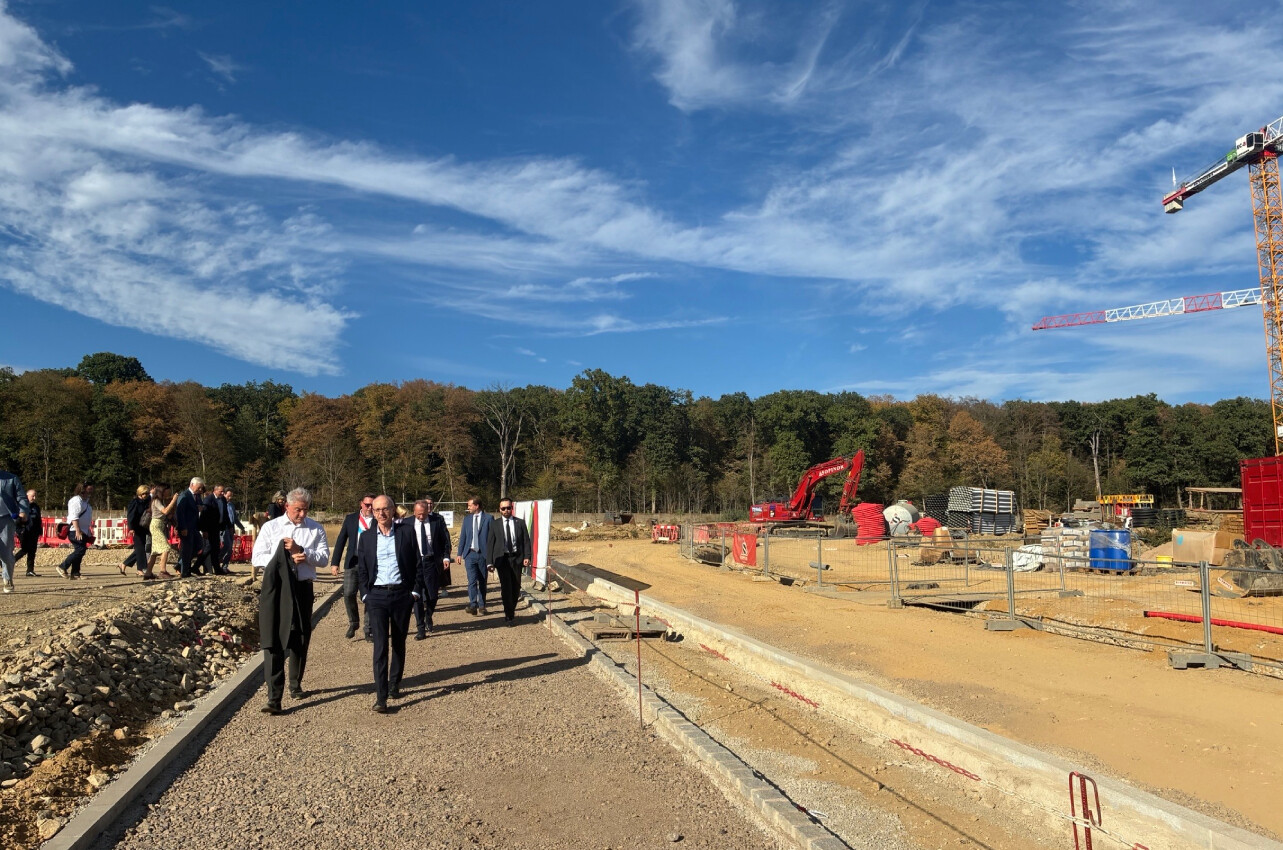
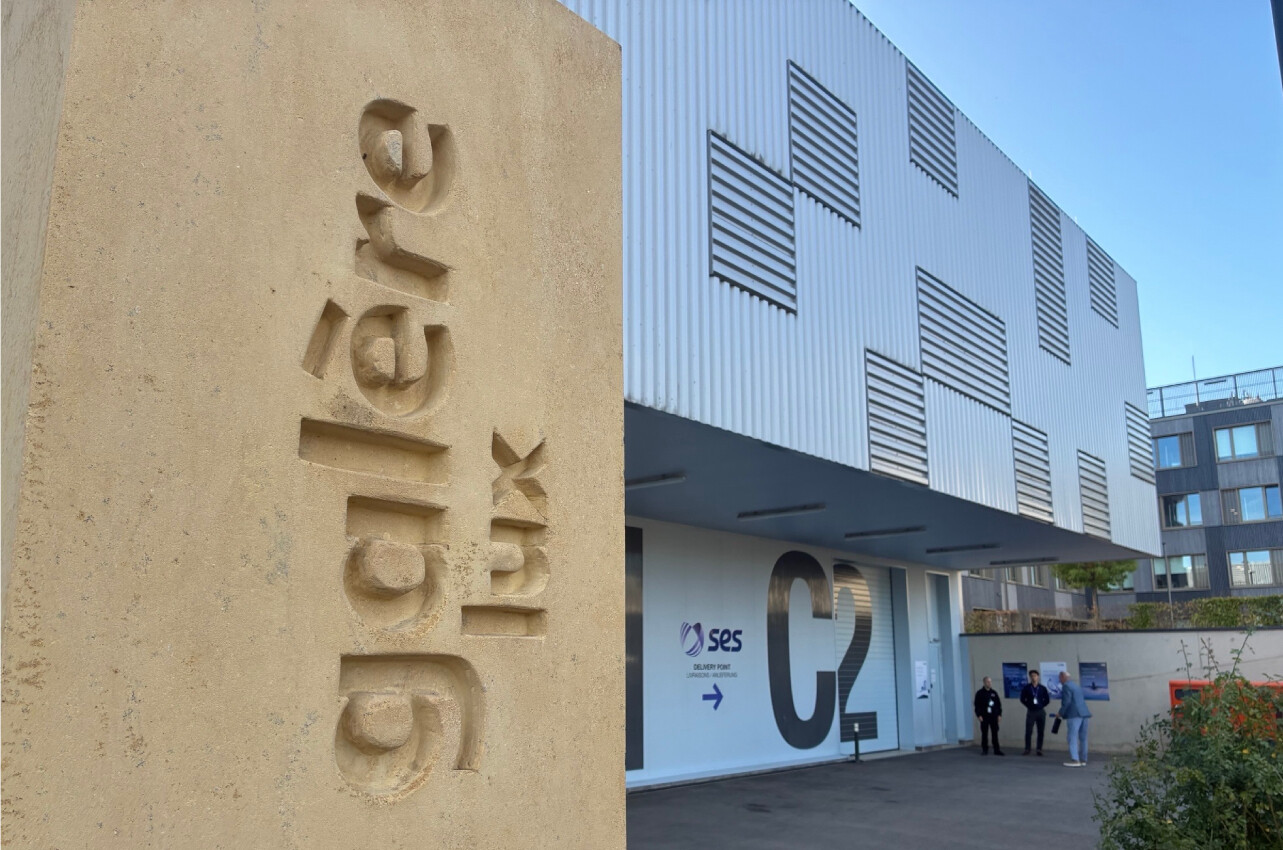
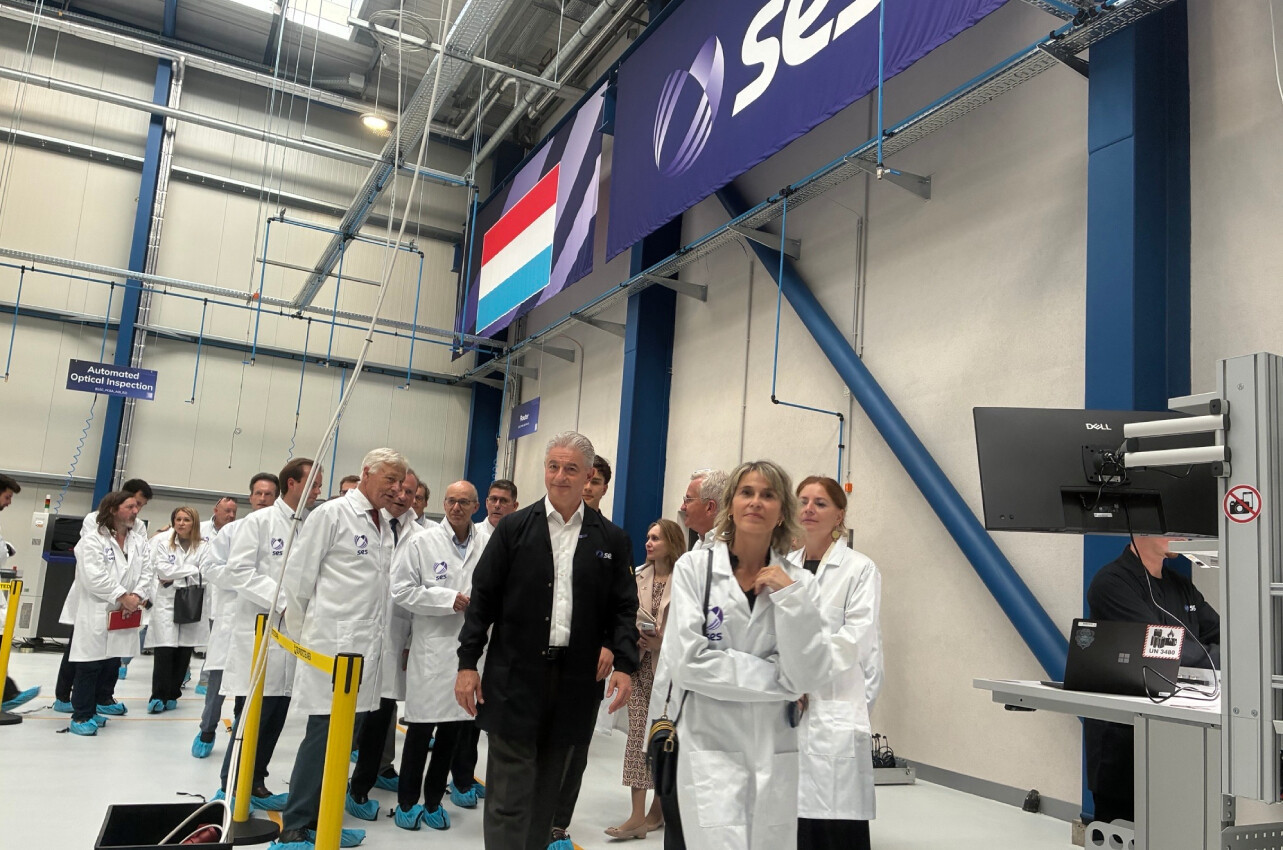
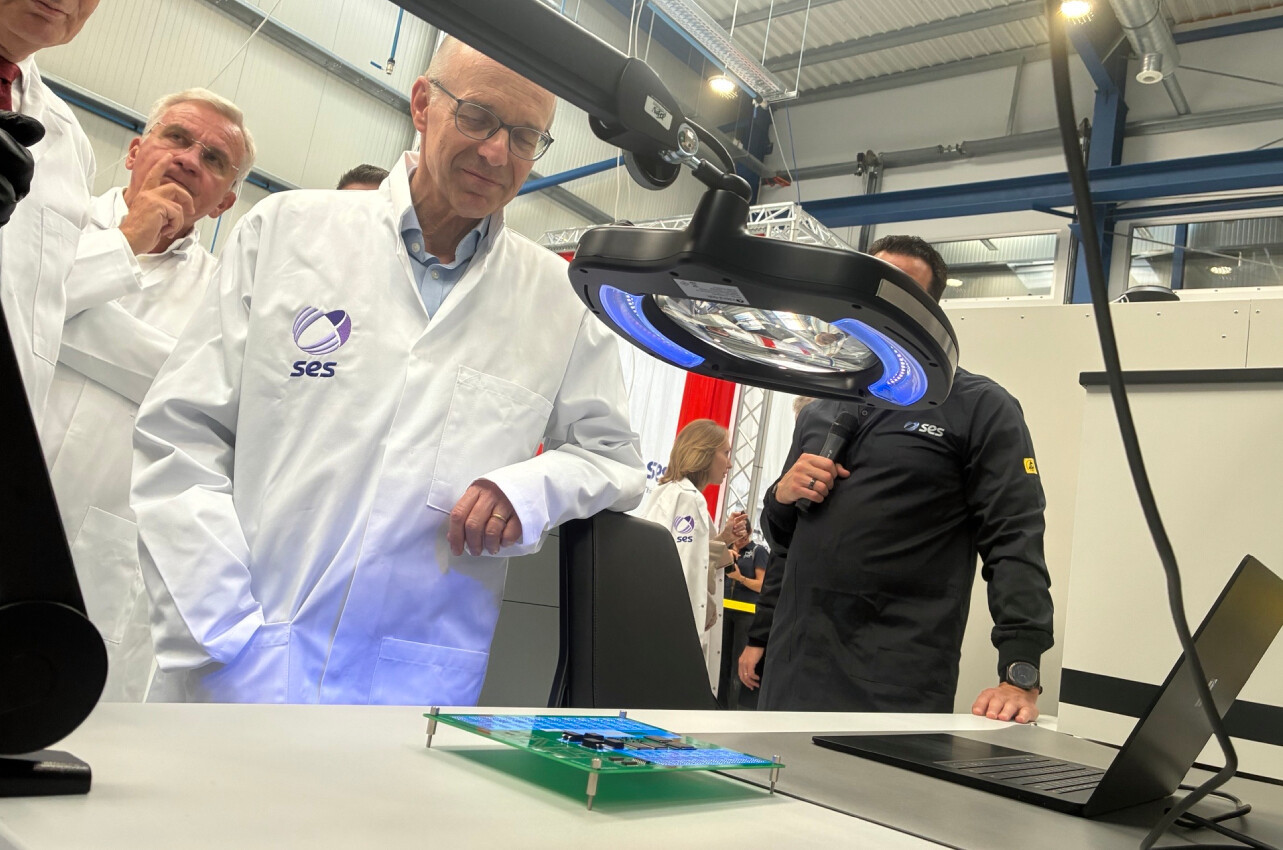
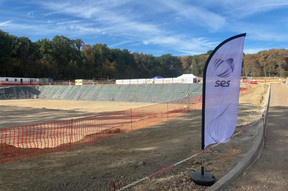
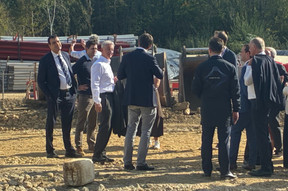
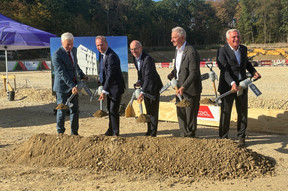
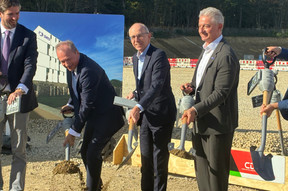
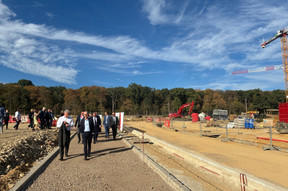
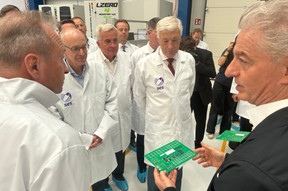
If it had finally rained, SES’s industrial future would look very much like an Olympic-sized swimming pool. A vast rectangular hole stretches across the ground in Kockelscheuer, in front of officials who have turned up to shovel a few cubic metres of earth under a blazing sun. For the officials – from the prime minister to the mayors, including the president of the parliament and the president of the state council – for the moment, it’s all dust and broad smiles. In less than two years, the group promises, the first satellites should be launched from here.
The construction site marks the first spectacular milestone in a project launched two and a half years ago. SES no longer wishes merely to design its networks, purchase its satellites from manufacturers and operate them from Luxembourg. The operator now intends to take control of part of the manufacturing process, from the electronics and payloads right through to the assembly and testing of complete satellites.
Our industry is changing at an extremely rapid pace. To stand still is to accept failure and fall behind.
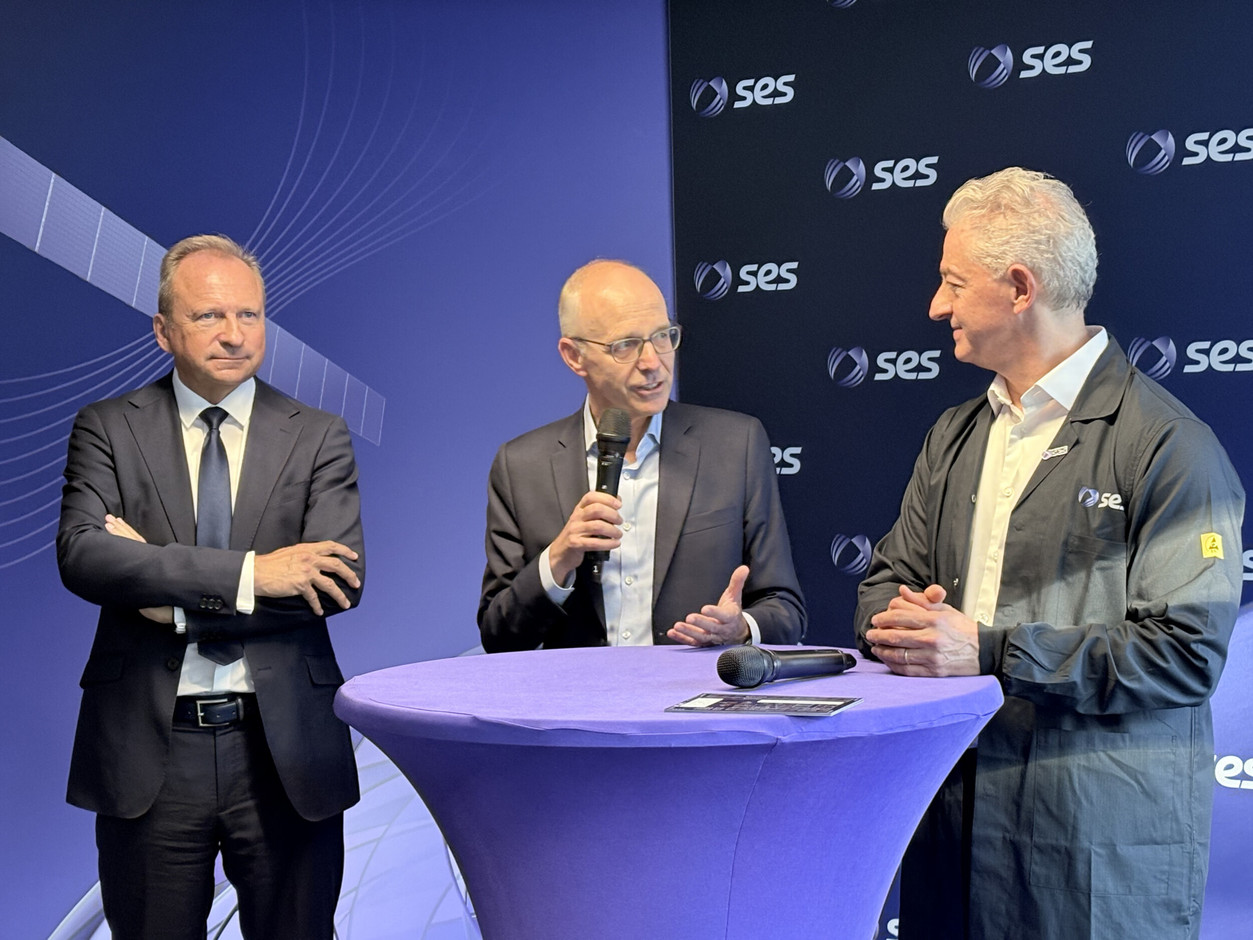
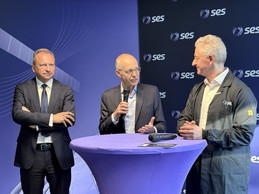
“Our industry is evolving at an extremely rapid pace. To stand still is to accept failure and fall behind,” summarised Adel Al-Saleh to the audience at the end of the tour. The CEO of SES acknowledges that the model which has underpinned the group for four decades is being called into question. “We have decided to challenge the business model that has served us well for 40 years.” It is as if a start-up were emerging from what was, 40 years ago, itself a start-up for which the state was prepared to commit 5% of its GDP.
The future building is to cover 16,000 square metres: 11,000 for production and 5,000 for offices. It will house an electronics production line, payload assembly stations, an area dedicated to complete satellites, research and development laboratories, and environmental testing facilities. Its footprint will measure 185 metres by 70 metres.
The first 60 employees are already on the job
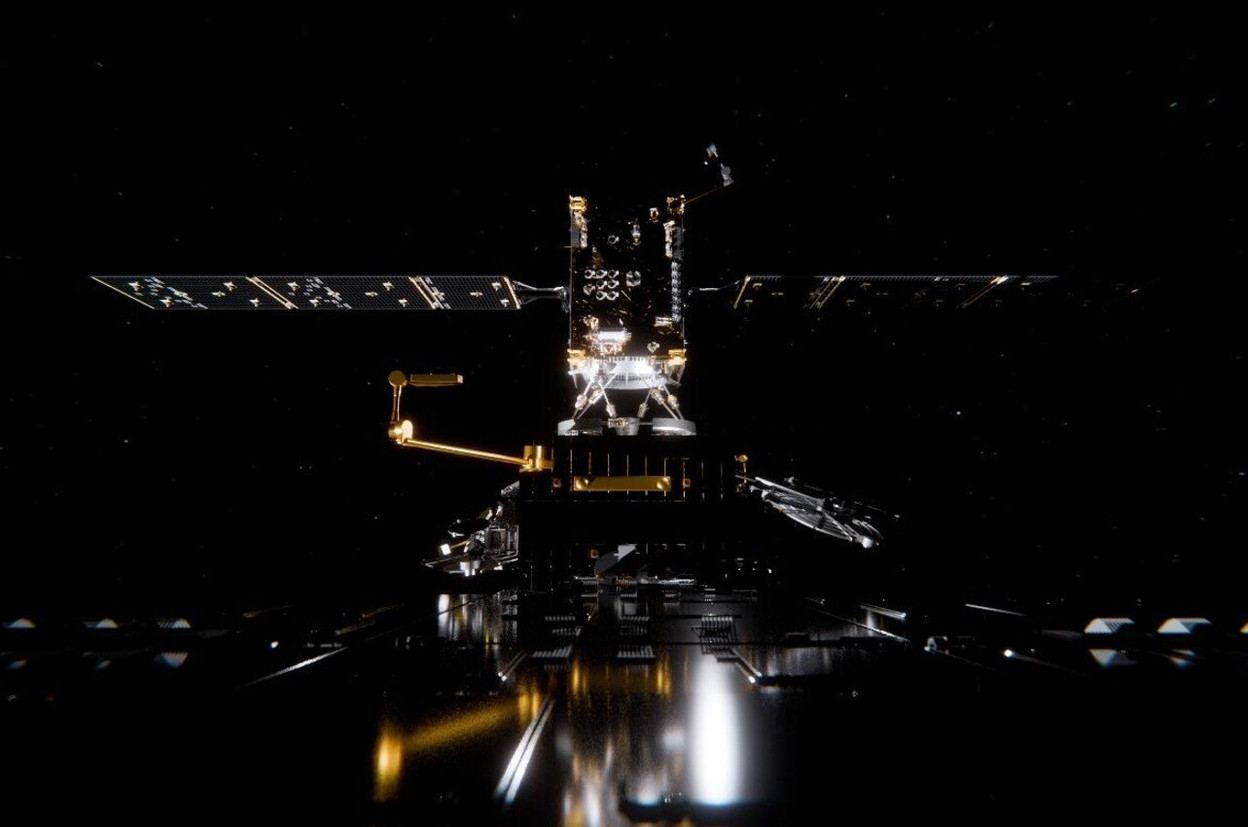
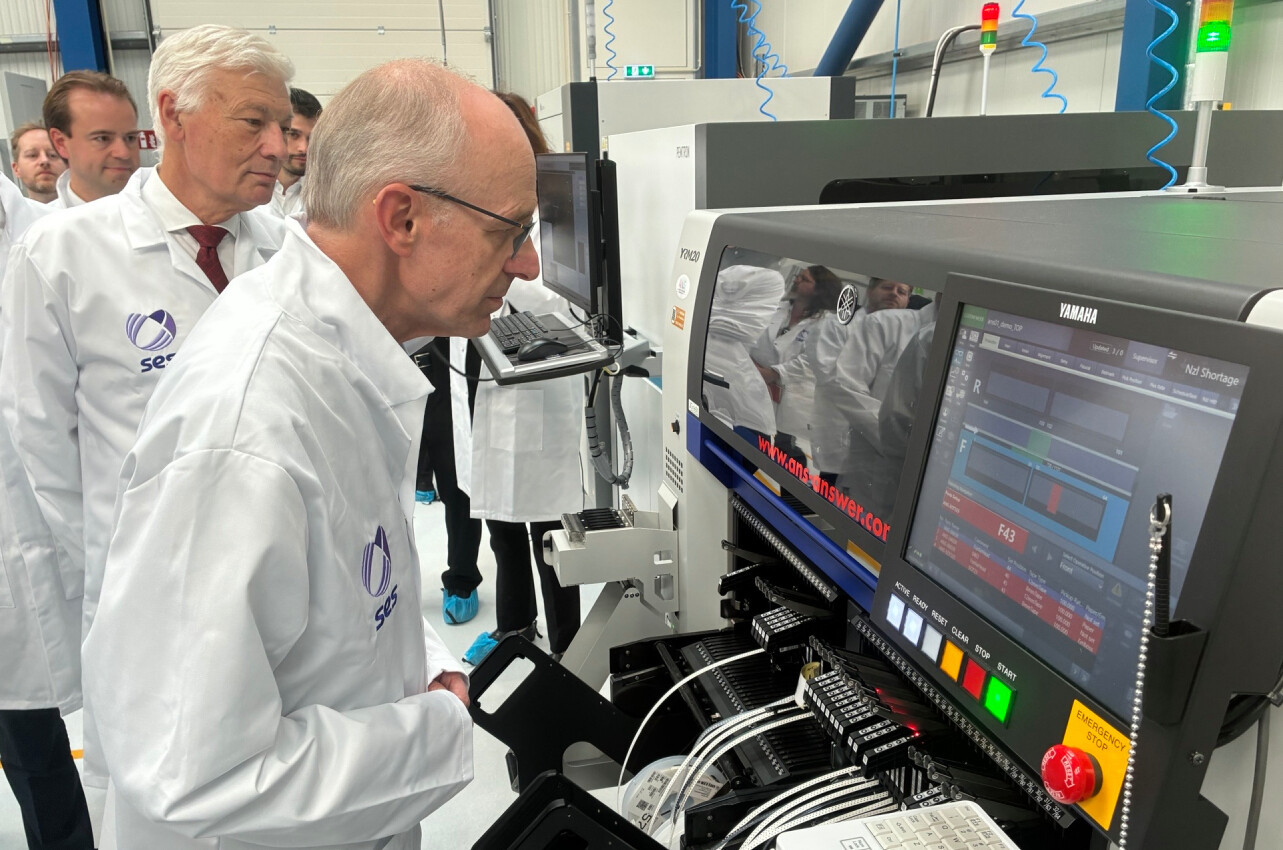
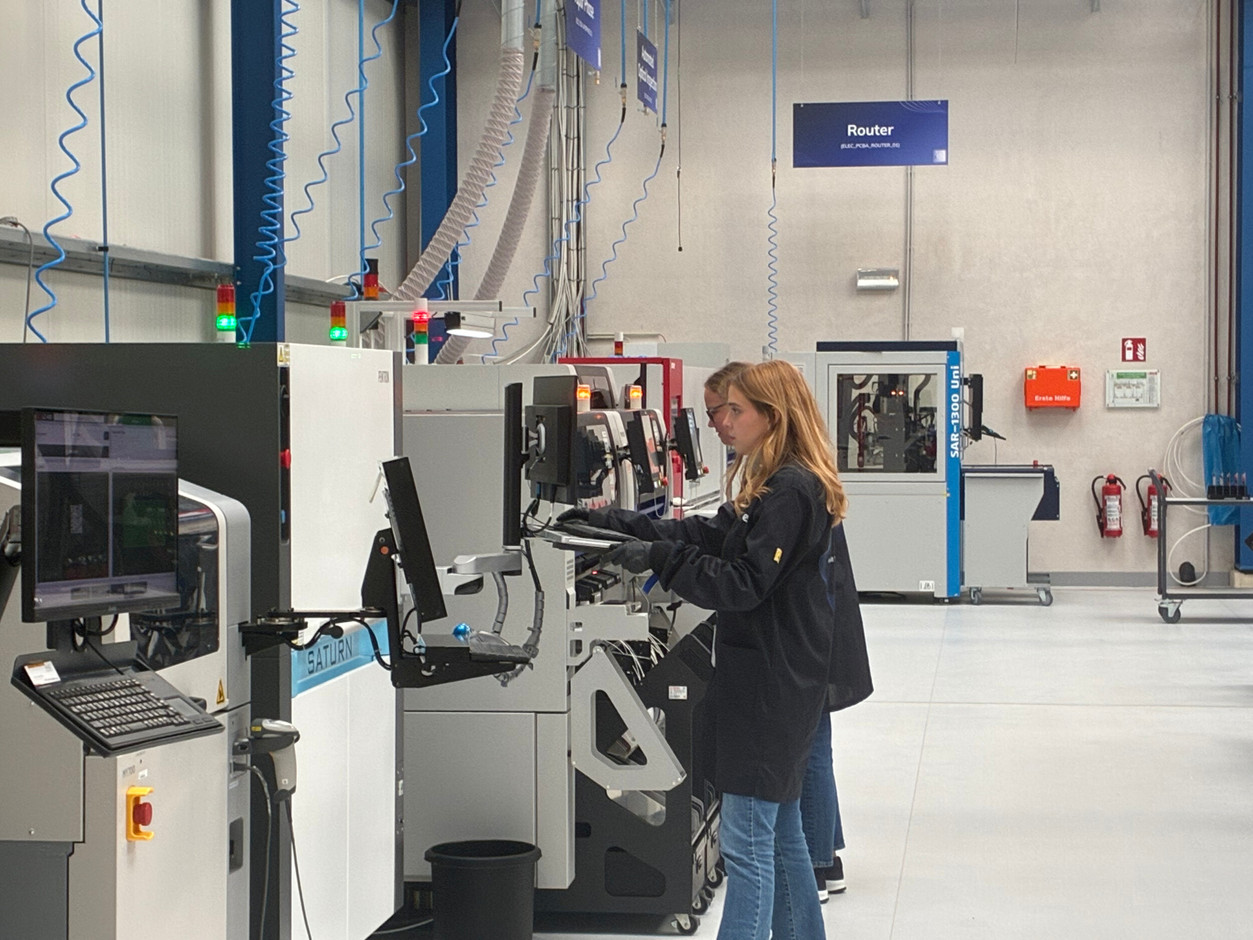
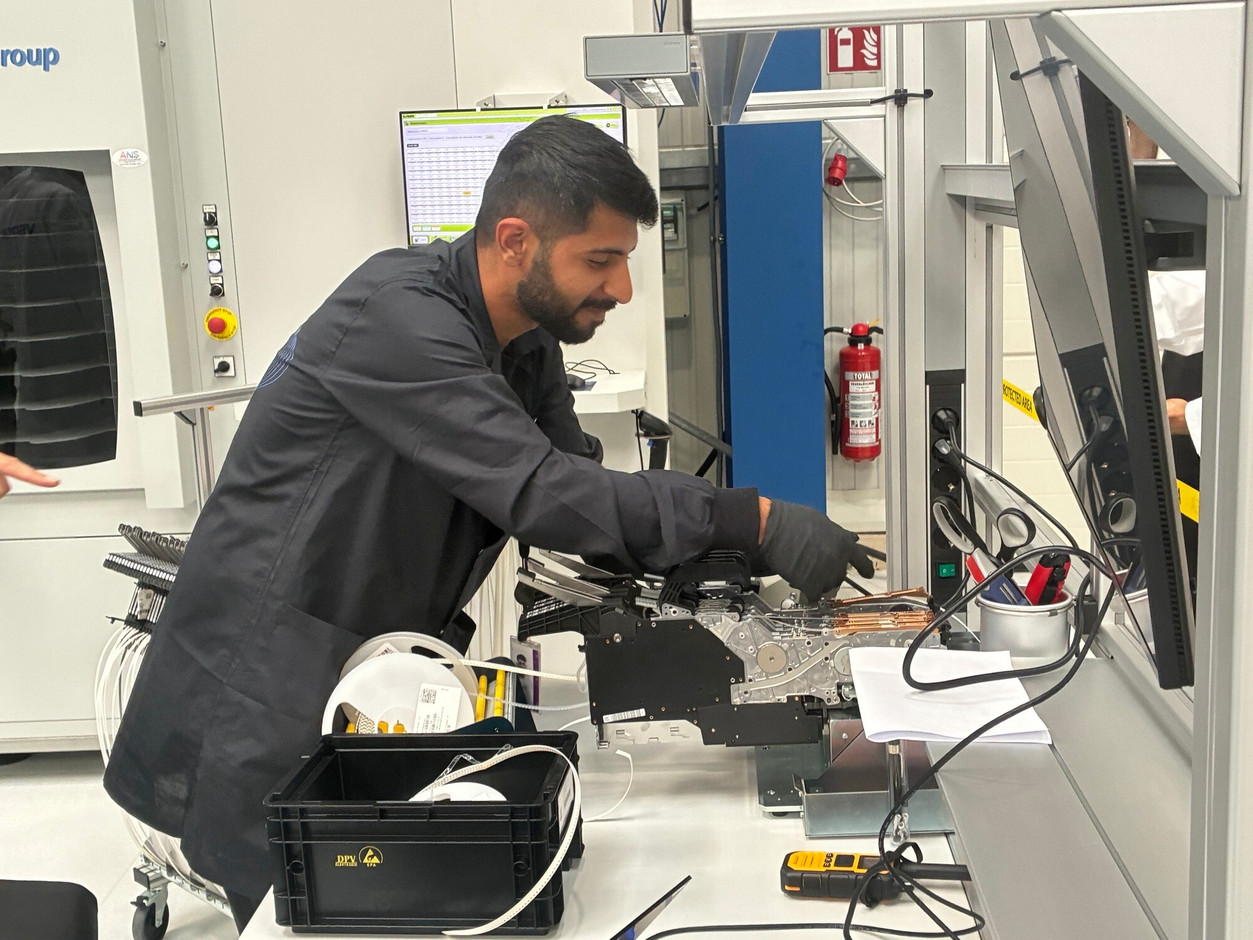
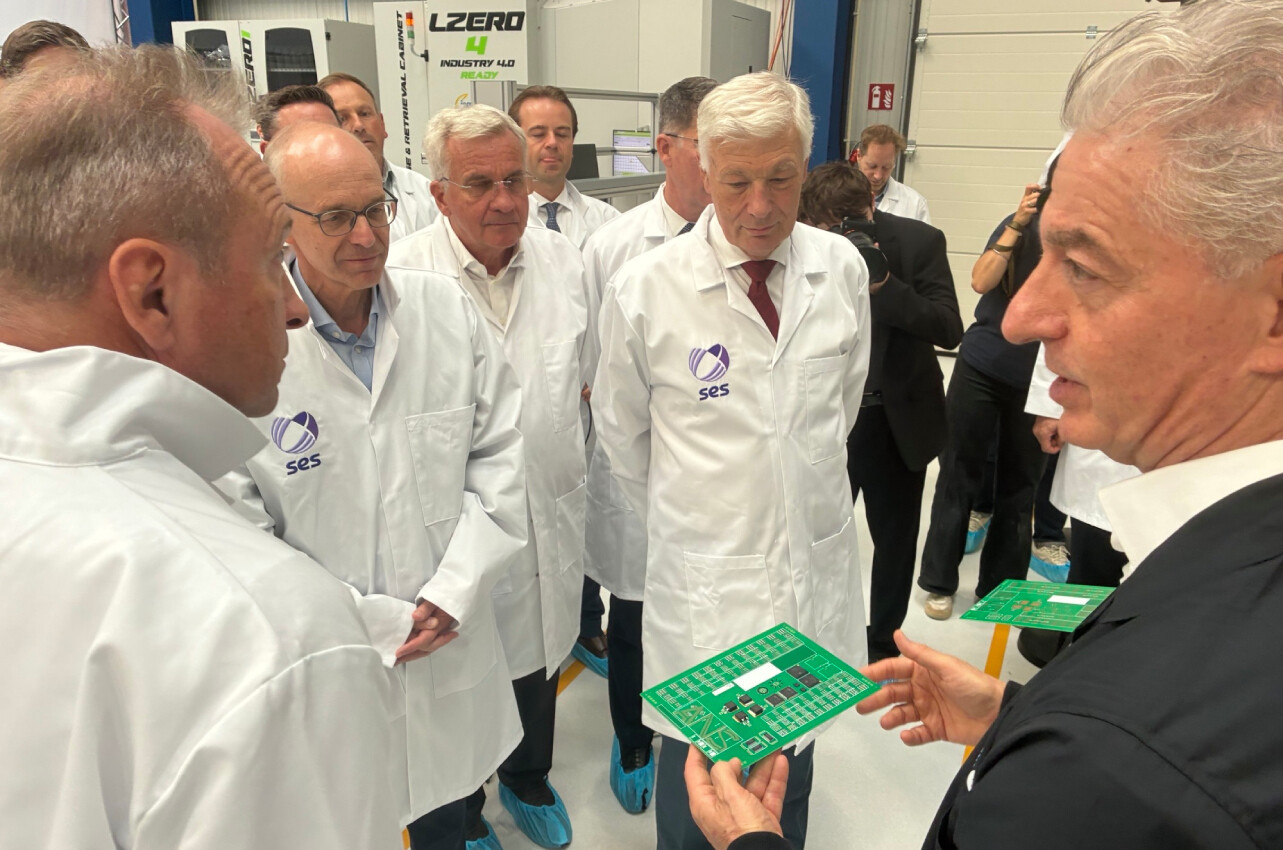
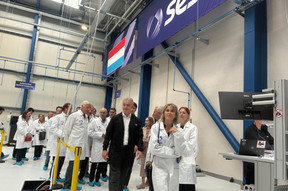
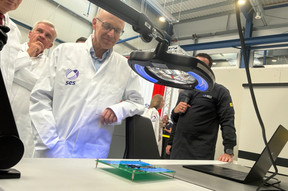
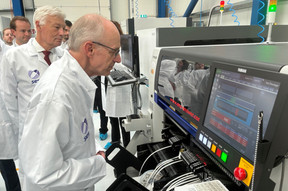
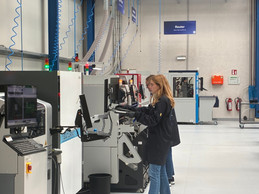
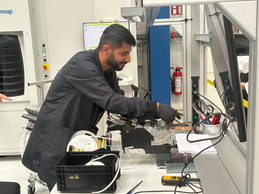
Behind the still gaping hole, the industrial project has already begun. Around sixty people are currently working on the programme and its first pilot facilities. SES says it has already recruited around 100 staff to develop this new capacity. Al-Saleh anticipates a rapid ramp-up: “This site will very quickly grow to 200 people, then to 300.” It is a state-of-the-art cleanroom, featuring technologies ranging from lasers to 3D printing, capable of printing microprocessors which SES will then assemble into what is known as a ‘platform’ – a rectangular cube fitted with solar panels and antennas.
CDCL Group has committed to delivering the building by the end of 2027. SES then expects to take a few months to install the equipment. The technical specifications state that the site will be completed in the first half of 2028, whilst Al-Saleh is aiming to launch the first satellites around the middle of that same year. When asked about the feasibility of this timetable, the executive did not promise a smooth-running project. “Do we stand a good chance of achieving this? I truly believe so. Will there probably be delays? Yes. But we’ll make up for them.”
The challenge lies as much in the pace as in the cost. According to the CEO, developing a satellite currently takes “more than four to five years”. SES wants to move to a model in which new satellites can be built every year. “We believe we can build a satellite for 50% less than the ones we buy today,” he says.
This estimate highlights the rationale behind the project: to reduce the lead times imposed by suppliers, shorten innovation cycles and gain better control over the supply chain. “We cannot rely on others to accelerate our innovation, improve our supply chain and develop our capabilities,” insists Adel Al-Saleh.
Greater independence where it makes sense
This autonomy does not mean that SES will manufacture everything. The group will continue to work with manufacturers capable of producing certain components more efficiently. “It depends on how you define autonomy,” explains its CEO. The priority is to eliminate certain dependencies on those who currently transform raw materials into electronic circuit boards, chips or sub-assemblies. SES will then select the areas in which integration actually brings real benefits.
Nevertheless, the model breaks with the traditional division of roles in the space industry. The company currently purchases the majority of its satellites from major manufacturers. It now aims to become an industrial player in its own right, at least for the technologies it considers critical and differentiating. The production capacity at Kockelscheuer will initially serve its own needs. However, SES does not rule out the possibility of one day manufacturing for other operators. “That’s not the initial intention. The intention is to build them for ourselves, more quickly and more cheaply. But if an opportunity arises to build them for someone else, why not?”
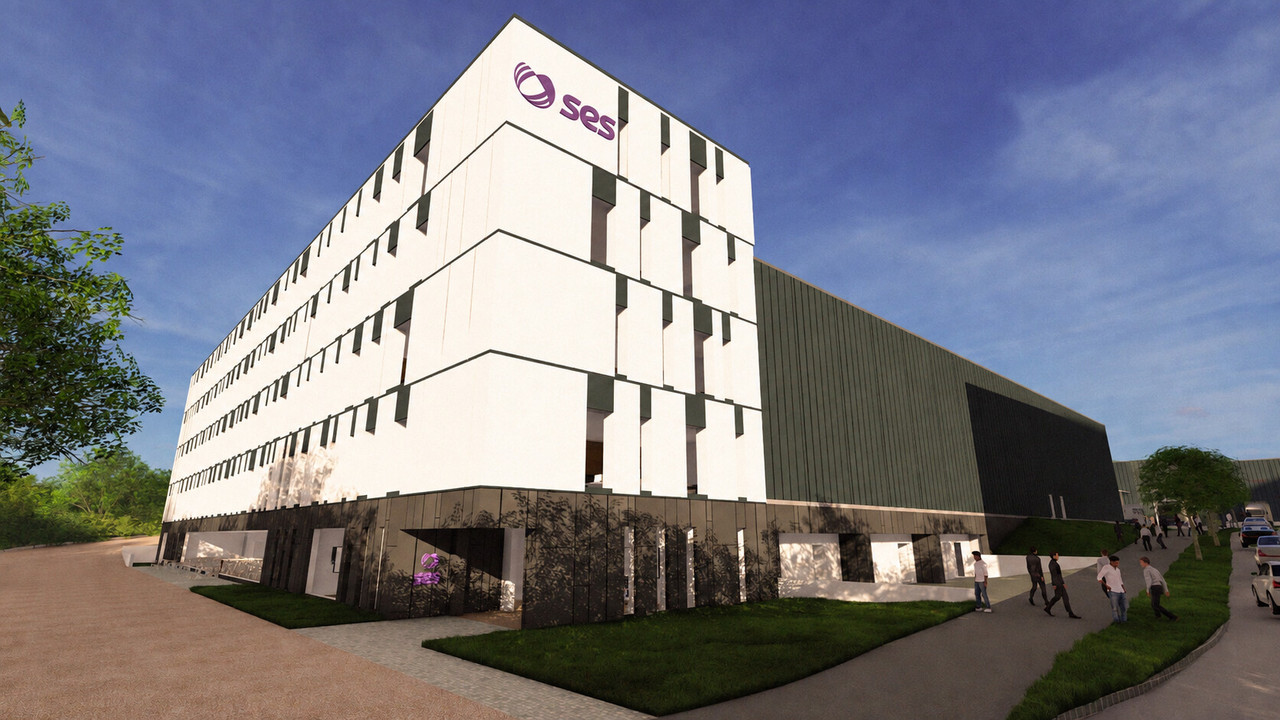
An image of SES’s future industrial site in Kockelscheuer. (Image: SES/CDCL Group3D illustration by Alleva Enzio Architectes & Associés)
In particular, the site is set to support meoSphere, the next generation of SES’s medium Earth orbit network, following on from O3b mPOWER. It is also set to contribute to the European Iris² programme through the development of payloads and the assembly, integration and testing of satellites. The Iris² satellites under SES’s remit are to be assembled in Luxembourg, Al-Saleh announced to representatives of the European Commission.
Luxembourg wants to make its mark in space
Prime Minister 
Minister of Finance 
However, the factory is just the first step. SES wants to transform the Kockelscheuer site into a campus capable of hosting start-ups, medium-sized businesses and industrial partners. These organisations would have access to the group’s facilities, testing resources and the expertise of its engineers to develop technologies that SES cannot or does not wish to pursue on its own.
“Our ambition goes beyond SES,” says Al-Saleh. “Our ambition is to build a world-class space campus in Kockelscheuer.” This is where the challenge takes on a whole new dimension. The issue is not merely whether SES will succeed in manufacturing its own satellites there more cheaply and quickly. It is a question of whether a factory designed to reduce an operator’s dependencies can become the industrial foundation that is still missing from Luxembourg’s space ecosystem.