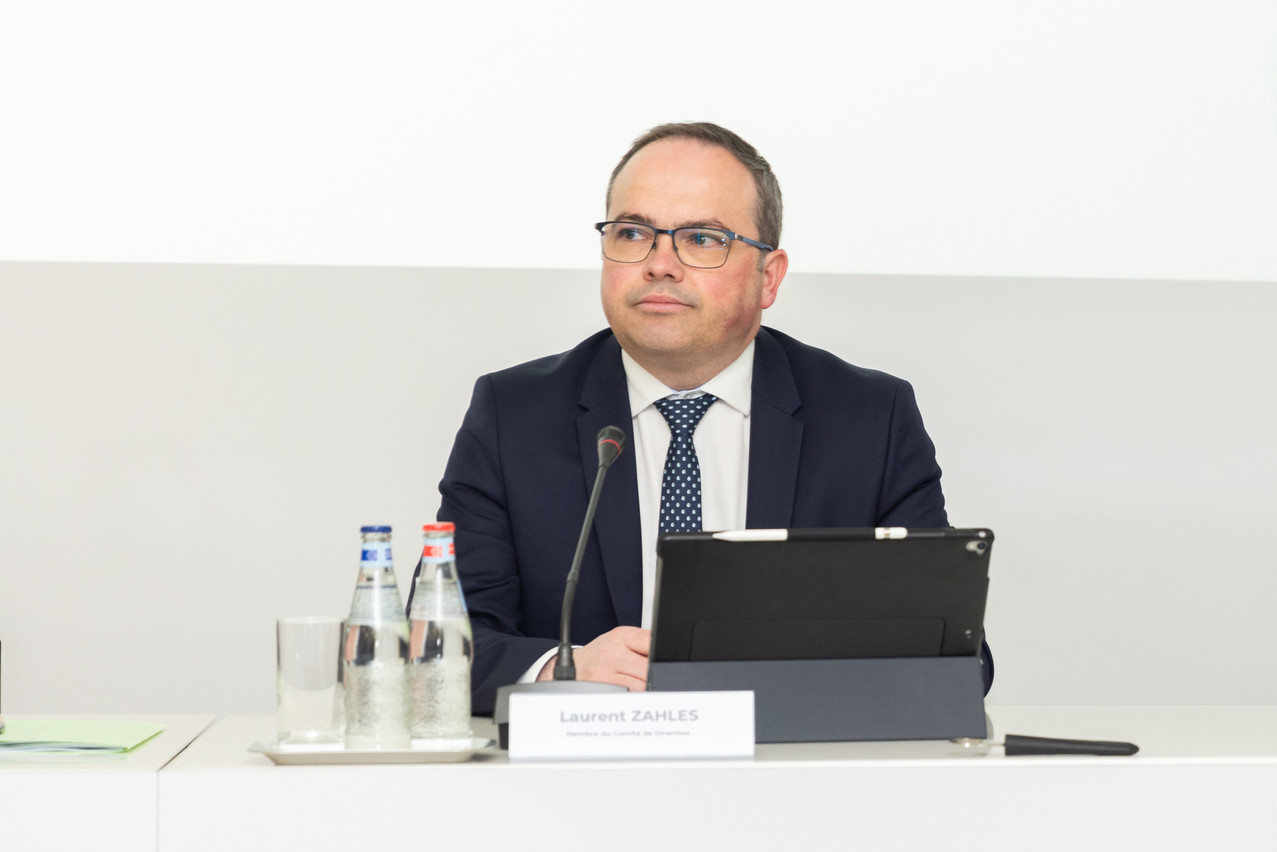
Faced with the housing crisis, the banks are reasserting their role as a solution. “Banks have always wanted to provide credit and are certainly part of the solution to the housing crisis,” says Laurent Zahles, Vice-Chairman of the Retail Banking Cluster at the ABBL and Chairman of the Executive Board of Banque Raiffeisen. “We live from the loans we grant, not from those we refuse.”
In 2024, banks granted 16,056 mortgage loans (+18% year-on-year) for a total volume of 7.81 billion (+8.8%). And 2025 looks set to be even better, with 9,936 mortgage loans granted in the first half of the year (+39.9% compared with the same period in 2024) for a total volume of €4.75 billion (+34.1% year-on-year). Laurent Zahles attributes this growth to the “perhaps temporary” fall in interest rates and the increase in household purchasing power “thanks to the government’s temporary support measures”. And this momentum is set to continue: “the return from Home Expo 2025 is considered positive, with a strong customer presence, including for concrete projects and first-time purchases”.
Loans that relate to the purchase of existing properties. The new-build market remains at a standstill, “mainly due to a lack of confidence among buyers, who prefer existing properties where they can move in immediately”.
Mortgage loans, a strategic issue for the banks
A return to the situation that prevailed on the market before 2019 in the wake of a decade of falling rates is not on the agenda. “Bankers are constrained by the fact that a large proportion of the loans they grant are re-used deposits that their customers entrust to them. We have a responsibility not to put these deposits at risk through a risky lending policy. And on the other hand, we don’t want to put credit applicants in a situation where they are unable to repay their loans. This inability to repay had increased in the summer of 2022, following the rapid and significant rise in key interest rates by the ECB, which had the effect of tightening the market. “We received fewer loan applications, or some applications could not be processed, because the applicants no longer met the conditions for granting loans, which are strictly regulated in Luxembourg.”
Mortgage loans remain a strategic issue for the banks, between whom competition is at full force. Not only in terms of commercial conditions, but also in terms of customer expectations. These customers have three main needs: information, simulation and estimation tools, and transparency. “Customers are asking for greater transparency in terms of credit availability and capacity. They also want to be able to compare what one bank offers with another.” In this business segment, digitalization is not a key argument. Instead, customers are looking for proximity, trust and support for such a life project. The average length of a mortgage commitment is around 25 years, insists Laurent Zahles.