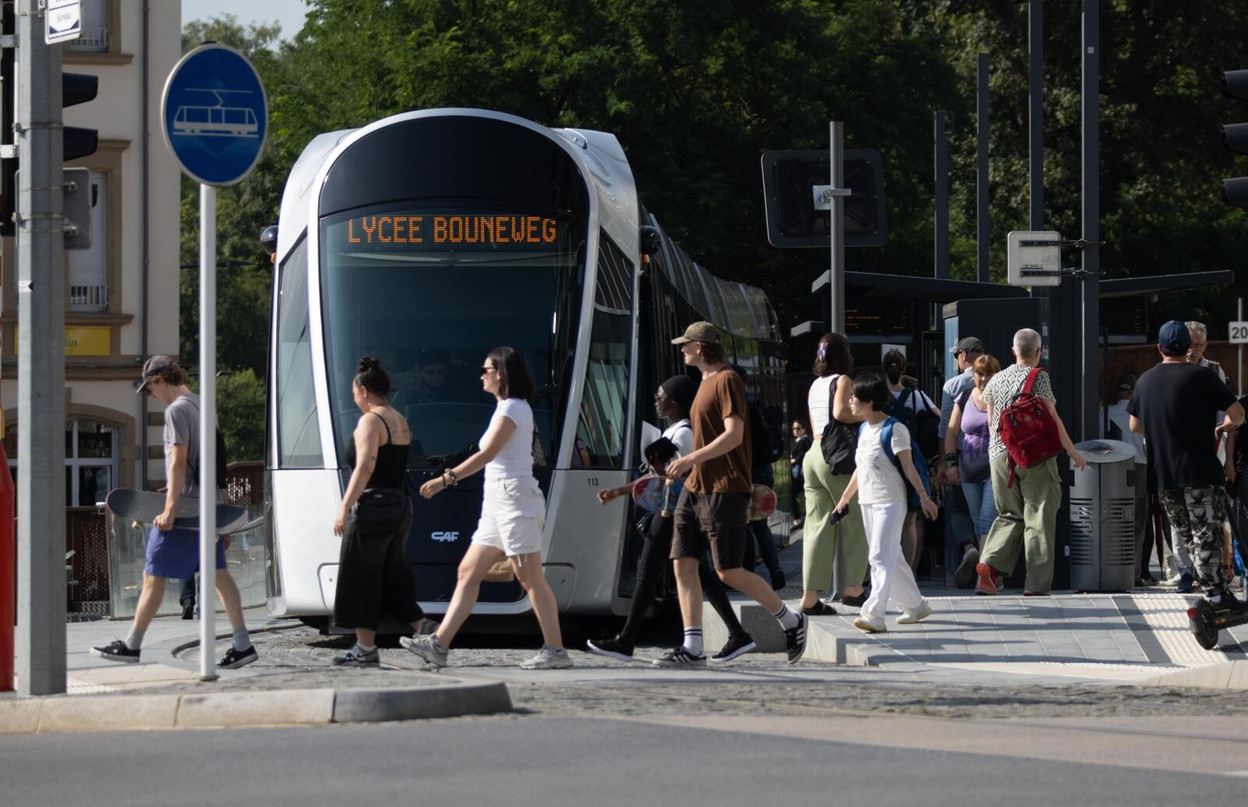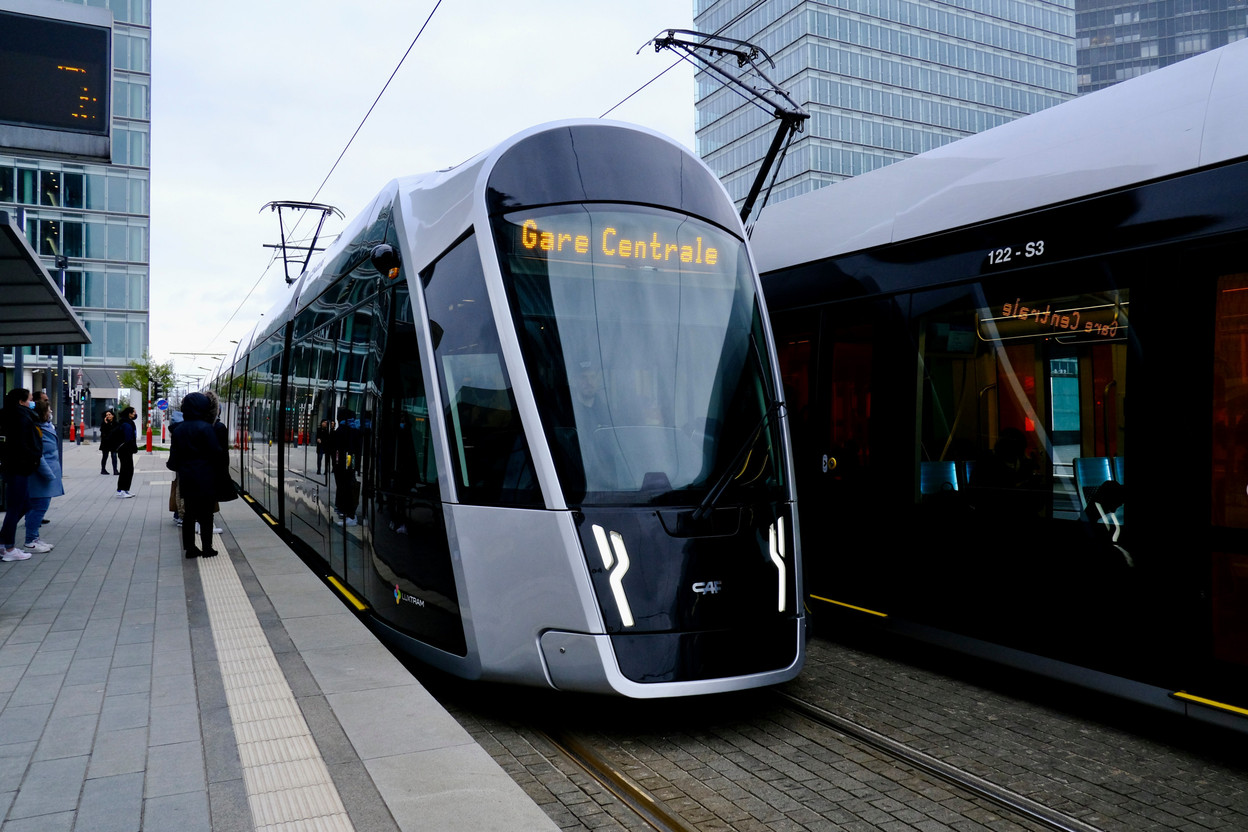
On the road to Arlon, the tram will not remain visible for long. After running alongside the road, it will go underground for around 600 metres before re-emerging in front of the Luxembourg Hospital Centre.
The Act of 17 September 2026, published this Friday evening in the Official Journal, authorises the government to carry out this extension between Place de l’Étoile and the future CHL transport hub, located in Strassen. It also declares the works to be in the public interest, thereby paving the way for the necessary land acquisitions. The legislation sets the ceiling for expenditure borne by the State at €114m excluding VAT. However, this amount does not represent the full cost of the project. The financial statement estimates the total cost at €171m excluding VAT: €114m for the State and €57 million for the City of Luxembourg, representing a split of two-thirds to one-third.
This estimate is based on the construction price index for April 2025. The amounts still to be committed will be adjusted every six months in line with changes to this index. The budget includes €16 million for studies, inspections and preliminary investigations, €145m for works, supplies and ancillary services, and €10m for miscellaneous and unforeseen expenditure. The Chamber of Commerce had expressed regret at the lack of a more detailed breakdown of costs.
Four stops
Stretching 2.2 kilometres, the new branch is set to have four stops: Étoile, Wunnquartier Stade, CHL and Pôle de mobilité CHL. It will branch off from the existing line near Stäreplaz-Étoile station, pass through the future Silver Étoile development, and then follow the Route d’Arlon.
The tram will initially run at ground level. Between Rue des Foyers and Val Fleuri, it will run through a covered cutting approximately 600 metres long. This solution is intended to avoid further encroachment on neighbouring properties and to free up space for pavements, green spaces, rows of trees and a two-way cycle path. To the west of Val Fleuri, the trams will emerge above ground before serving a station situated in front of the CHL on Rue Federspiel.
The project is therefore not simply a matter of laying tracks. It will transform the Route d’Arlon, part of which will retain one carriageway in each direction. Around the former Josy-Barthel Stadium, the tram infrastructure is set to support the development of the Wunnquartier Stade. At Place de l’Étoile, the line will cross a future pedestrianised square forming part of the Silver Étoile project, which will provide 600 homes and retail outlets.
Construction is due to begin in 2029
Construction is due to begin in spring 2029. This timetable depends, in particular, on the property and road projects planned for the Place de l’Étoile. The works will be carried out in sections, with traffic arrangements being adjusted in stages whilst the covered trench is being built. Access to homes, shops, emergency services and the CHL must remain guaranteed. Around 15 private properties are affected by land required for the project.
The service is still scheduled to commence in 2032, approximately six years after the Finance Act is passed. The AVL and RGTR bus routes will then need to be reorganised around the Étoile and the CHL to avoid running parallel to the tram line and to provide services to its stations.
The CHL transport hub will initially serve as a temporary terminus. The network is then due to extend towards the future West Park-and-Ride, near Boulevard de Merl, to attract some of the motorists arriving via the A6. This subsequent phase is not funded under the Act of 17 September. The additional trains required to operate this branch line will also need to be provided for under a separate Act.