Everything was in place. The memorandum of understanding had been signed, the valuation negotiated, and investors approached. In December 2021, Ocsial was preparing to merge with a US SPAC to go public. The deal was expected to enable it to raise between $300m and $800m by offering around 15% of its share capital. The Luxembourg-based company, which had become one of the few players capable of the industrial-scale production of graphene nanotubes, was then valued at $2.3bn.
“Everything was ready. I had signed a memorandum of understanding with a SPAC in December 2021, based on a very favourable valuation of the company,” explains Ocsial’s CEO, Konstantin Notman, at the company’s offices in Leudelange.
In January 2022, the operation’s American partners were still visiting the group’s Russian facilities. A few weeks later, Mr Notman was presenting Ocsial to investors who were being asked to finance the ‘Pipe’ – the injection of private capital to accompany the merger with the SPAC. “It was one of the best-known funds in the world. Everything was going well. They were happy, I was happy, everyone was happy. And then, boom: the invasion of Ukraine. A disaster.” Within a few days, the plan for an initial public offering collapsed. Worse still: Ocsial’s business model became virtually impossible to justify to its clients, insurers and banks.
Banks, insurance companies, our US, European and Hong Kong subsidiaries: everyone was asking the same question. It was an absolute disaster.
“Within two days, it was absolutely clear that we were at an impasse. The product came from Russia and 100% of our production assets were located there. Even though all the intellectual property was held in Luxembourg, who was going to care?” The company is legally based in Luxembourg. Its patents are registered in the Grand Duchy. Its customers and sales teams are spread across the globe. But the product still comes out of its Russian factories. After the outbreak of the war, this origin alone was enough to taint the entire supply chain.
“Companies from all over the world were asking us: ‘You have a factory in Russia – what on earth are you still doing there?’ Banks, insurance companies, our US, European and Hong Kong subsidiaries – everyone was asking the same question. It was an absolute disaster.” By March 2022, three weeks after the invasion began, the management took a decision. Ocsial had to freeze its Russian operations and rebuild elsewhere the industrial infrastructure that had taken nearly a decade of research and development to create.
In Serbia due to a lack of land in Luxembourg
Luxembourg is already the group’s legal and decision-making centre, but it does not allow for the immediate relocation of industrial operations. The site earmarked for the Differdange factory has not yet been secured. The necessary permits are lacking. Rapidly relocating several dozen Russian engineers and their families requires visas and procedures that are incompatible with the urgency of the situation. Ocsial has therefore chosen Serbia.
“We had to build a factory from scratch. We transferred some of the old Russian equipment. Lots of people joined the team, left Russia and moved here. We’re talking about dozens and dozens of people – nearly a hundred in total.”
The company is gradually separating its Russian assets from the rest of the group. It is relocating engineers – the holders of its know-how – and some of its equipment. Meanwhile, customers are cutting back on orders and financial institutions are closing their doors. “It was a shock treatment. We were losing customers; we were losing everything. At one point, I was even turned away by local banks. Yet we didn’t have any shareholders subject to sanctions. But everyone wanted to be extremely cautious.”
The crisis is becoming a matter of survival. “I had no idea how we were going to pay the wages the following month. But, step by step, we relocated our staff and rebuilt everything from scratch.”
Black powder isn’t particularly appealing in its own right
In October 2024, just over two years after this decision, Ocsial opened its first European factory in Stara Pazova, 35 kilometres from Belgrade. The 10,000-square-metre site houses the nanotube synthesis facility, the dispersion and concentrate production lines, a research centre and quality control laboratories. Its initial capacity stands at 60 tonnes of nanotubes per year.
Graphene nanotubes resemble a black powder. When incorporated in very small quantities into a battery, plastic, elastomer or coating, they can alter its conductivity, resistance or mechanical performance. But simply selling this powder has never been enough.
“We’ve lost a lot of our illusions along the way,” admits Konstantin Notman. When the first synthesis unit was commissioned in 2013, the team imagined that manufacturers would rush to adopt this material with its exceptional properties. “After launching this magical process and this fantastic invention, we thought we’d see a huge queue of customers. But nobody turned up. Why? Because you have to develop the complete solution. It’s not enough just to deliver a black powder.”
Last year, we underwent audits by 25 automotive customers at our Serbian factory.
For each manufacturer, Ocsial must learn how to incorporate nanotubes into an existing process, develop a workable formulation, produce prototypes and demonstrate the material’s benefits without compromising the product’s other properties. “We need to show the client how to incorporate this powder into their technology, simulate their process, manufacture their product and demonstrate all the benefits. It is only with a fully ready-to-use solution that we can begin the validation process.”
In the automotive sector, this process can take six years. Prospective clients examine, in turn, the prototypes, the products manufactured on a pilot line and, finally, those coming off the production line at the final factory. They audit the manufacturing methods, the quality system, the social policy and every last detail of how the site operates. ‘They even check the toilet paper in your toilets. I’m not joking. Last year, we underwent audits by 25 automotive clients at our Serbian factory. That works out at more than two audits a month.’
After 15 years of knocking on the industry’s doors, Ocsial claims to have opened almost all of them at the same time. In June 2026, Volkswagen confirmed that it had selected the group as a supplier to PowerCo, its battery subsidiary, for its future unified cell.
One in four smartphones, one million electric vehicles
According to Konstantin Notman, Ocsial’s nanotubes are now used in 25% of smartphones produced worldwide and are already fitted in one million electric vehicles on the road. The CEO also claims that all 20 of the world’s leading battery manufacturers are among the company’s clients.
Ocsial expects to generate around $100m in turnover in 2026, according to its CEO. To hear him tell it, the group could generate three times that amount if it had the necessary capacity available immediately. “We’re fully booked until at least 2030. We know the customers, the volumes, the products and the schedule. At the moment, we’re under such pressure that we’d need to add at least 10 to 15 plants.” Next to the first Serbian plant, machinery is already at work on a new facility. Ocsial aims to increase its local capacity to around 240 tonnes per year by 2027.
The global workforce exceeds 500 people. With the expansion into Serbia and the other projects that have been announced, Konstantin Notman believes the company could reach around 1,000 employees within the next two or three years.
Differdange, flagship factory, research centre
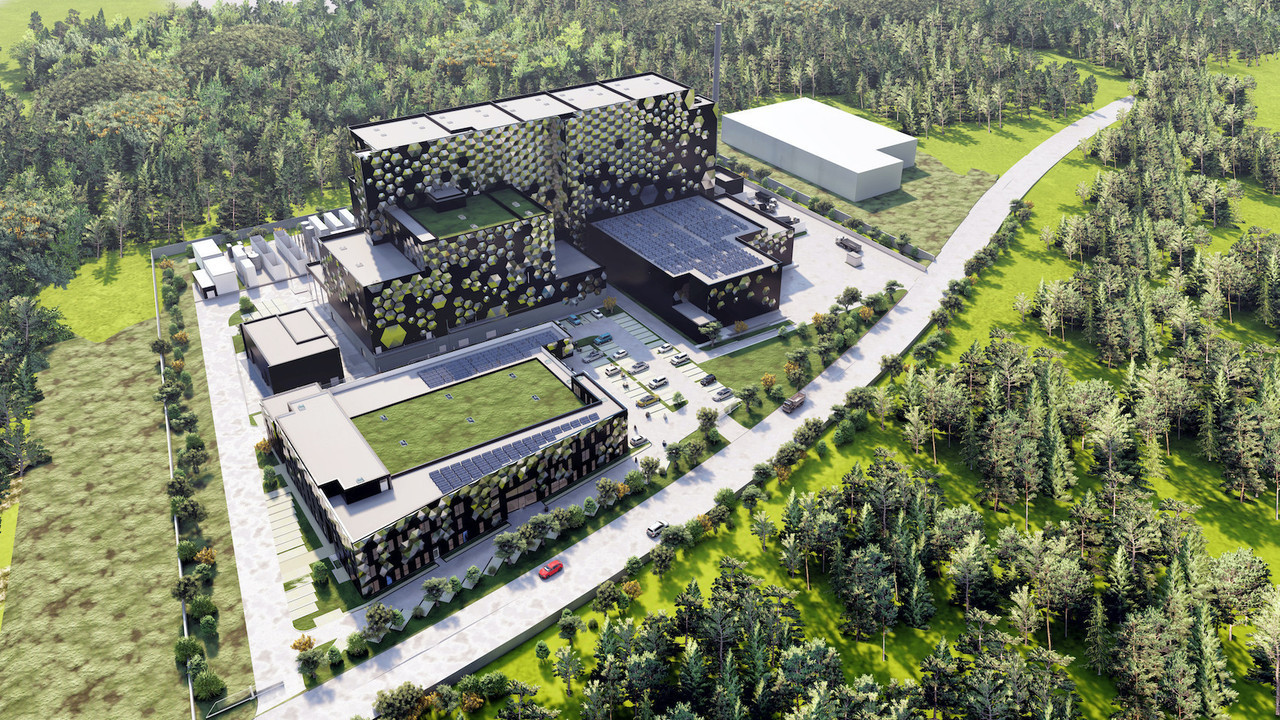
In this new industrial landscape, Luxembourg is set to become the flagship location. In November 2025, Ocsial signed a long-term lease with the State for 3.63 hectares in Differdange. The announced investment amounts to $300m and the factory is expected to create more than 300 jobs.
The project is no longer the one envisaged before the war. The company has reduced the maximum height of the buildings from 50 to 20 metres. Certain chemical operations have been removed from the Luxembourg programme because they have already been set up in Serbia or may be relocated to a German chemical park. The site in Differdange is to focus on the synthesis of nanotubes. “We have decided not to change our plans and to regard Luxembourg as our flagship plant. We have completely redesigned the project. An industrial facility is generally seen as something of a nuisance, which does not blend naturally into its surroundings. We have decided to do the opposite and hide it within the natural landscape.”
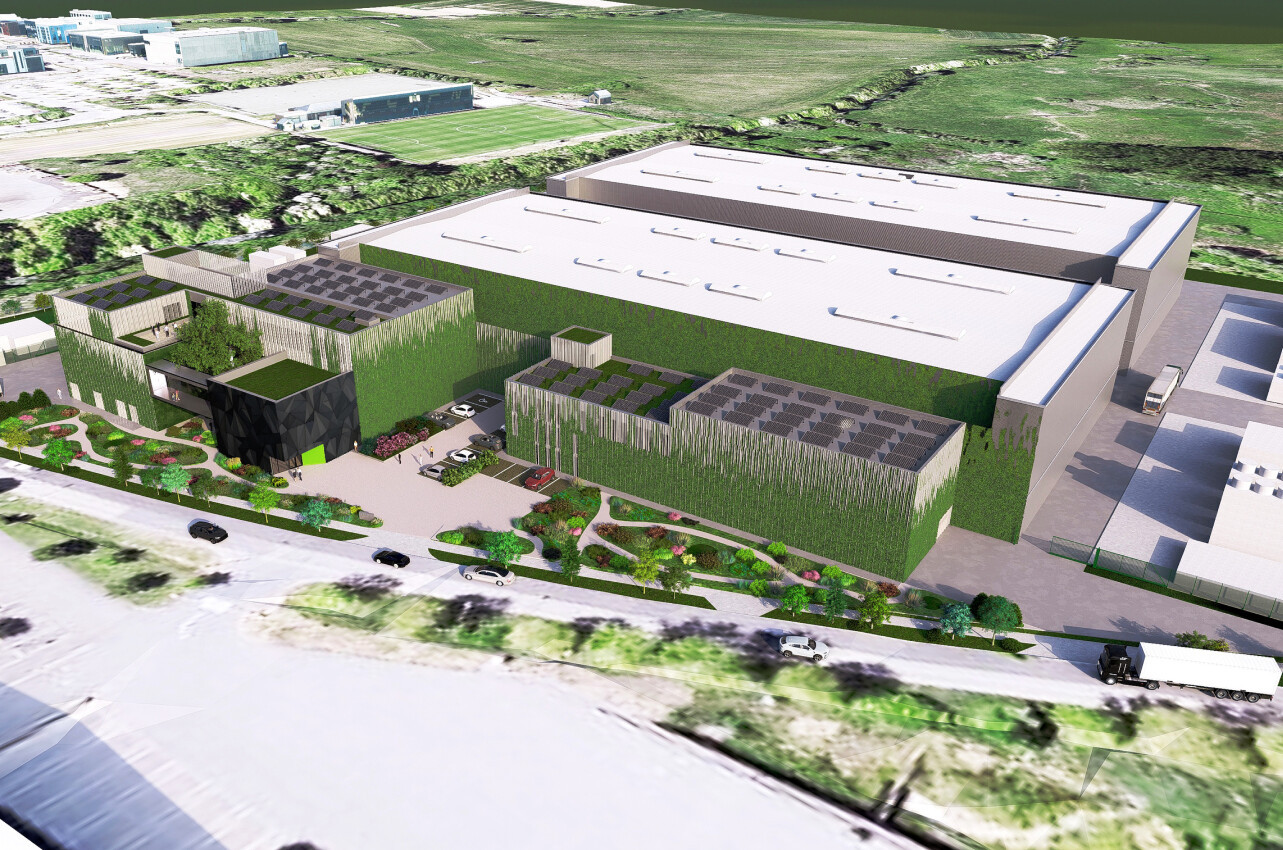
A rendering of what the Differdange factory will look like, fully covered in greenery to minimise its visual impact. It will feature a research centre and production lines. (Image: Ocsial)
Ocsial hopes to secure its planning permission in the first half of 2027 and begin work immediately. The complex is also set to house a research centre and a space for students from technical colleges and universities.
The group will need more than 300 people on site. According to its CEO, half of the manufacturing roles will need to be filled by highly qualified candidates. Salaries in Luxembourg will cost around twice as much as in Serbia, but Notman accepts this difference as the price of attractiveness.
“Labour costs in Luxembourg are incredibly high. We mustn’t delude ourselves. But the other side of the story is that Luxembourg is a very attractive place to recruit talent. It’s a safe, international and stimulating environment. In our line of business, labour costs are significant, but they are not the deciding factor.”
Russia is prepared to do anything to reclaim its success story
Ocsial has saved its teams and its production. It has not escaped Russia’s scrutiny. According to Konstantin Notman, investigations into the group’s former structures began as soon as the company set about relocating its engineers and rebuilding its production facilities in Serbia. “The tax authorities, customs, the Director of Public Prosecutions, and local and regional public prosecutors’ offices: everyone began scrutinising us non-stop. They were looking for some criminal offence that would allow them to halt the process or block something.”
For two years, he continues, the Russian authorities found no evidence on which to prosecute the company. They then changed their line of argument: Ocsial should never have owned the technology it was using. “They concocted a story claiming that we had stolen intellectual property and that its true owner was the Russian state. It came as a huge surprise: for ten years, nobody had ever raised this issue with us.” The Russian courts held that the inventions exploited by Ocsial had been developed using the state’s scientific resources. The corresponding patents therefore belonged to the Russian Federation, and not to MCD Technologies, the Luxembourg-based company that held them. The Russian Intellectual Property Court ruled in favour of the State. In February 2026, the Supreme Court refused to hear the appeal lodged against this decision.
The ruling paves the way for a second legal action. In March, a court in Novosibirsk ordered the scientist Mikhail Predtechenski and three companies linked to the project — Universal Additives, Plasmocatalysis and the Luxembourg-based Long Life Technologies — to pay 9.366 billion roubles to the Russian state on the grounds of ‘unjust enrichment’. The court also ordered the seizure of the shareholdings held in the former Russian entities. The decision was upheld on appeal in June.
Konstantin Notman, on the contrary, maintains that the development of the technology was funded, ‘down to the last cent’, by private capital. He condemns a process devoid of any real cross-examination. “Imagine a court handing down a final judgement within 20 hours. The document is 30 pages long and refers to experts who could not possibly have taken part in the proceedings. It’s a kangaroo court. A combination of sleight of hand and legal acrobatics.” These rulings do not directly allow Moscow to take control of patents registered in other countries. Ocsial’s technology is protected in 46 jurisdictions. However, they do give Russia the means to seize former local assets and attempt to get the facilities up and running again.
Ocsial regards this action as expropriation. According to its CEO, the group initiated proceedings against the Russian Federation in July, relying on the investment protection agreement concluded in 1989 between the Belgian-Luxembourg Economic Union and the Soviet Union. This agreement, which provides for recourse to arbitration, is still listed as being in force.
Why spend time and money on facilities that the group says it no longer needs? “It’s a matter of principle. They’re trying to restart production. I think it’s impossible, but they’re trying. They’re trying to steal the real technology. We will fight the Russian Federation and anyone else who tries to use our intellectual property, anywhere in the world.”
A tax debt… of 2 centimes
Born in Siberia and now a Luxembourgish citizen, Konstantin Notman has not returned to Russia since the month before the invasion. He is trying to renounce his Russian nationality. Even this process, he says, has turned into a Kafkaesque ordeal. “I have to provide numerous documents, including a certificate confirming that I have no tax debts. But the authorities refuse to give it to me because I owe 1.5 roubles. We’re talking about less than two cents. So I have to start the process all over again, time and time again.”
The battle extends beyond the old Russian buildings. It also determines how Ocsial selects its future shareholders. The company aims to raise up to $400m, not in a single transaction, but in several stages of a process that Konstantin Notman describes as a ‘pre-IPO’.
The board of directors, which has been joined by 

But after waiting for customers for 15 years, Ocsial is now facing the opposite problem: its market is growing faster than its factories. “We’ve been knocking on the doors of big industry for 15 years. Today, all those doors are opening at once and demand is coming in like a wave. We have to build all these production lines at the same time.”
The IPO, which had been derailed by the war, is thus back on the company’s agenda five years later. However, Ocsial no longer owns any factories in Russia. It has a site in Serbia, is preparing its complex in Luxembourg, is considering setting up operations in the United States and Australia, and now rejects any capital that might place it at the centre of national interests.
Konstantin Notman sums up this second life in five words: ‘Build, produce and sell. In reality, everything’s already been sold. So, build and dispatch. That’s my strategy.’