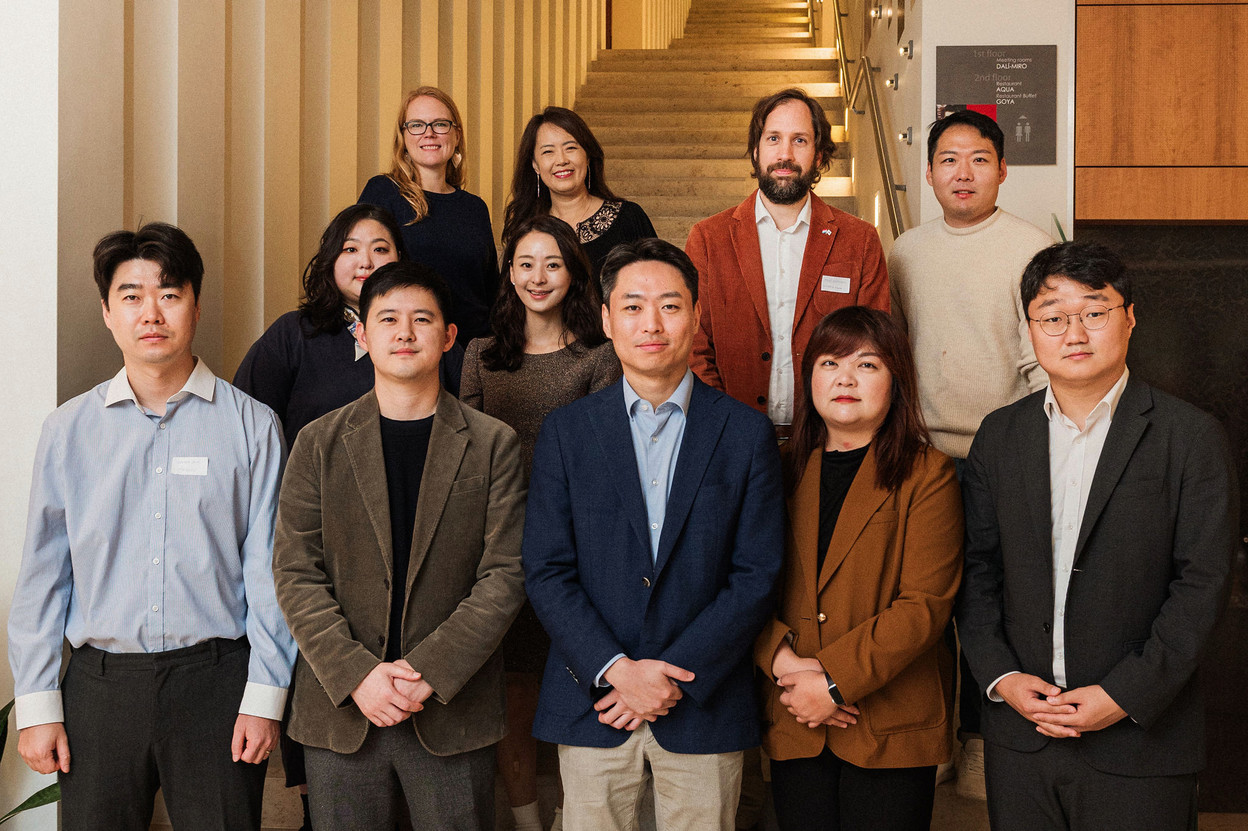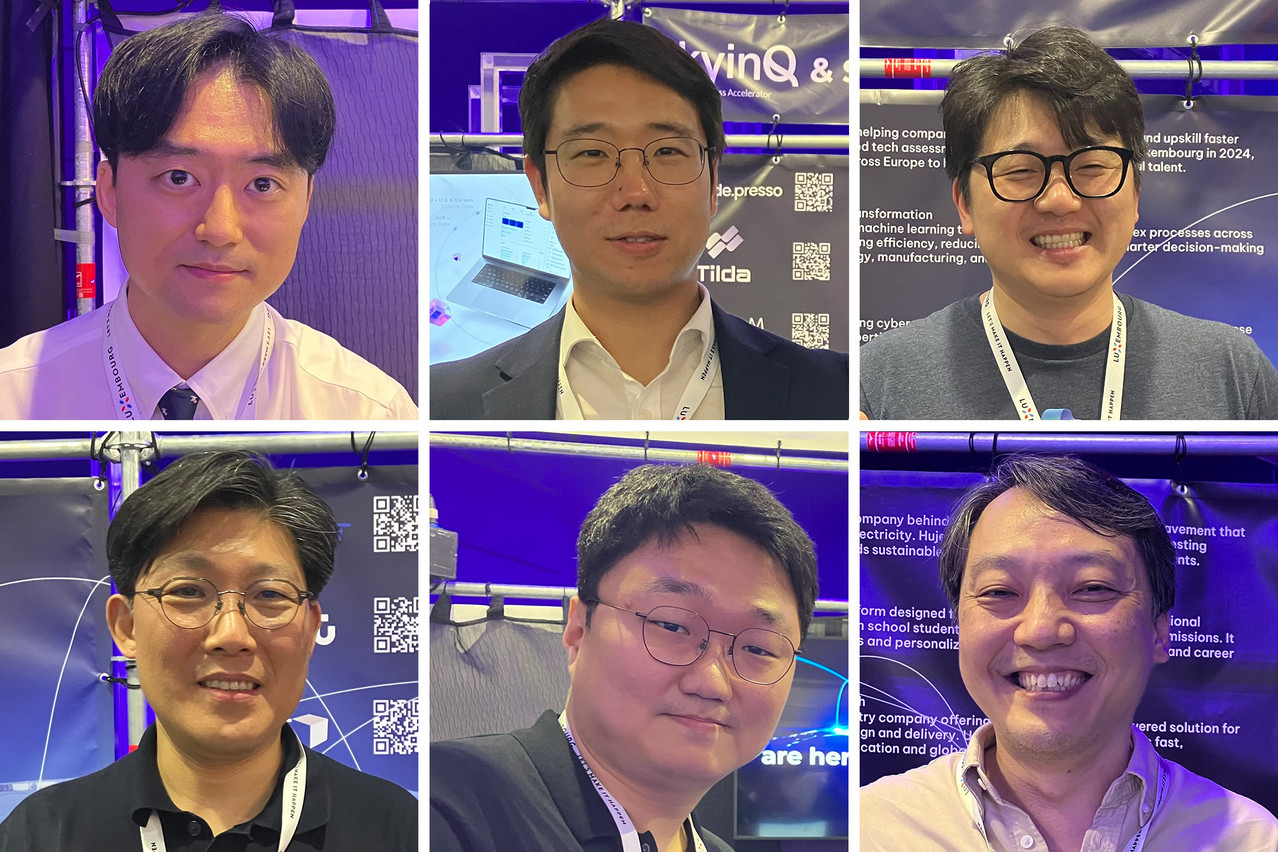
With 8,500 attendees and 144 startups at Nexus Luxembourg 2025, there was no shortage of ideas floating around Luxexpo The Box this week. Paperjam met up with six South Korean startups to hear about what they’re working on.
Quve: AI-based dental solutions
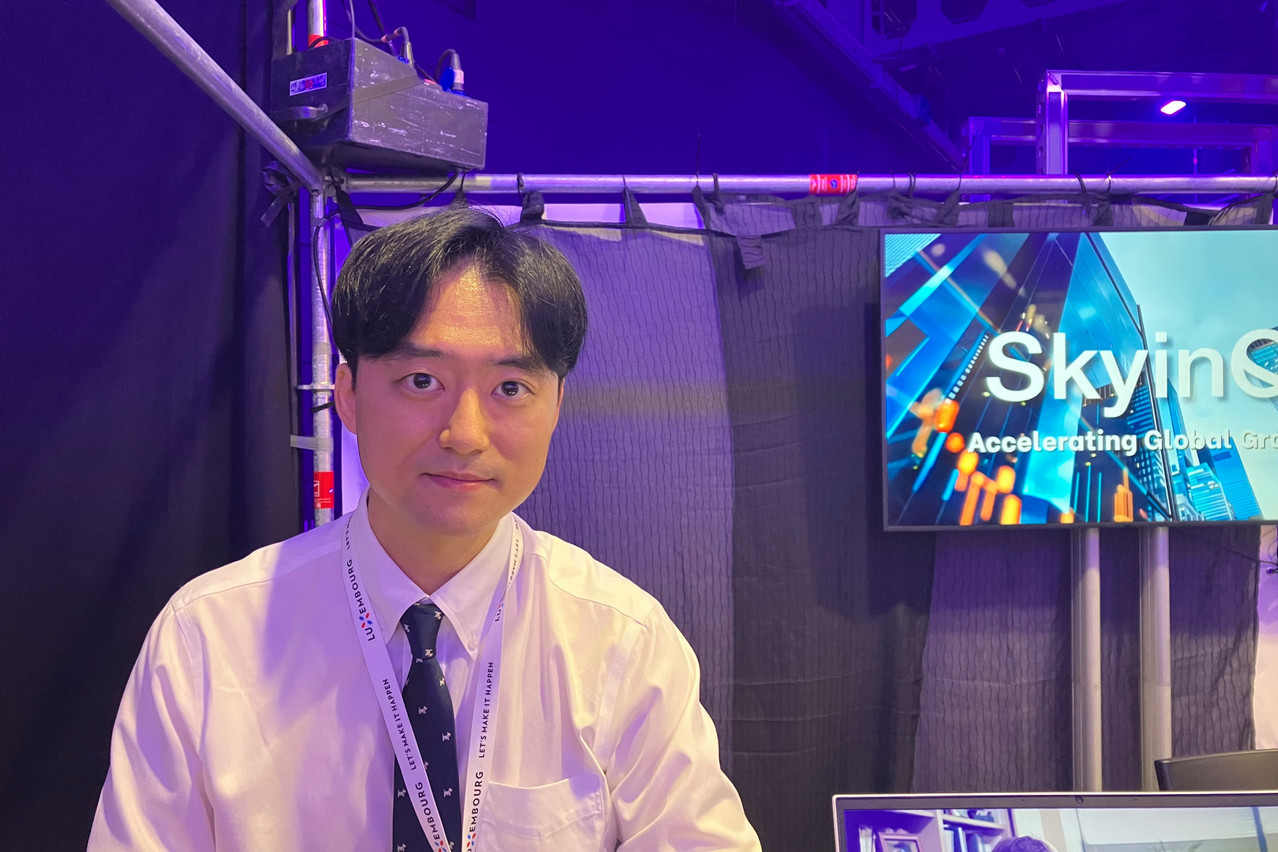
Gunseok Lee, general manager at Quve, an AI-based digital dentistry platform. Photo: Lydia Linna/Maison Moderne
“Quve is an AI-based digital dentistry solution company,” explains general manager Gunseok Lee. The company is able to manufacture dental crowns within three hours in their headquarters in the Gangnam district of South Korea’s capital city Seoul. “With a normal workflow, that would require at least 48 hours--and even up to 72 hours--to produce and deliver the crown.” Quve is able to deliver in three hours.
The company will start working on a proof-of-concept with a “major company in Luxembourg and the Greater Region,” he added. The plan is to design and manufacture everything in South Korea, then ship the dental crowns to Europe--all within five working days. Quve, which currently employs 35 people in South Korea, is also looking for a dental laboratory partner in the grand duchy or the Greater Region in order to pursue the entire process here on site.
Huject: energy-harvesting technology
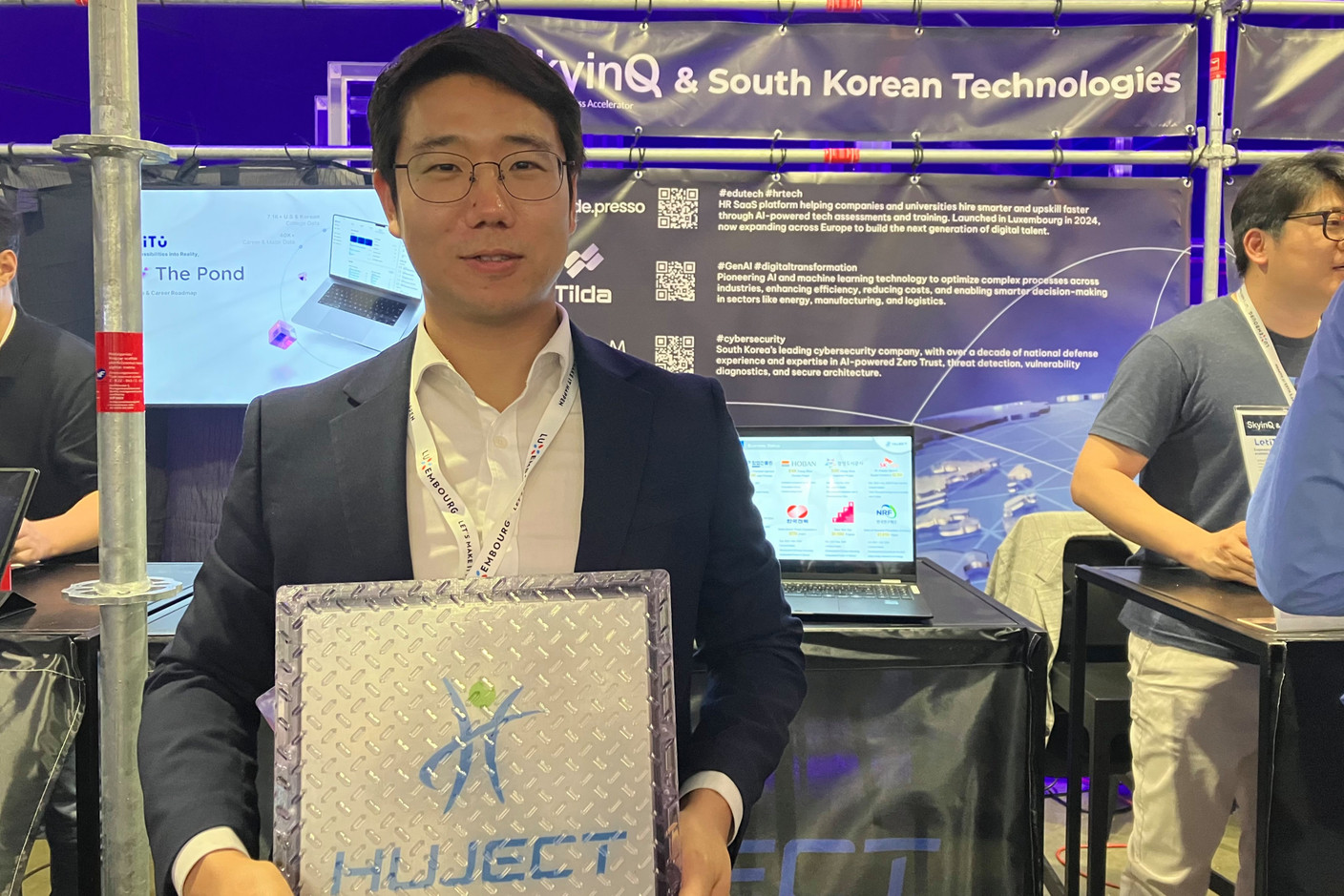
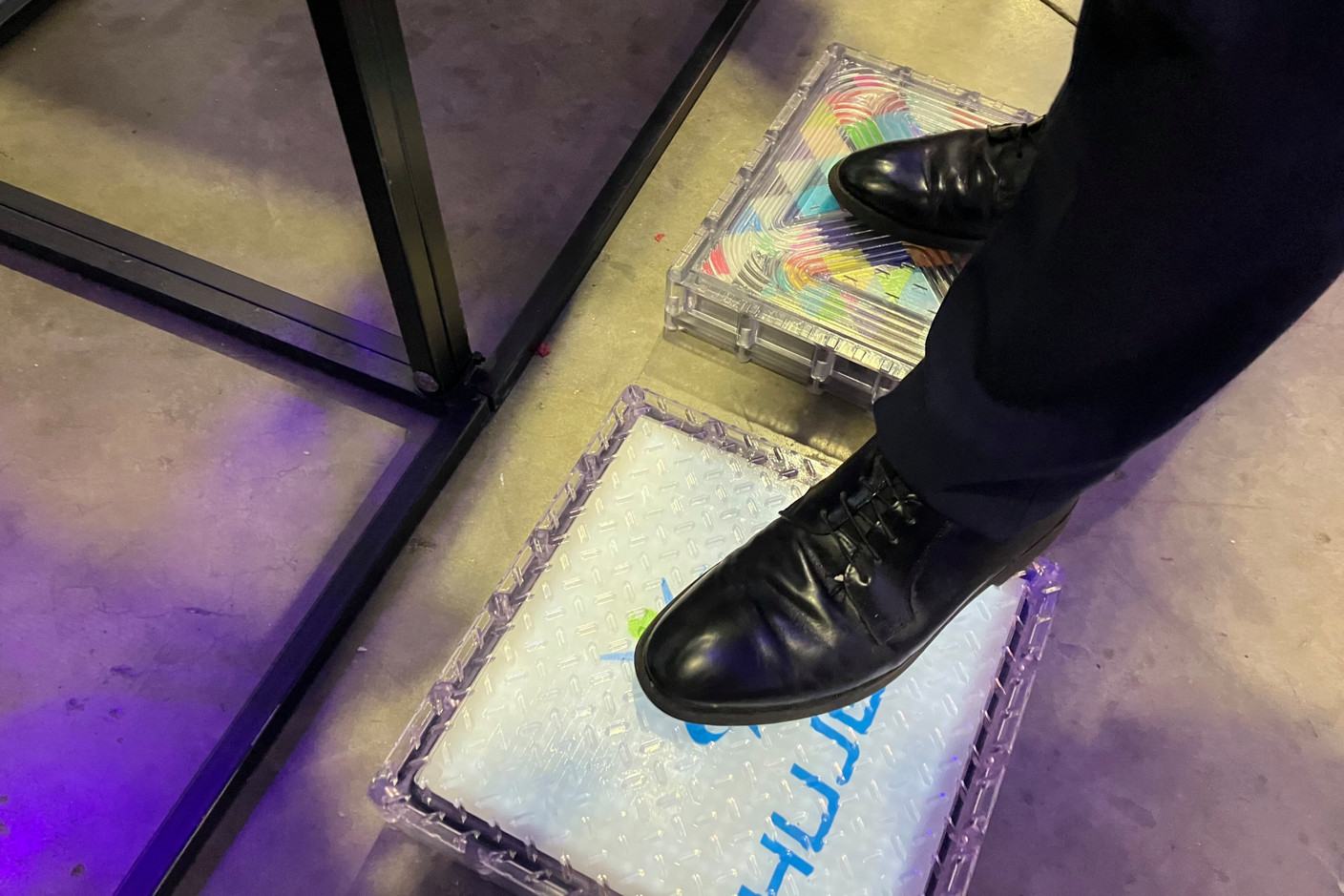

A spinoff from Hanyang University in Seoul that holds 43 patents, Huject is tackling problems like energy blackouts through “energy-harvesting technology,” said its CEO Moses Sung. “Energy harvesting is an eco-friendly technology that harvests unused energy from daily life and converts it into electrical energy.”
The company--which was founded in 2020 and employs 12 people--focusses on the piezoelectric and electromagnetic harvesting mechanisms. At his Nexus stand, Sung had examples of self-powered pavement blocks that are able to generate electricity--they convert kinetic energy from footsteps of pedestrians into electrical energy for practical use. These will be installed in the South Korean capital’s Gangnam district, but they can also be used for landscaping, directional signs, advertising and entertainment, explained Sung. Huject is also interested in installing its energy blocks in Luxembourg and is looking for partnerships and investors.
Letitu: AI-powered college matching and career counseling
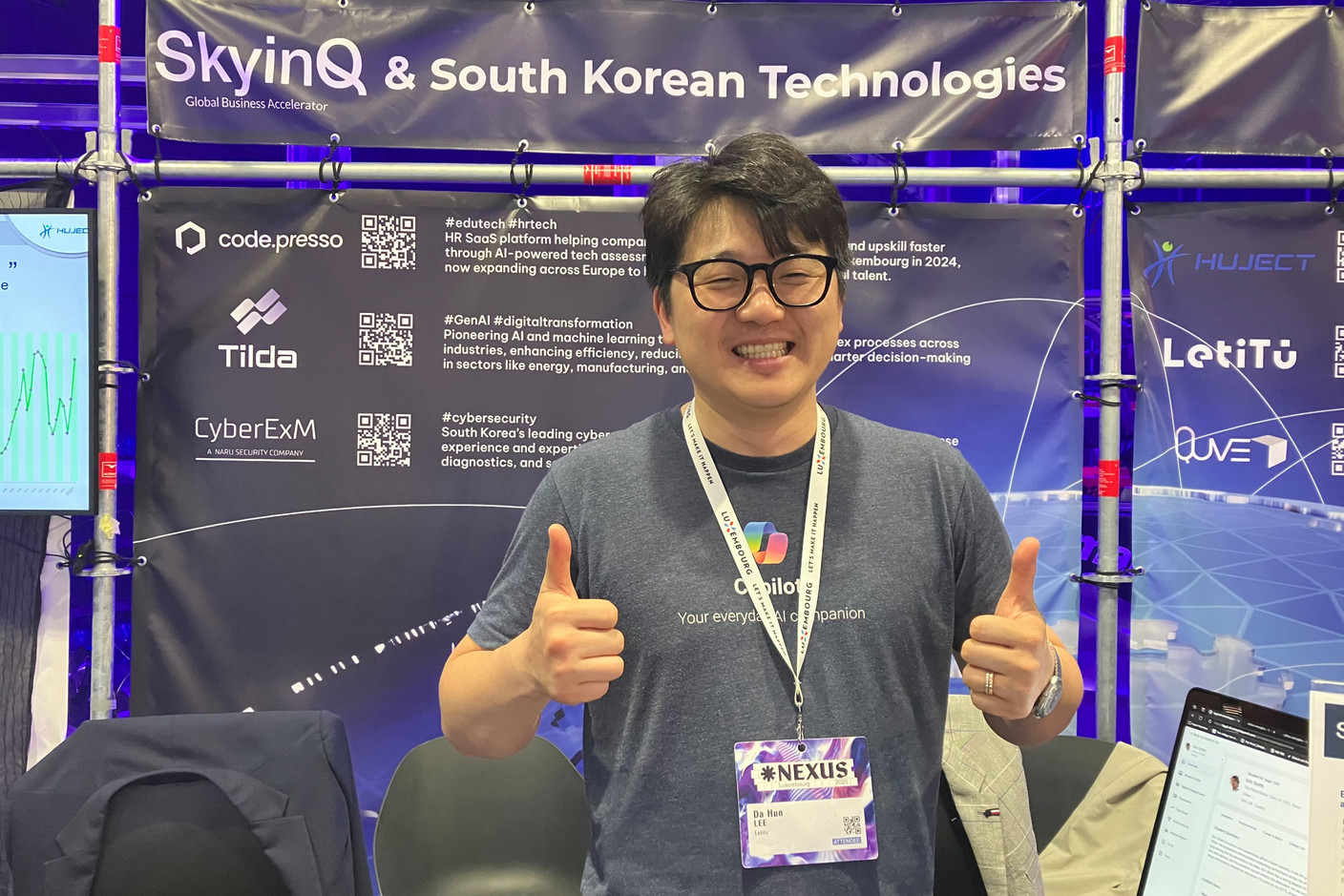
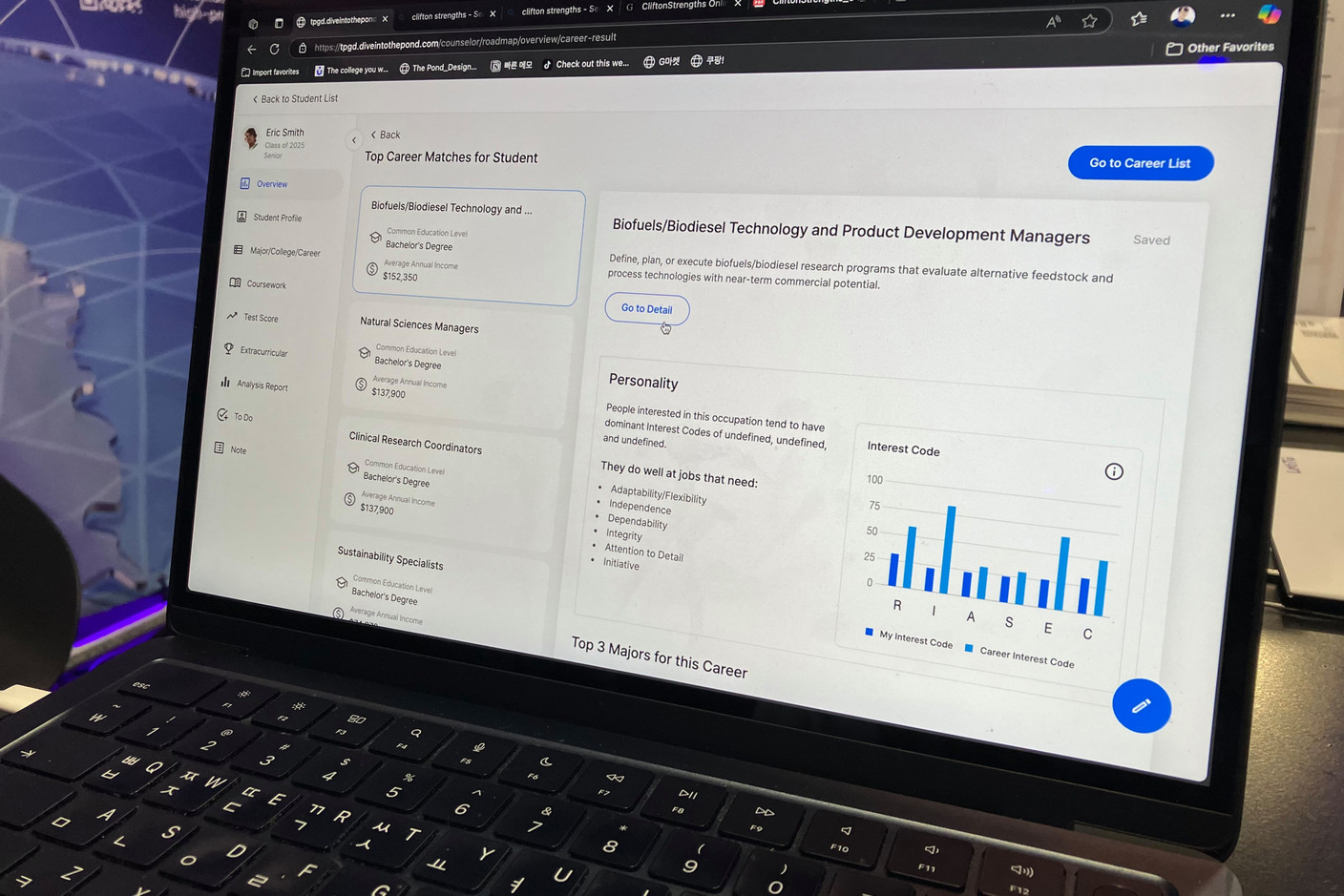
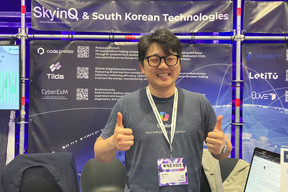

Letitu CEO Marco Lee has been working as a school counsellor for the past 15 years, helping students find the right college and a major that suits them. His startup aims to digitise this process and analyse data to better support students in their educational journey. “The Pond,” a platform that features AI-powered tools, generates personalised educational roadmaps by analysing a student’s personality, their grades, their career aspirations, grades and more to provide a list of jobs (and colleges) that could fit their characteristics.
“We’re focussing on the United States right now,” he added, though the company is also present on the Malaysia market and is expanding to the Philippines as well. But Luxembourg is an interesting place to do a proof-of-concept because it’s a “hub” surrounded by France, Germany and Belgium. About 15 people work for the company and it’s raised roughly $1.5m, including from investors like Hyundai and Hanyang University.
Codepresso: attracting and acquiring tech talent
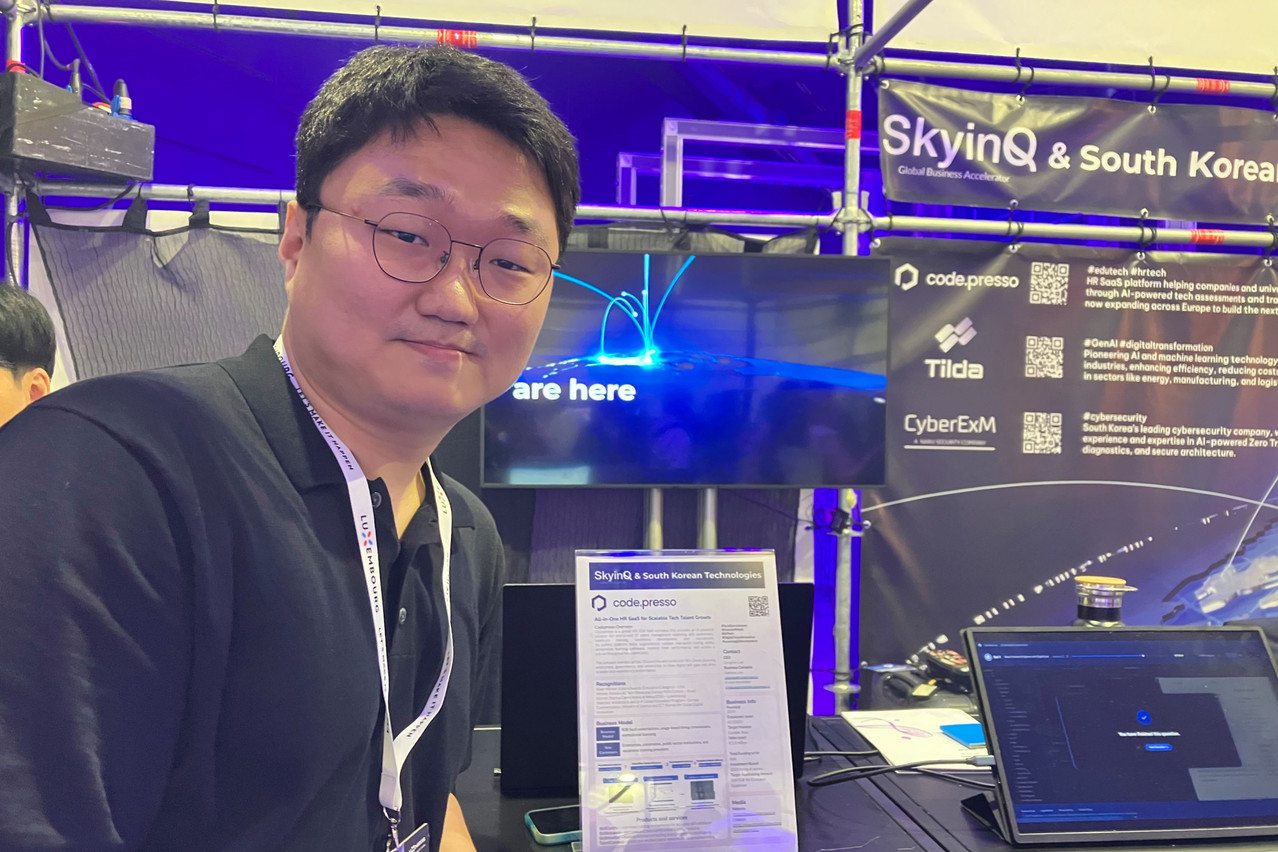
Saebyuk Lee, global business development manager at Codepresso. Photo: Lydia Linna/Maison Moderne
After winning the startup pitches at the 2024 edition of the Nexus tech conference, Codepresso--represented by global business development manager Saebyuk Lee--was back in Luxembourg this week. The company, which helps organisations attract and acquire qualified tech talent through quantitative assessments, data-driven management, training sessions and a cross-border recruitment platform--has been incorporated in the grand duchy since July of last year and has done its first proof-of-concept with a Luxembourg customer, an HR agency. It’s also working on POC with companies in Spain and Portugal.
Codepresso has also launched a six-month long-term POC with Polytechnic Cyber Institute, an online educational institution in Luxembourg, to support AI-driven technical skill development and assessment for students, said Lee. The company now counts roughly 50 employees and made €1.3m in sales. “Luxembourg is a gateway to the European market,” he added.
Naru and its Luxembourg subsidiary, CyberEXM
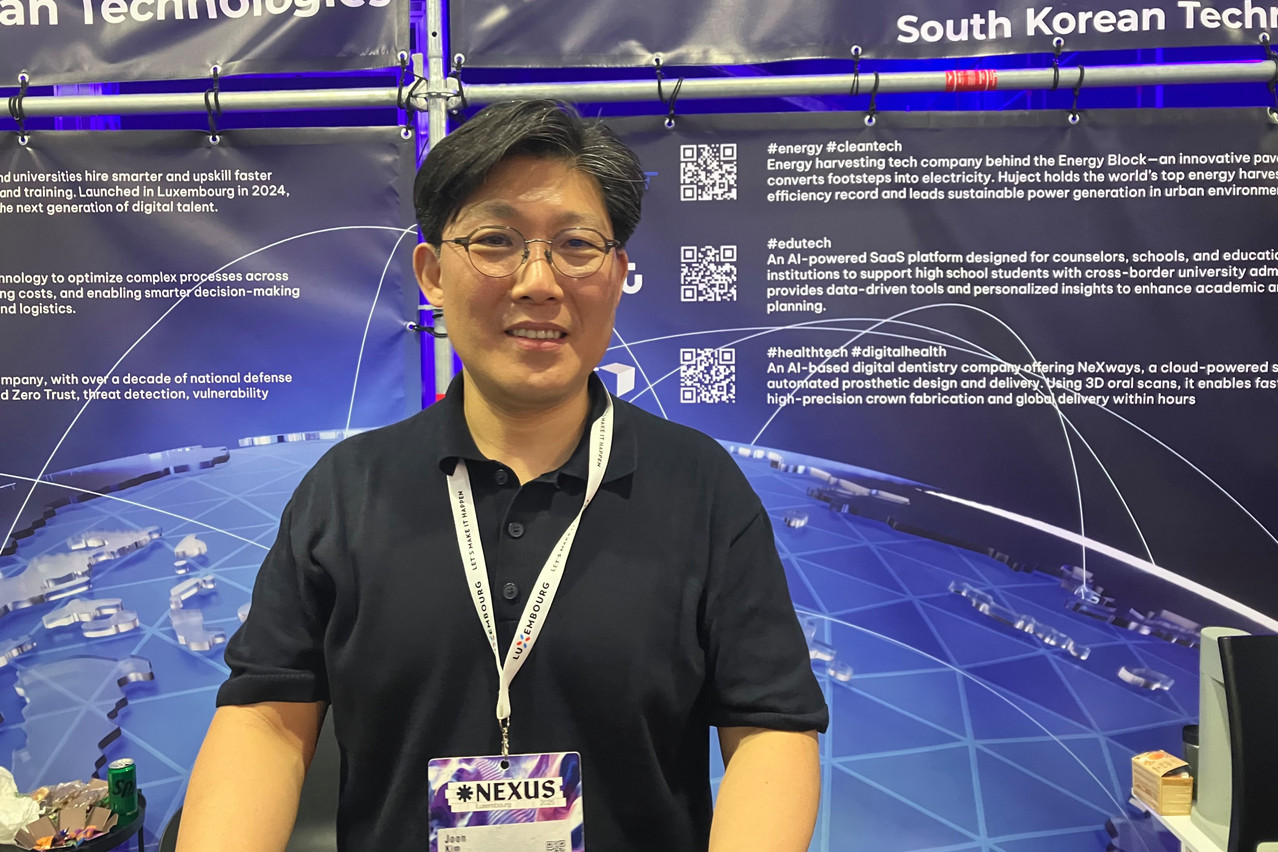
Joon Kim, founder and CEO of CyberEXM S.à r.l. (Naru Security Inc). Photo: Lydia Linna/Maison Moderne
Seoul-based cybersecurity company Naru Security was also present at the 2024 edition of Nexus, and founder and CEO Joon Kim had an update for Paperjam. “After last year, we had several contacts with Luxembourg entities,” he explained, and he also attended Tech.LU as an instructor. Aside from the work his company does to help government agencies find problems with their networks, hunt threats and provide tailored cyber intelligence, Kim is also an adjunct professor at Sungkyunkwan University, where he teaches network security.
“There’s a lot of need for this technology,” he continued, “and there are a lot of opportunities in Luxembourg and on the European continent as well. That’s actually when we started to establish a Luxembourg subsidiary of Naru Security, which is named CyberEXM.” The name comes from the Latin phrase “Deus ex machina” and is meant to represent the company’s ability to quickly solve complex problems using AI. The incorporation in the grand duchy is “almost done” and should be completed in the coming weeks. Once that’s completed, the company aims to start offering its services to the government and to the private sector.
Tilda: using AI for energy management
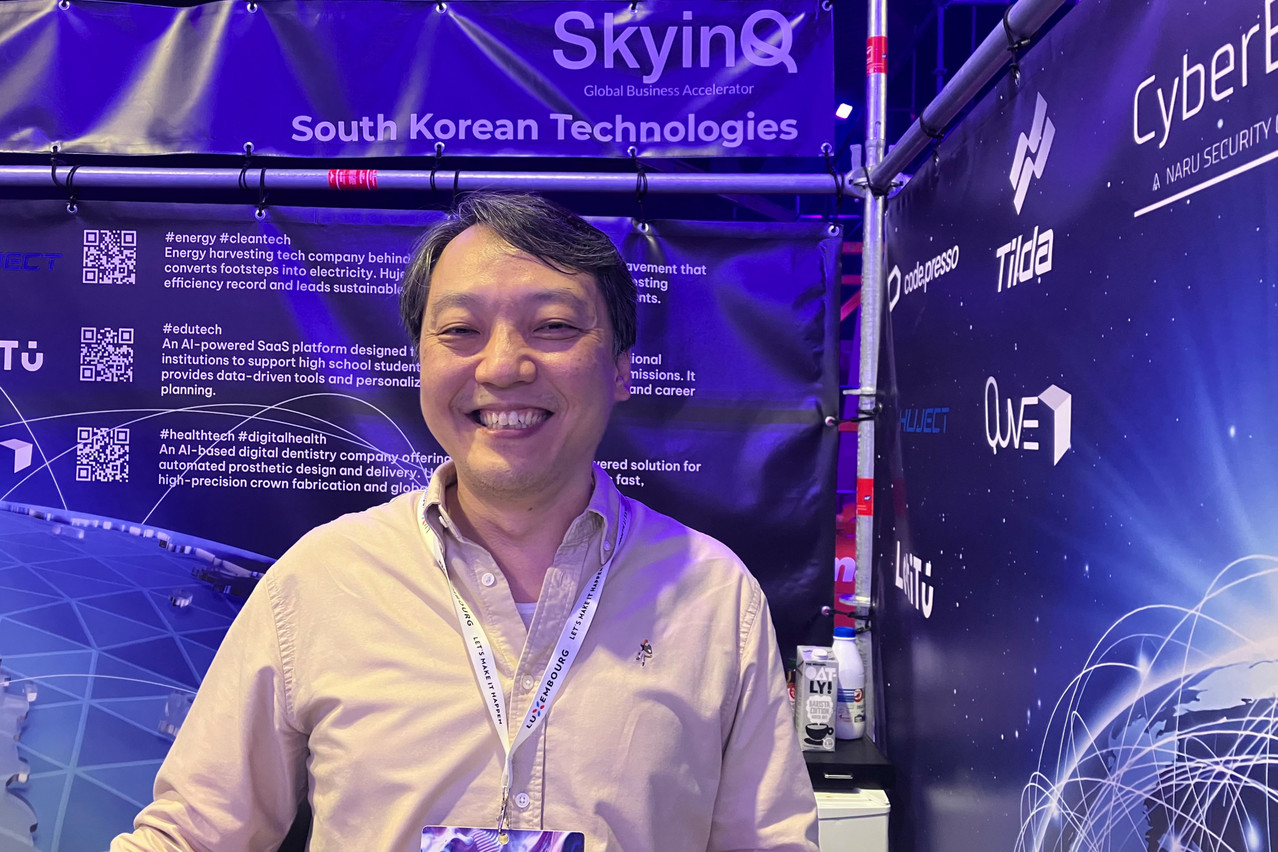
Ji Ryan Chung, CEO of Tilda. Photo: Lydia Linna/Maison Moderne
And last but not least, we also caught up with Tilda CEO Ji Ryan Chung, who also attended the 2024 edition of Nexus. The company’s AI-driven energy management platform delivers real-time information to optimise energy storage systems and solar generation.
“The need is growing as the grid system is getting saturated in each country. Eventually, every country will need to upgrade the electric grid, but that takes a huge amount of time and cost, so they need efficiency solutions, like micro-grids or virtual power plants,” Chung explained. “We are planning to develop the software solution for the battery-aggregating business, so that when the demand and cost is low, they charge, and when the demand and cost is high, they sell.” It has grown its business in Japan, he noted, and has opened an office in Kobe. “Right now, we are doing the first European POC with a German manufacturer. Hopefully that goes successfully, and then we’ll have a first real reference success case here and we’ll be able to attract more clients,” he said. “And of course, if we open an office in the EU, Luxembourg will be the place.”