
One financial centre, multiple areas of expertise
For years, microfinance was the sector’s most visible expression. Today, digital financial services, climate and gender finance and innovative investment models have broadened both the solutions and the actors involved.
Financial inclusion aims to ensure that individuals and businesses traditionally excluded from financial systems can access affordable and responsible financial services.
Impact finance complements this ambition by directing capital towards investments that intentionally generate measurable social or environmental outcomes alongside financial returns.
While the two approaches are not synonymous, they are increasingly complementary. Financial inclusion brings an understanding of underserved markets and clients’ needs, while impact finance contributes investment expertise and impact measurement. Together, they support progress towards the 17 Sustainable Development Goals (SDGs).
An ecosystem grows stronger when it is visible, understood, and able to connect its expertise.
An Ecosystem Taking Shape
Luxembourg offers a revealing lens on this evolution.
Its financial centre combines internationally recognised expertise in asset management, investment funds, banking and insurance with more than two decades of experience in development finance and financial inclusion. Today, the ecosystem brings together financial institutions, investors, development finance actors, advisory firms, research centres, public institutions and specialised service providers.
This diversity is one of Luxembourg’s strengths. Yet an ecosystem reaches its full potential when its expertise is visible and connected.
This is the ambition behind the Luxembourg Inclusive and Impact Finance Ecosystem Mapping, jointly developed by the Inclusive Finance Network Luxembourg (InFiNe), the Luxembourg Sustainable Finance Initiative (LSFI) and the LSFI Impact Investing Advisory Board (IIAB).
More than a directory, the mapping is an interactive platform providing a structured view of organisations active in inclusive and impact finance in Luxembourg.
To date, 62 organisations have contributed. The data reveals the ecosystem’s profile: 44% play an ecosystem-enabling and market-building role; 29% act as intermediaries; 18% supply impact capital; while organisations representing the demand for impact capital and government institutions each account for 5%.
Designed as a living platform, the Mapping helps organisations identify expertise, strengthen collaboration and showcase Luxembourg’s capabilities. It is a tool for connection, not just information.
An Ambition Beyond Borders
If the Mapping illustrates how Luxembourg’s ecosystem is structured today, the Luxembourg Award for Inclusive Finance (LAIF) reflects how the sector has evolved over two decades.
Launched in 2005, with its first Award presented in 2006 as the European Microfinance Award, LAIF celebrates its 20th anniversary in 2026 under a new name reflecting the evolution of the sector. Inclusive finance remains at its core, while the field has diversified through new approaches and innovations, including digital finance, inclusive insurance, SME finance and responsible financial innovation.
For its first edition under the LAIF name, “Unlocking Youth-Inclusive Finance” highlights solutions enabling young people to access the financial services, skills and opportunities they need throughout key stages of their lives.
The Mapping and LAIF tell a related story: a Luxembourg ecosystem that has diversified, become more connected and continues to mobilise financial expertise for measurable impact.
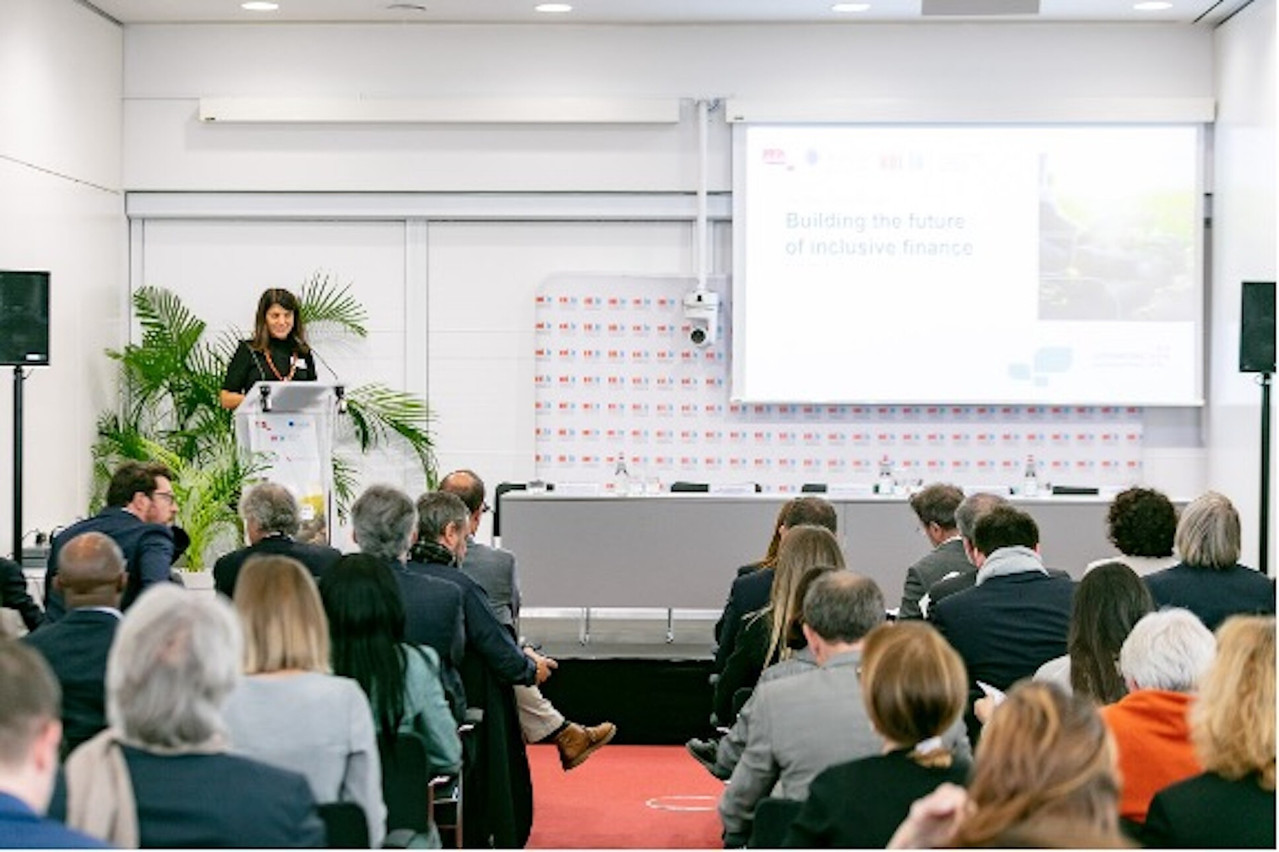
Building Future of Inclusive Finance– 10years Anniversary InFiNe 2024 (Photo © Inclusive Finance Network Luxembourg asbl)
Discover and Get Involved
Ecosystem Mapping launch webinar, 1 October 2026
Explore Luxembourg’s Inclusive and Impact Finance Ecosystem Mapping, an interactive platform showcasing organisations, expertise and activities across the ecosystem.
Luxembourg Award for Inclusive Finance 2026, 12 November 2026
Celebrating its 20th anniversary, LAIF 2026 focuses on “Unlocking Youth-Inclusive Finance”, highlighting solutions expanding young people’s access to financial services, skills and opportunities.