The start of the 2026–2027 school year is once again set to see growth. According to forecasts by the national education ministry, 120,181 pupils will be attending primary and secondary schools, both public and private, which is 2,220 more than a year ago. Since the 2020–2021 academic year, pupil numbers have risen by more than 12 per cent, with some 13,000 additional pupils over the past six years.
This trend is mainly concentrated in state schools. Primary schools are expected to enrol 58,647 children, an increase of 968 in one year, whilst state secondary schools will have 45,411 pupils, up by 1,133. Including adult education and the National Institute of Languages, the total number of learners under the Ministry’s remit is estimated to reach 180,222.
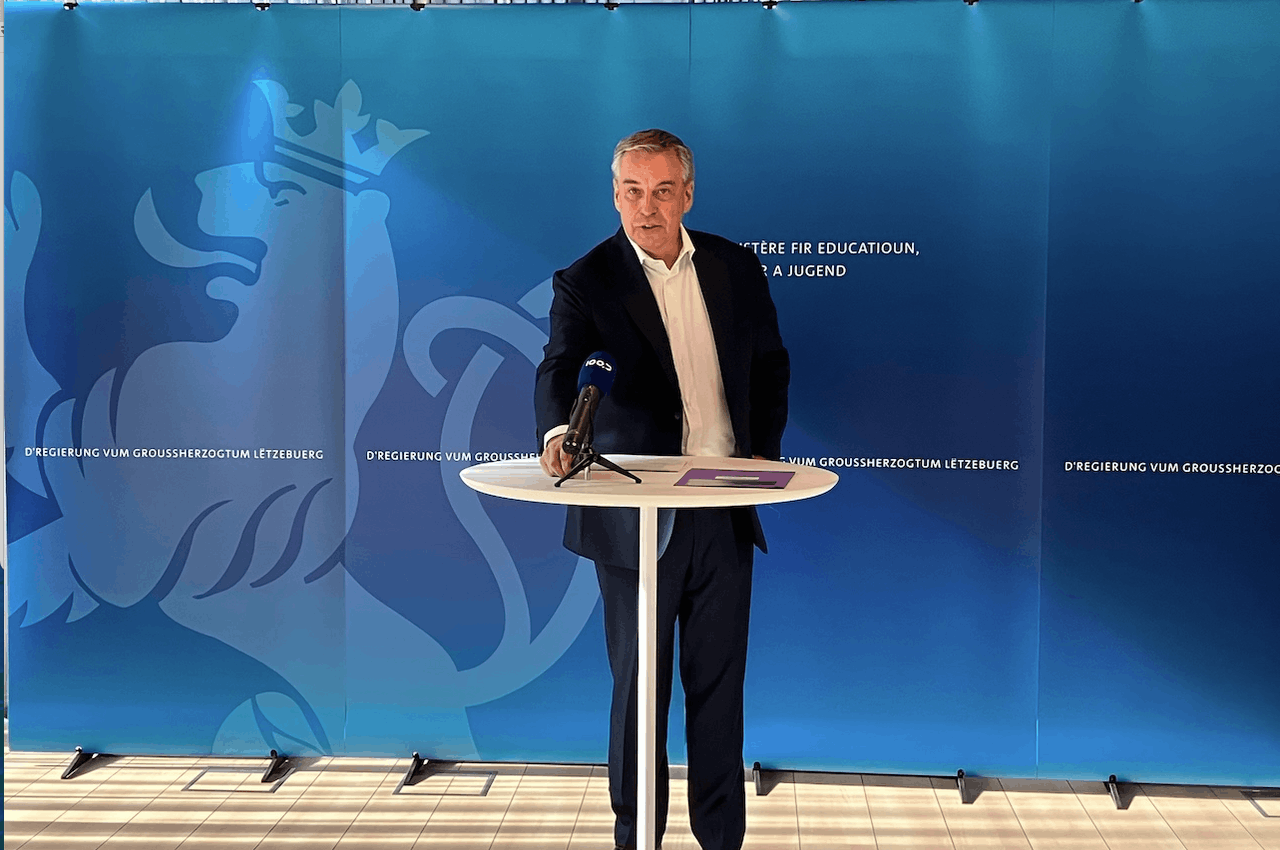
On behalf of the education minister, 
Pisa: a sign rather than a starting point
Without shying away from the Pisa 2025 results, Meisch sought above all to place them within the context of a longer-term strategy. In his view, the reforms underway are not a knee-jerk response to the publication of the international study. Rather, PISA serves to confirm weaknesses that had already been identified and the need to gradually transform the system.
In particular, the minister highlighted the reading difficulties experienced by some 15-year-old pupils. However, he refuses to focus the response solely on secondary education. The gaps observed at this age often develop much earlier, he emphasised. Priority must therefore be given to identifying difficulties as early as Key Stage 1, to strengthening language learning and to targeted interventions before these delays become entrenched.
This interpretation also enables him to defend the Alpha project, one of the most sensitive reforms of his term in office. From the 2026–2027 school year onwards, parents will gradually be able to choose between literacy programmes in German or French. The stated aim is not to undermine multilingualism, but to enable children to learn to read and write in the language most closely associated with their environment.
Behind this reform lies a political observation: in a country where the majority of pupils speak neither Luxembourgish nor German at home, the language of instruction continues to have a significant impact on their educational pathways.
The expanded French-language range
This diversification continues at secondary level. At the start of the new school year, French-medium Year 7 classes will be available in four general secondary schools, 17 general education establishments and ten secondary schools offering the preparatory stream. Nine courses leading to the supplementary vocational qualification will also be offered in French, bringing the total number to 40.
Meisch presents this development as a means of promoting equal opportunities. The curricula and requirements must remain the same, but pupils must be able to follow their course of study in a language that does not itself constitute a barrier to learning.
The growth in government-funded international education reflects this same trend. At secondary level, these programmes are expected to enrol 6,932 pupils, compared with 6,349 the previous year and just 2,397 in 2020–2021. In six years, pupil numbers have almost tripled.
The minister wants to take things to the next level. Around 3,500 additional places are being considered in government-run European schools, notably through the creation of a new school in the west of the country. Their total capacity would then approach 10,000 pupils. Meisch pointed out, however, that these schools would still account for less than 10% of state education: they are intended to complement the national system, not replace it.
The fundamentals at the heart of the reforms
Linguistic diversification forms part of a wider overhaul of the core curriculum. The new curriculum is beginning to come into force for Cycles 1 and 2, before being extended to Cycles 3 and 4 in 2027–2028.
The last comprehensive overhaul took place in 2011. The new document is intended to make the learning objectives clearer and to incorporate more cross-curricular skills: health and wellbeing, digital technology and artificial intelligence, sustainable development, emotional education, culture, citizenship and the role of the economy.
Meisch emphasised the practical nature of the reform. The curriculum must become a genuine working tool for teachers, supported by training, teaching materials and a digital platform. The minister also highlighted the participatory nature of its development, which was based on consultation with nearly 1,200 stakeholders and the analysis of more than 6,000 contributions.
He has made this one of the key priorities for the remainder of the parliamentary term: modernising the education system without undermining its foundations, but by adapting its curriculum to the country’s social, linguistic and technological realities.
More resources for inclusion
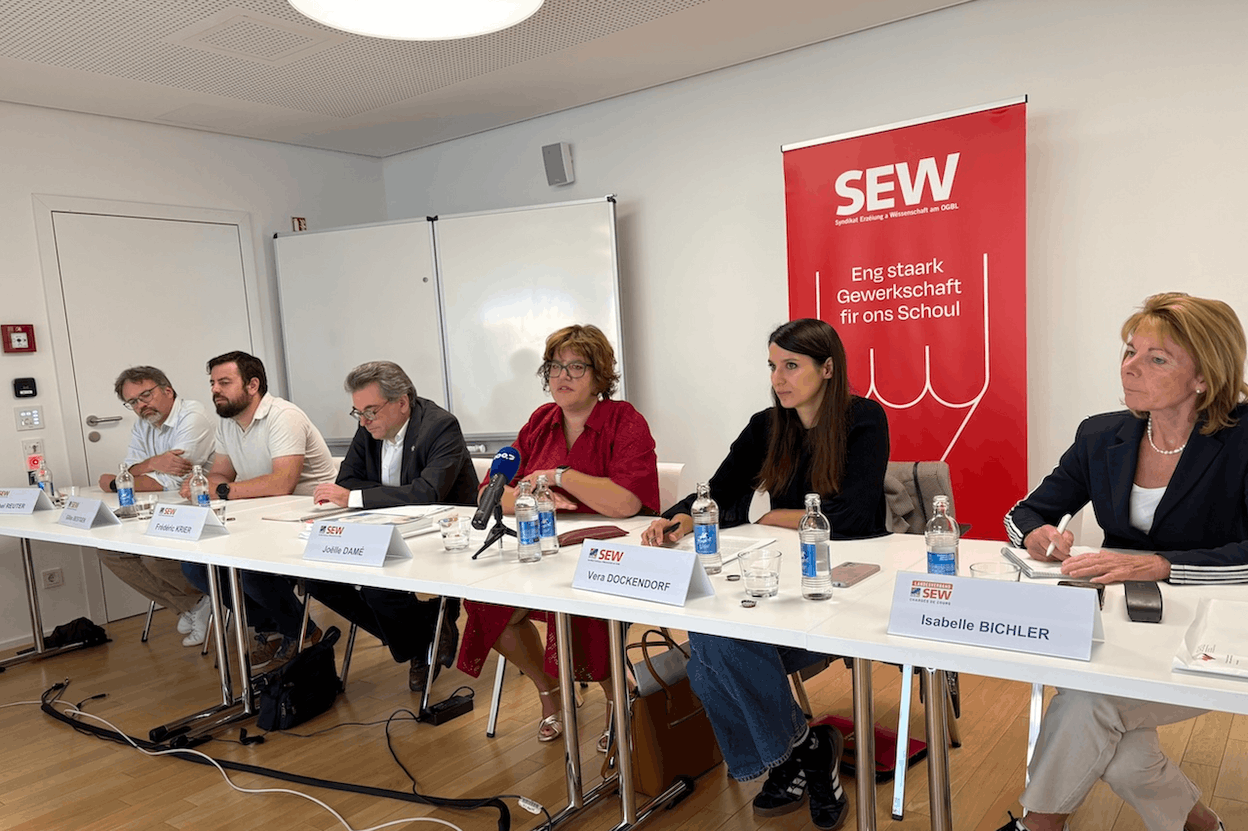
The other issue on which Meisch focused at length concerns inclusive education. The subject has become one of the main points of tension in primary education, where teachers and trade unions criticise excessively lengthy procedures and a lack of effective responses to the most challenging behaviour.
The minister pointed out that the number of staff assigned to support pupils with special educational needs had risen from 645 in 2017 to 1,902 in 2025. A further 200 posts are yet to be created in 2026 to strengthen the support teams.
However, Meisch implicitly acknowledges that increasing staff numbers is not enough. The Ministry also wishes to review procedures to enable a swifter response when a pupil seriously disrupts the running of a class or endangers their own safety or that of others.
A crisis response plan must be put in place, whilst specialist centres will continue to provide their services across the regions. The minister has also promised better coordination between teachers, specialist teams and families. This is a direct response to criticism from those on the ground, which relates as much to administrative red tape as to the level of resources available.
Rethinking the preparation process
This desire to make educational pathways more personalised is reflected in the reform of the preparatory stream. Meisch wants to move away from an overly standardised system for pupils with very different needs.
The reform must strengthen basic learning, as well as practical activities and social and emotional skills. More diverse teams, comprising educators in particular, will need to support young people in order to restore their confidence and prepare them for vocational training.
The mnister also called for a more general revaluation of apprenticeships and technical trades. The ‘Première DAP’ programme, higher vocational training, French- and English-language courses, and mobile workshops are all designed to create more pathways between school and the world of work. The aim is also to enable pupils in the academic stream to discover manual and craft-based trades at an earlier stage.
Following the ban, propose alternatives
Finally, Meisch addressed the issue of smartphone and social media use. The minister drew a link between their intensive use, the ability to concentrate and certain academic achievements. Following the introduction of stricter rules on mobile phone use in schools, he intends to continue the ‘Screen-Life-Balance’ policy.
He acknowledged, however, that a ban alone cannot constitute an education policy. Schools must offer more sporting, cultural, creative and group activities to provide alternative ways of spending the time no longer spent in front of screens. Resources must be made available to secondary schools, and a digital platform must be set up to facilitate access to these activities.
Through these various initiatives, Meisch seeks to present a coherent picture of his work. Linguistic diversification, curriculum reform, inclusion, vocational training and limiting screen time are said to be the components of a single strategy.
One major challenge remains: implementing these changes simultaneously within a system that has to accommodate several thousand additional pupils each year. To support the start of the new school year, the Ministry is planning to deploy 6,616 teachers in state primary schools and 6,175 in secondary schools. The success of Meisch’s strategy will now depend less on the announcement of new reforms than on the national education system’s ability to implement them effectively in the classroom.