The aim was not to arrest suspects, but to take down their online presence. For several weeks, nine European countries, including Luxembourg, combed through the digital ecosystem of ‘The Com’, a network of extremist communities active on social media, messaging apps and video game platforms. The result is unprecedented: 4,340 URLs linking to content associated with this network have been reported to the platforms with a view to having them removed and halting their dissemination.
The operation, dubbed ‘Referral Action Days’, was coordinated by Europol’s EU Internet Referral Unit (EU IRU) and the Spanish Centre for Intelligence against Terrorism and Organised Crime (CITCO). It forms part of the Compass project, led by the European Centre for Counter-Terrorism (ECTC), which brings together law enforcement agencies from Member States and several partner countries to combat ‘The Com’.
Violence: an end in itself
Europol describes ‘The Com’ – short for ‘The Community’ – as an informal network of online groups sharing a nihilistic and misanthropic worldview. Unlike traditional terrorist organisations, it has neither a central leadership nor a single ideology. In this world, violence becomes an end in itself. Some factions draw on ideas from the violent far right and accelerationism, with the aim of hastening the collapse of society by increasing acts of violence and corrupting the younger generation.
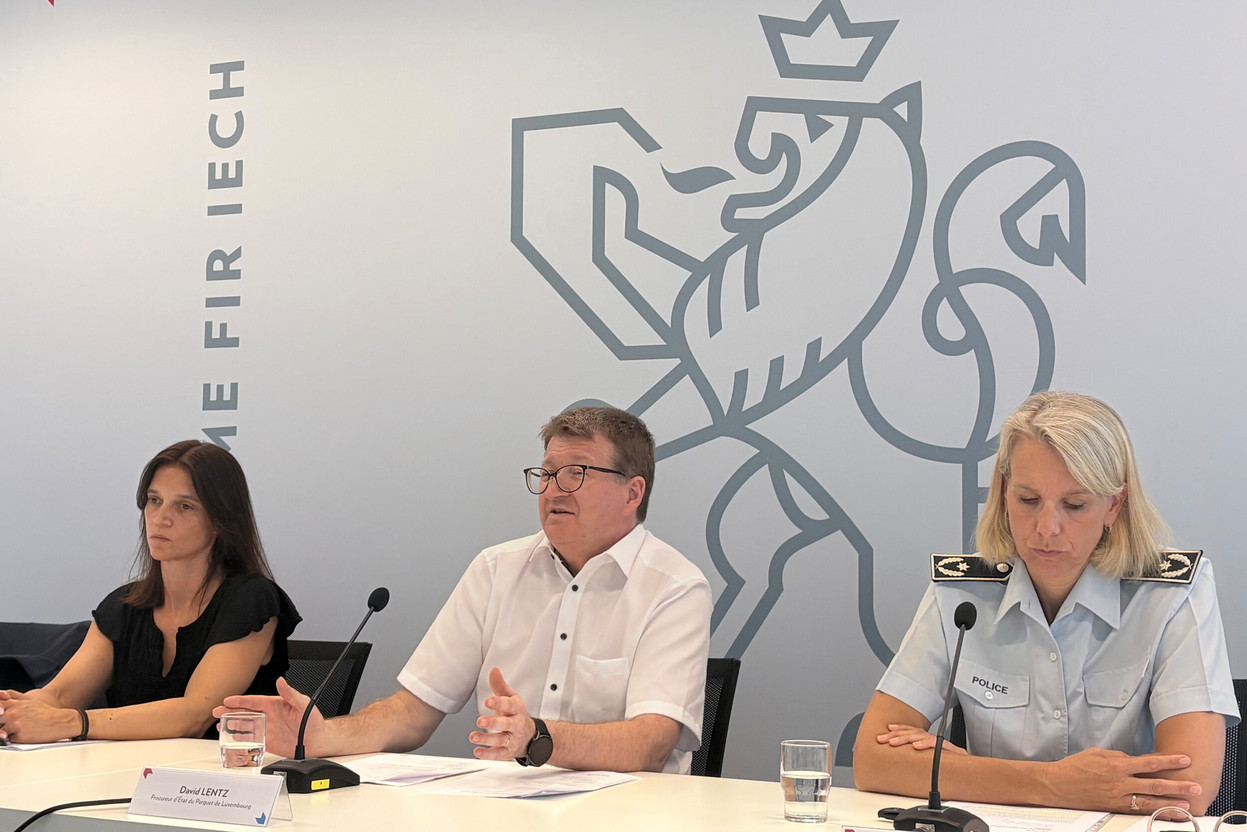
It is precisely this modus operandi that is reminiscent of the incidents described in early July by the Luxembourg Public Prosecutor’s Office and the Grand Ducal Police. Without ever naming the communities concerned – the authorities had even asked the media to avoid giving them unwanted publicity – they explained how certain groups identify vulnerable teenagers, gradually gain their trust and then trap them in a relationship of psychological control based on fear, blackmail and humiliation.
This time, Europol’s press release provides previously unpublished details on how these communities operate. Recruiters approach their victims on social media, messaging apps or video-game platforms before directing them to private forums where radicalisation and victimisation take place. Minors are pressured into self-harm, torturing animals, committing assaults or producing images of child sexual abuse. Once this content has been obtained, it is used as a tool for ongoing sextortion designed to keep the victims under control.
Hundreds of requests for assistance
The European agency also highlights the role of social media algorithms in this process. Young people may be exposed to this content without actively seeking it out. Seemingly innocuous posts gradually lead to increasingly violent images and videos. The groups use coded language, emojis and references that adults often struggle to identify, which facilitates recruitment and makes detection more difficult.
Prestige within ‘The Com’ is based on the ability to produce the most shocking content. Europol cites videos of self-harm, suicides, animal abuse, physical assaults and child pornography. Investigators also describe ‘blood walls’ – inscriptions made with the victims’ blood displaying the pseudonym of their blackmailer – or ‘cut-signs’, which involve forcing a victim to carve the name of their blackmailer into their own flesh before circulating the images. Other groups produce manuals explaining how to make homemade explosives, commit murder, ‘groom’ minors or organise ‘doxing’ and ‘swatting’ operations, which involve disclosing personal data and then triggering a police response at a victim’s home by means of a false report.
According to Europol, the phenomenon has grown to such an extent that its European Counter-Terrorism Centre now receives hundreds of requests for assistance from Member States and partner countries concerning offences committed within the ‘The Com’ environment. In its annual EU TE-SAT 2026 report, the agency now classifies violent nihilism as one of the ideologies destabilising the European Union and considers that, within the space of two years, this network has become a global threat, particularly to minors, both as victims and as potential perpetrators.
The operation announced on Friday does not, therefore, mark the end of ‘The Com’. Its primary aim is to reduce its online visibility, disrupt its recruitment capabilities and provide police forces with new leads for their investigations. Above all, it sheds concrete light on the mechanisms of control described three weeks ago by the Luxembourg authorities, by demonstrating the international scale of a phenomenon that is now thriving at the intersection of child sexual exploitation, cybercrime and violent extremism.