Detecting the preparations for an attack before it strikes an airport, an energy network or a bank: that is Osavul’s aim. The company aims to link indicators of information manipulation, cyber-attacks and physical threats to identify hostile actors and the organisations they are targeting.
The company, which is headquartered in Luxembourg, has announced a Series A funding round of €8.5m. The round is led by 33N Ventures, with participation from Balnord, G+D Ventures and existing investor 42CAP. According to Osavul, this brings its total funding to around €12m. The valuation and breakdown of the investments have not been disclosed.
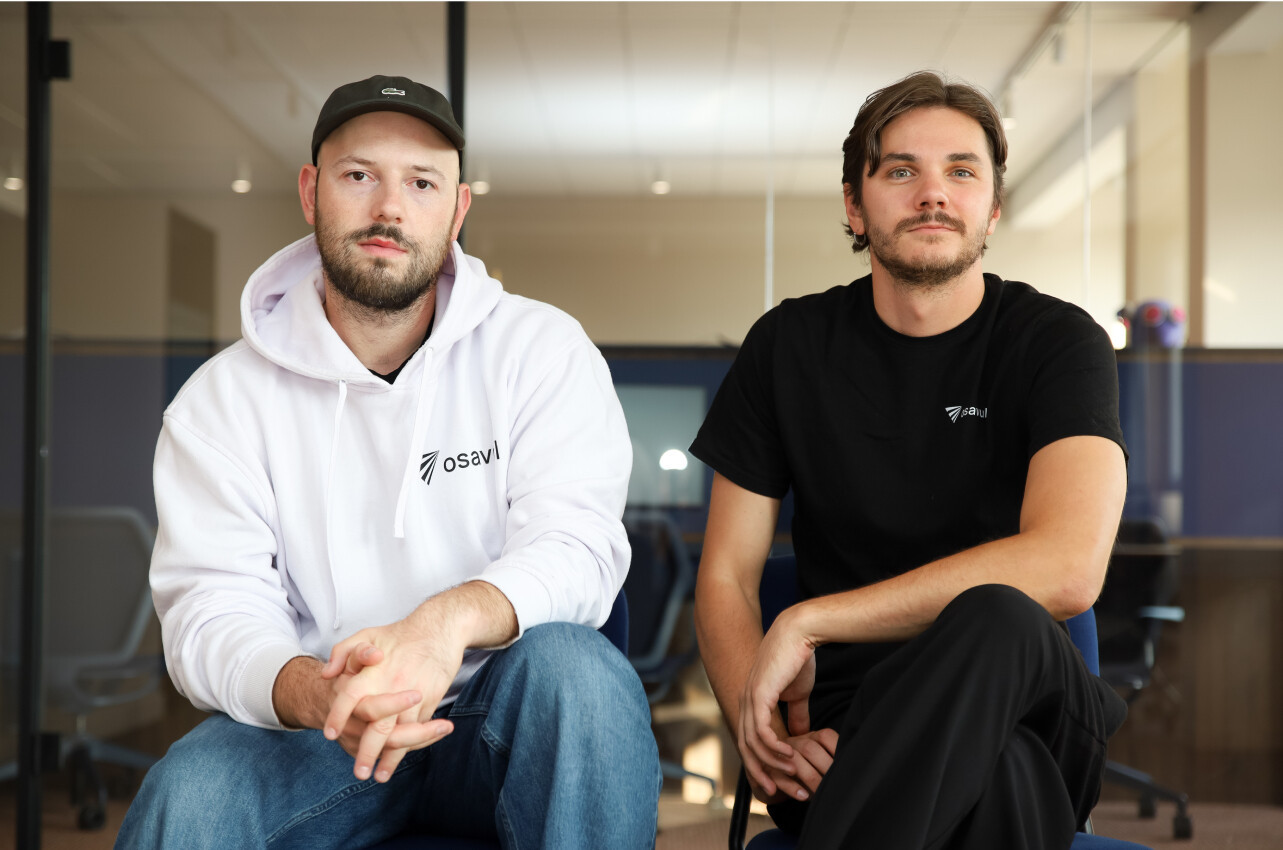
The platform was developed during the Russian invasion of Ukraine, in collaboration with defence, cyber security and information security units. Its two co-founders, Dmytro Plieshakov, chief executive, and Dmytro Bilash, head of business development, had previously sold their company, Captain Growth, to Perion.
Conquering Europe from Luxembourg
Osavul states that it now serves government, defence and security organisations in more than ten countries, including the United Kingdom, Germany, Poland and the United States. Dmytro Bilash describes Luxembourg as the base from which the company has been serving its international clients since mid-June.
In particular, the company is contributing its technologies to the Brandwatch-Blackbird.AI consortium, which has been selected by Nato’s Communications and Information Agency to provide an information environment assessment capability. Osavul explains that it contributes to this initiative by providing access to public data that is difficult to collect and through its artificial intelligence-based analytical tools. This mission focuses on understanding information-related threats. In its official approach, Nato plans, in particular, to analyse influence operations involving cyber means or physical actions, such as sabotage. The aim is to identify the behaviour of hostile actors and to provide alerts that enable a tailored response.
To compile its assessments, Osavul combines open-source data with restricted-access data. In particular, its tools gather information from social media, messaging services, websites and underground communities. According to the company, the analyses are linked to the supporting evidence and verified by analysts. The platform can also be deployed within the client’s infrastructure in order to store sensitive data there.
The new funding is intended to strengthen the company’s artificial intelligence capabilities, expand the sales team and accelerate its expansion into new markets. Osavul is targeting, in particular, companies in the defence, energy, transport and financial services sectors. It states that the total value of its contracts has quadrupled in 2025, without disclosing the initial figure, its turnover or its profitability.
According to Dmytro Plieshakov, companies that operate critical infrastructure now face the same adversaries as governments, but have fewer resources to detect their preparations. Osavul therefore intends to market the capabilities developed in collaboration with defence institutions to these operators, whilst continuing its government-related activities.