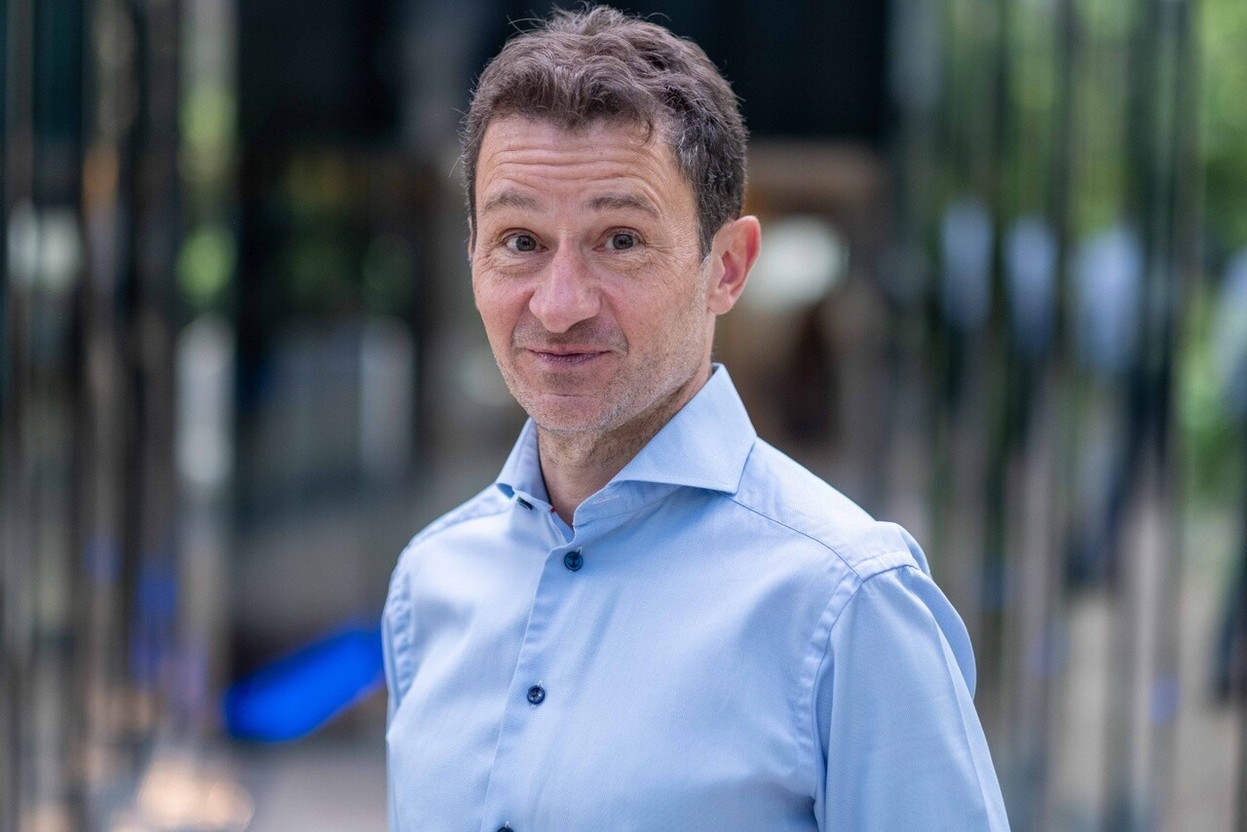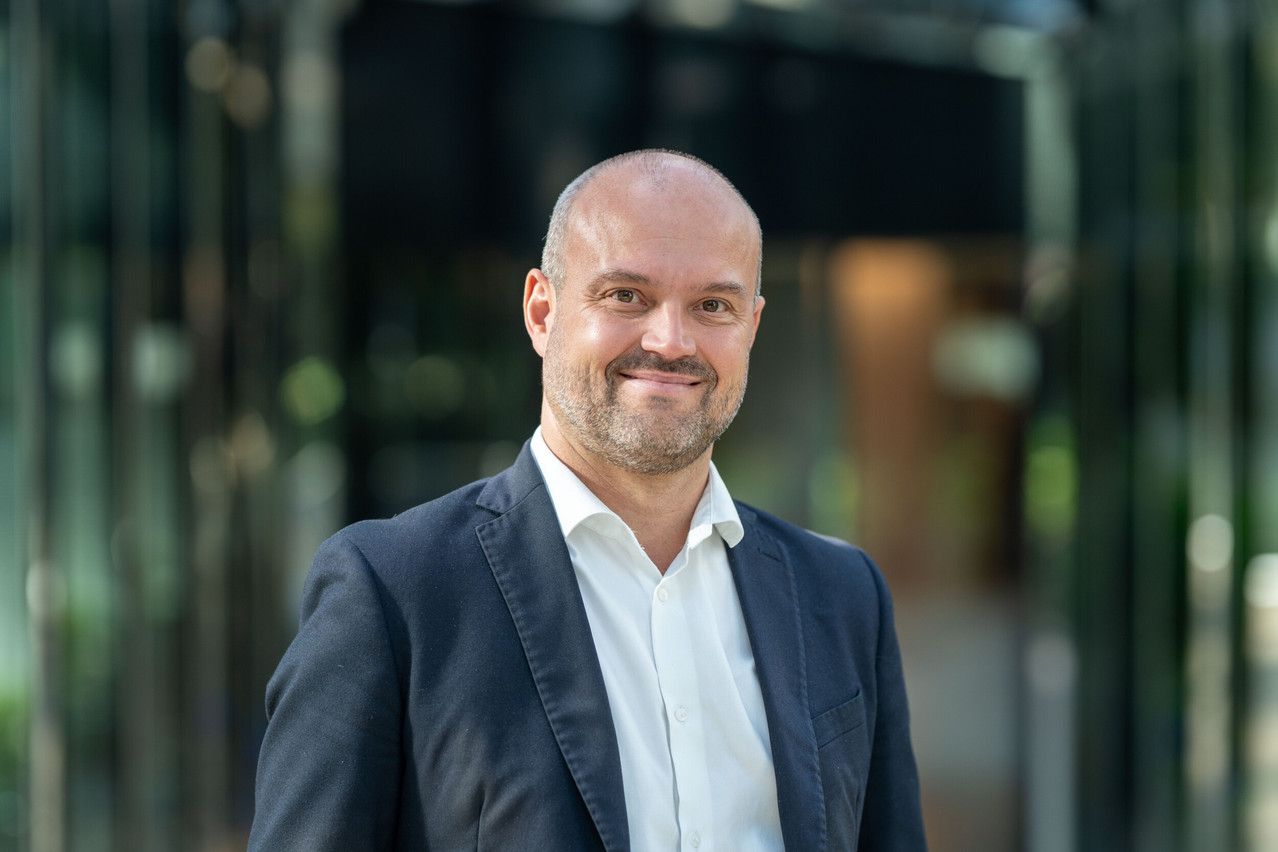
“Now I’ve got to do better than you.” Fabrice Kremer’s quip as he took the floor after Guy Wagner sums up the challenge rather well. On 1 January 2027, he will become Chief Investment Officer at BLI – Banque de Luxembourg Investments and will also take over the management of BL Global Flexible EUR.
The succession plan was drawn up internally. Fabrice Kremer joined BLI in 2006. He has had direct experience in asset allocation since 2013 and has been coordinating the management company’s asset allocation committee for over five years. But the handover will not be limited to simply maintaining the status quo.
“There is no question of compromising the product’s DNA,” warns Fabrice Kremer, however. The key investment principles developed by Guy Wagner will therefore remain in place: a structural exposure to precious metals, a largely tactical use of sovereign bonds and, at the heart of the equity portfolio, a selection of high-quality companies with recurring revenues, held over the long term.
Add a more tactical pocket
It is on this basis that Fabrice Kremer intends to make his mark. One of the criticisms sometimes levelled at the fund – as Guy Wagner acknowledged during the conference – was that a product described as ‘flexible’ did not, in the end, always make full use of the flexibility it offered.
His successor intends to make greater use of it. Part of the equity allocation could therefore be devoted to more tactical positions: cyclical stocks, financials, sectors undergoing a turnaround, or shorter-term market themes. This approach will enable Fabrice Kremer to take account of economic conditions that may temporarily deviate from the structural trends anticipated over a ten- or fifteen-year horizon.
‘Good’ and ‘bad’ volatility
Risk management is the other significant development. Fabrice Kremer distinguishes between what he calls ‘bad volatility’ and ‘good volatility’. The former occurs when the market shifts abruptly from a calm state to one of high volatility. It is generally accompanied by a fall in asset prices and, in his view, calls for a rapid reduction in risk.
Rather than immediately selling off companies in which the fund manager’s long-term conviction remains intact, the fund manager may use futures contracts to rapidly reduce overall exposure to equities. ‘Healthy volatility’ comes into play once panic has set in.
“This is the point at which most people have already panicked; it’s the point at which you can seize opportunities,” he explains. Fabrice Kremer therefore intends to adopt a more contrarian approach and reintroduce some risk into the portfolio.
Capitalising on the investment cycle
His current assessment is that the global economy is currently in an investment cycle rather than a consumption cycle. In his view, four factors are driving this: artificial intelligence and the electrification that goes hand in hand with it, global rearmament, and the need to secure access to resources.
In his view, this trend favours cyclical companies exposed to investment rather than those dependent on consumption. Nor does Fabrice Kremer see, at this stage, any immediate threat of a recession. Rising energy prices do pose a risk, but he believes the global economy still has significant capacity to absorb them.
Oil, on the other hand, could have a more immediate impact on financial markets via interest rates. A rise in crude oil prices fuels inflation expectations and may keep bond yields at high levels, which in turn weighs on equity valuation multiples.
Latin America joins the portfolio
It is particularly in the implementation of this strategy that the new approach is beginning to take shape. One of Fabrice Kremer’s key tactical convictions at present is Latin America. He sees a convergence of several favourable factors there: a dollar that, according to BLI, is set to weaken structurally; a cycle favourable to commodities; political changes in several countries; and valuations that remain low.
“For me, Latin America today is a market that has far more advantages than disadvantages,” he sums up. Brazil occupies a special place in this picture.
BLI has already built up a position comprising around 4% of the portfolio in Brazilian equities and 3% in bonds denominated in the real.
The approach to bonds stands in stark contrast to the caution shown towards the debt of developed countries. According to Fabrice Kremer, Brazil’s high interest rates offer a sufficiently high carry to absorb some of the adverse movements in interest rates. Conversely, any fall in interest rates would yield an additional gain.
The yen as an asymmetric bet
Fabrice Kremer also wants to take a belief already held at BLI a step further: Japan. However, rather than limiting himself to Japanese equities, he wishes to make greater use of the potential offered by the yen, which he considers to be significantly undervalued. His idea would be to hold Japanese equities without hedging their currency risk and, potentially, to maintain a greater exposure to the yen than to equities.
He describes this type of positioning as ‘asymmetric’: seeking out situations where the potential for profit appears significantly greater than the risk of loss.
AI is becoming a more challenging proposition
Where the future CIO is taking a much more cautious stance is on artificial intelligence. For the time being, he does not see any break in the cycle. Investment continues to rise, companies retain access to the capital markets, and bond issues and share capital increases continue to find takers.
However, he believes there are several signs suggesting that ambitions should be scaled back. Fabrice Kremer points in particular to the rising cost of protection against default by certain players in the ecosystem, as evident in the CDS market. He also raises questions about the sector’s growing ‘interconnectedness’: suppliers, customers and competitors are acquiring stakes in one another, which makes it more difficult to interpret their results.
Part of the increase in profits for some major technology groups therefore stems from the rise in the value of their shareholdings rather than from their operational activities. This trend could work in the opposite direction if share prices were to fall.
Under these circumstances, identifying the future winners – chip manufacturers, hyperscalers or other players in the ecosystem – becomes more complicated. Fabrice Kremer’s conclusion is therefore not to abandon AI, but to stop structurally over-weighting it.
“We want to err on the side of caution,” he explains. BLI could retain certain positions in semiconductors or take a stake in hyperscalers during periods of market weakness, but with a more tactical approach.
A succession that ensures continuity, but not an exact replica
It is ultimately here that the difference between the two generations becomes apparent. Fabrice Kremer adopts much of the framework established by 
But he wants to intervene more when the cycle or the markets temporarily deviate from this long-term scenario.
Guy Wagner had summed it up himself before handing over to him: his successor must not only ensure the fund’s continuity, but also strive to ‘make it even better’ by bringing this tactical dimension to it.
Having spent twenty years at the same firm, Fabrice Kremer is therefore not planning to break with the Wagner era. Rather, he is developing a more flexible version of the same investment philosophy.