Q: A Ukrainian brigade has formally requested your vehicles. What do they need?
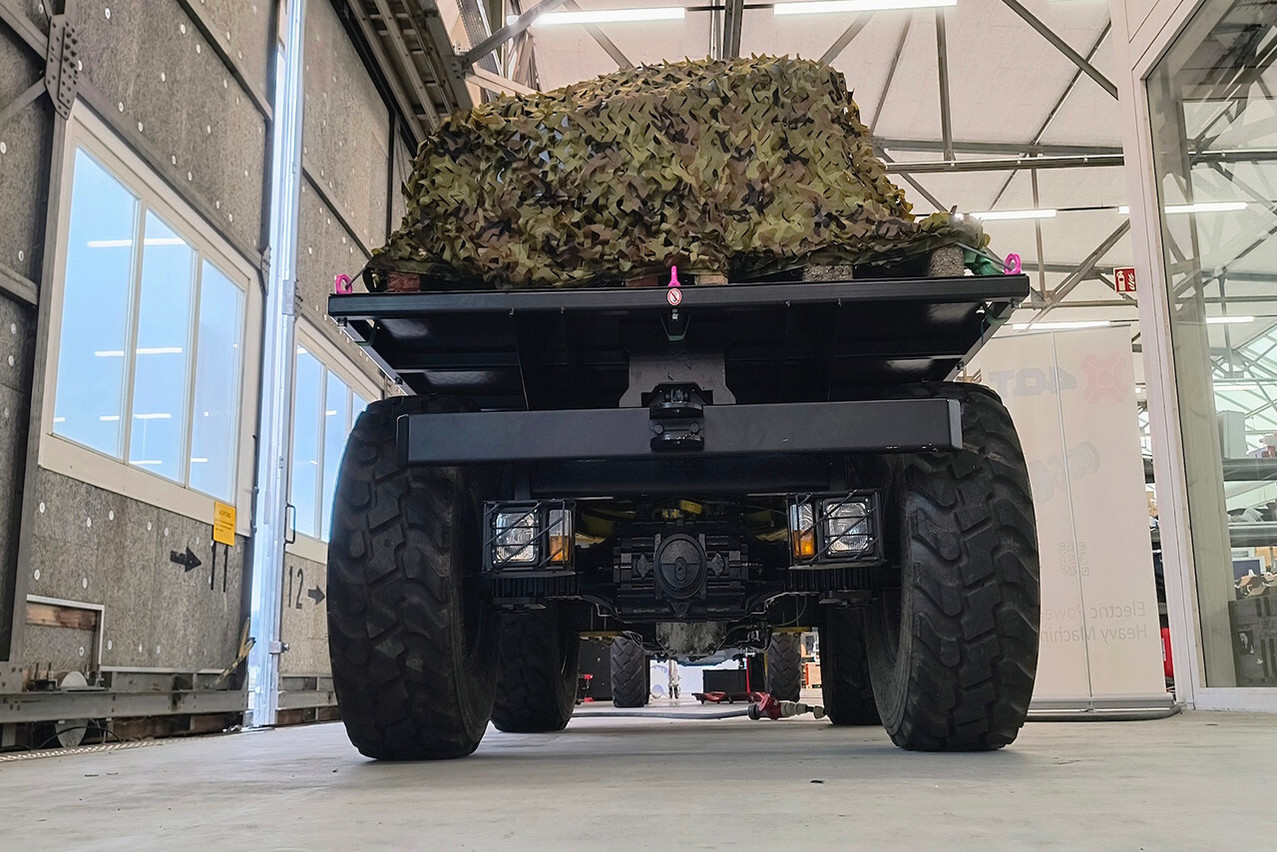
Marc Vetter, CEO of 4QT: Ukraine's 47th Unmanned Systems Brigade has signed a formal needs request for our heavy unmanned ground vehicles. Most UGVs operating in Ukraine today carry well under a tonne. Several vehicles, each with a crew of three, or several journeys are needed to replace one conventional logistics run. Our platform is tested with more than four tonnes of payload and can pull a trailer. In our assessment, one heavy run consolidates four to six light sorties, or one manned truck run that puts a driver on a route exposed to strikes. The objective is straightforward: more supplies per journey, fewer people driving into dangerous areas. The first batch is built and tested.
Q: What did you learn from working directly with Ukraine?
Marc Vetter: We went there to listen. The feedback concentrated our engineering on payload, reliability, field maintainability and interoperability. It made the vehicle simpler, not fancier, built around industrially available components. One piece of feedback was blunt: a vehicle carrying four tonnes of supplies becomes a target itself. The units expect it to attract drones, and over time they expect it to defend itself. Counter-drone self-protection is on our roadmap, and we are actively working on it.
Q: What does this have to do with Luxembourg?
Marc Vetter: The drone disruptions at Findel showed that unmanned-systems resilience is now a domestic subject. Protecting infrastructure is a chain: detect, confirm, track, respond proportionately. Our contribution is the mobile ground layer on which specialised partners install sensors and response systems. The measures that protect a logistics vehicle against drones are, at their core, the same measures that protect a runway, a substation or a port. These capabilities are dual-use by construction. Luxembourg has deliberately made logistics and mobility its defence specialisation, as an active member of the PESCO Military Mobility project and, since 2022, the European Network of Logistic Hubs. A heavy logistics vehicle capability extends exactly that role, alongside partners in Belgium, the Netherlands and Germany. If the initial order develops into serial production, it creates skilled work here: engineering, electronics, software, assembly, testing, maintenance.
Q: What should happen next?
Marc Vetter: A coordinated assessment: the requirement, the available systems, and the financing route, examined together. Luxembourg's procedures exist for good reasons, and the European rulebook already provides for urgent defence cases. We are asking for nothing the established procedures do not foresee: act on the brigade's request once Ukraine's Ministry of Defence confirms it through official channels, inspect the vehicles independently if desired, deliver a first batch, review before anything larger. The assessment should test us too: supply-chain stability, workforce and regulatory readiness. Every week the brigade waits is another week its drivers cover those routes themselves. Because the first batch is built and tested, the time to delivery is set by the time to decision.
Contact: Marc Vetter, m.vetter@4qt.lu